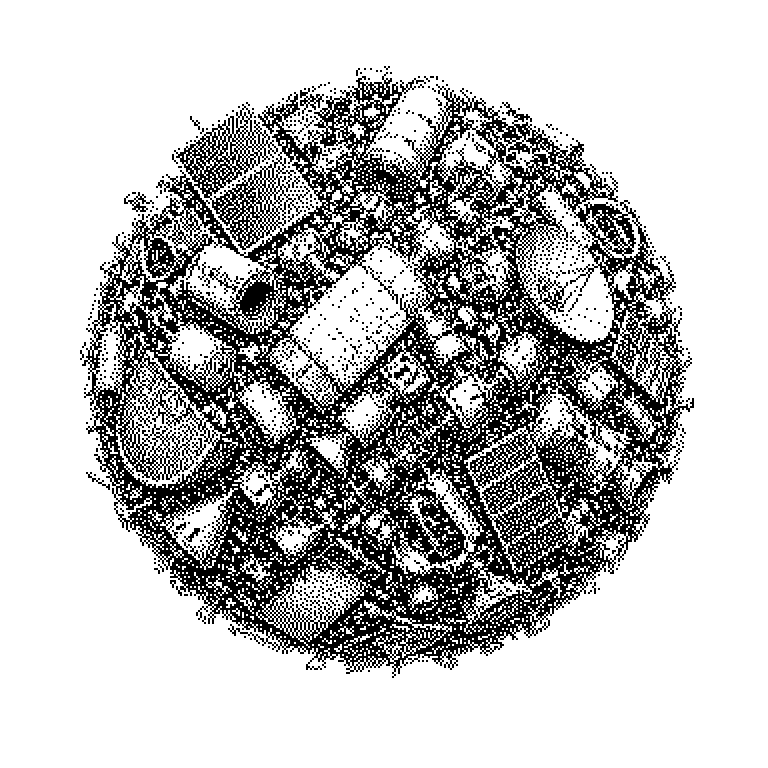
Space Debris
Space debris refers to all human-made objects in Earth orbit that no longer serve any useful purpose — from decommissioned satellites to tiny metal fragments. The more debris accumulates, the more dangerous the use of space becomes for future missions.
Space debris consists of all human-made objects in Earth orbit that are no longer actively controlled or used by anyone. This includes decommissioned satellites, rocket stages, tools lost by astronauts, and fragments from collisions. The European Space Agency ESA estimates that there are currently over 36,000 objects larger than ten centimeters in orbit — and over 130 million particles smaller than one centimeter. Even tiny fragments are dangerous: objects in orbit move at speeds of up to 28,000 kilometers per hour, and a piece the size of a thumbnail can destroy a satellite.
The Kessler Syndrome as Worst Case
NASA physicist Donald Kessler described a scenario in 1978 that now bears his name. The more objects collide in orbit, the more debris is created. More debris means more collisions. At some point, this process could become self-reinforcing — continuing until certain orbits become unusable for decades or centuries.
This is not a purely theoretical problem. In 2009, two intact satellites collided unintentionally for the first time: the active US communications satellite Iridium 33 struck the decommissioned Russian satellite Kosmos 2251. The collision generated over 1,800 trackable pieces of debris. Such events show that the threshold to the Kessler Syndrome is not a distant future scenario.
Tracking, Avoidance, and Active Removal
Large objects are tracked from ground stations via radar and recorded in catalogs. The International Space Station ISS has to perform evasive maneuvers several times a year when debris gets too close. If the warning comes too late, the crew has no choice but to retreat into the docked rescue capsule module. However, objects smaller than about five centimeters cannot be reliably tracked — and there is hardly any protection against them.
In the long run, avoidance alone is not enough. That’s why space agencies and private companies are developing methods for actively collecting debris. The European project ClearSpace-1 is set to capture a rocket attachment with a grappling arm for the first time in 2026 and guide it into Earth’s atmosphere, where it will burn up. Other concepts use harpoons, nets, or laser pulses to slow down objects.
At the same time, design rules now apply to new satellites: they must be built so that, after the end of their mission, they re-enter the atmosphere and burn up on their own within 25 years. Whether all spacefaring nations adhere to such rules, however, is another question.
Space Debris in Current Debates
The topic has been on everyone’s lips at the latest since the massive expansion of commercial satellite networks. SpaceX already operates over 6,000 Starlink satellites in low orbits and plans significantly more. Critics warn that such mega-constellations dramatically increase the risk of collision — even if all satellites are properly disposed of at the end of their lifespan, the amount of debris grows simply due to the sheer frequency of objects.
Military tests are also a contentious topic. India, China, Russia, and the USA have shot down their own satellites with missiles to test anti-satellite weapons. Such tests generate thousands of new fragments in a single blow. After the Russian test in 2021, the ISS crew had to spend several hours in safety capsules.
For the space industry, space debris is therefore no longer merely an academic side issue, but an economic and political problem. Without binding international rules for debris reduction, humanity risks blocking its own access to orbit.