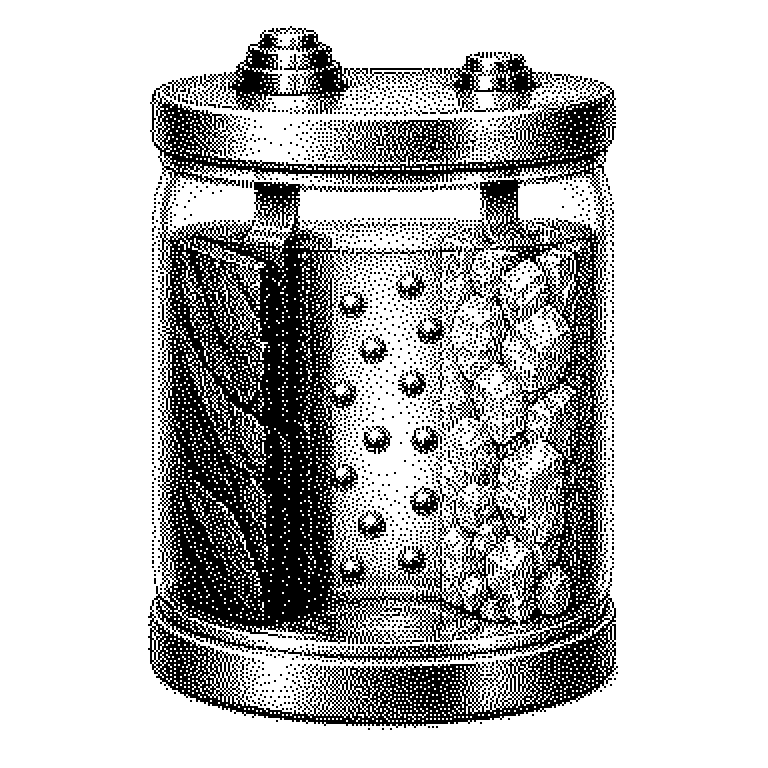
Sodium-Ion Battery
A sodium-ion battery stores electrical energy by shuttling positively charged sodium particles back and forth between two electrodes – following the same principle as a lithium-ion battery, but with a different and significantly more abundant raw material. It is considered one of the most promising candidates to replace lithium in certain applications.
A battery stores energy chemically and releases it as electric current. The principle behind almost all modern rechargeable batteries is the same: during charging, positively charged particles, so-called ions, migrate through a conductive liquid from one electrode to the other. During discharging, they return, and this flow powers a device. In a sodium-ion battery, these ions are made of sodium – a chemical element found in ordinary table salt. That may sound unspectacular, but it brings a decisive advantage: sodium is so abundant on Earth that it doesn’t need to be imported or laboriously mined.
Sodium as an Alternative to Lithium
Today, so-called lithium-ion cells are found in almost all batteries – in smartphones, laptops, electric cars. Lithium is a rare metal mined mainly in a few countries such as Chile, Australia, and China. This concentration makes the raw material expensive and politically sensitive. If one supplier fails, it can paralyze entire supply chains.
Sodium, by contrast, is the sixth most abundant element in the Earth’s crust. It can be extracted from seawater or salt deposits on every continent. This makes sodium-ion batteries less dependent on imports and significantly cheaper in the long run. Current estimates suggest that sodium cells could be about 20 to 30 percent cheaper than lithium cells in terms of raw material costs – a considerable difference when millions of batteries are to be built.
Another advantage: sodium-ion batteries perform better in cold temperatures than lithium variants. This is important for electric cars in Nordic countries, which struggle with significant range losses in winter.
Ions on the Move – Internal Structure
A cell consists of three main parts: the anode (negative terminal), the cathode (positive terminal), and the electrolyte, the conductive liquid in between. During charging, the anode absorbs sodium ions while the cathode releases them. During discharging, the process runs in reverse – and it is precisely this ion flow, combined with the simultaneous electron flow through the external circuit, that generates usable energy.
The structure closely resembles that of a lithium-ion cell, which is no coincidence: many manufacturers can retrofit existing production facilities with relatively minor adjustments. However, the sodium ion is larger and heavier than the lithium ion. This means it moves more slowly through certain electrode materials and requires more space. As a result, a sodium cell of equal weight currently still holds less energy than a lithium cell – the so-called energy density is lower.
Researchers are working specifically to find new cathode materials that can better accommodate the larger sodium ion. Particularly promising in this regard are certain layered structures made of metal oxides and so-called Prussian blue analogues – compounds whose crystal structure offers especially large gaps for sodium ions.
Use in Products and Energy Grids
The Chinese battery manufacturer CATL – one of the world’s largest battery producers – began installing sodium-ion cells in series-production vehicles in 2023. Carmaker BYD announced similar plans. These are no longer prototypes, but mass production. For a technology that was still considered a lab project just ten years ago, this is a remarkably fast leap.
The technology is particularly attractive for stationary storage – that is, huge battery blocks that store solar power when the sun is shining and feed it into the grid at night. There, weight is less relevant than in a car, which significantly mitigates the disadvantage of lower energy density. Some energy providers in China and Europe are already testing exactly such large-scale storage systems in the field.
In tech and finance news, the term comes up whenever the question arises of whether lithium’s dominance in the battery sector can be broken. Investors are watching the market closely: if the price gap to lithium cells continues to narrow, sodium-ion batteries could be powering millions of devices within a few years – without most users ever noticing.