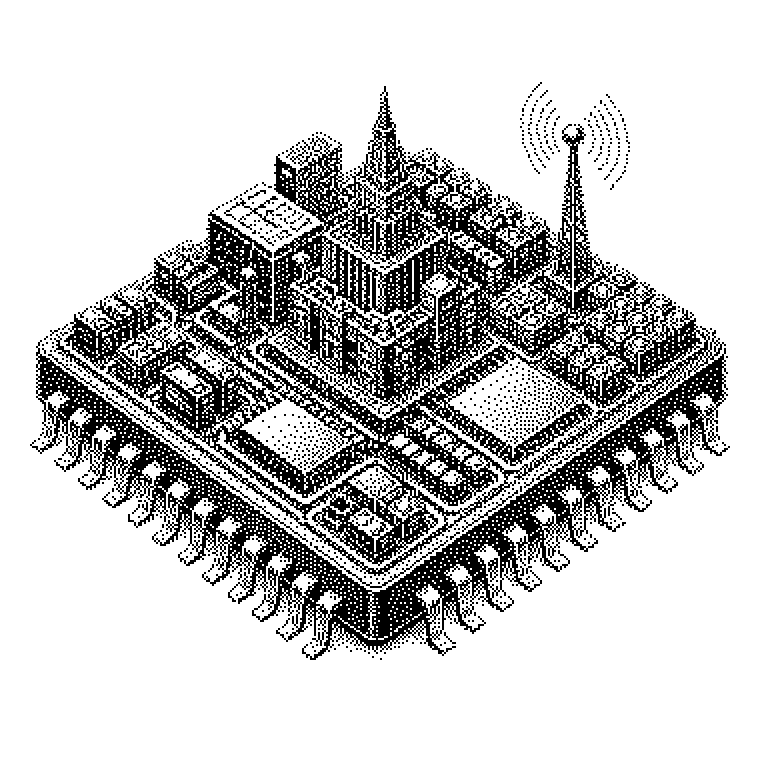
System-on-a-Chip
A system-on-a-chip is a single computer chip that contains almost all the components of a computer: processing core, graphics unit, memory interface, and radio modules. Nearly every smartphone, tablet, and many laptops today run on such a chip.
In a classic desktop computer, every task lives in its own component. One chip does the calculating, a second generates images for the screen, a third manages the working memory, a fourth handles WiFi. These parts sit individually on the motherboard and are connected via circuit traces. A system-on-a-chip combines all of this on a single piece of silicon that is smaller than a thumbnail. Instead of many separate chips, there is now only one, which contains practically the entire computer. The name says exactly that: an entire system on a chip.
Why phones wouldn’t work without an SoC
The most important reason is space. A smartphone has no room for a motherboard with twenty individual components. The more functions that move onto a single chip, the more room remains for the battery. That is precisely why this design has become universal in mobile devices.
The second reason is power consumption. Every signal that travels from one chip to another across the board costs energy. Within a single chip, the distances are a thousand times shorter. This saves power and makes transmission faster. As a result, a phone lasts a full day instead of two hours.
By now this also applies to larger devices. In 2020, Apple began switching its laptops to its own SoCs instead of using separate processors and graphics cards. Other manufacturers are following suit. The downside: when everything sits on one chip, nothing can be upgraded individually anymore. Adding more working memory is usually impossible on such devices.
Everything that sits on the silicon
The core is the CPU, the central processing unit for general tasks. Alongside it sits the GPU, a unit designed for many similar calculations running simultaneously, which generates images for the screen. Then there’s a memory controller that manages the working memory, as well as radio units for cellular, WiFi, and Bluetooth. Image processing for the camera and video decoders for streaming are usually included as well.
A recent addition in recent years is the NPU, the Neural Processing Unit. This is a computing unit specifically tailored to the kind of calculations that AI models require. It handles tasks like speech recognition or image editing directly on the device in a power-efficient way. Without it, the phone would have to send the data to a data center.
All these blocks are linked via an internal interconnect network and often share the same working memory. Think of it like an office building: previously, the departments sat in different buildings and sent each other mail. Now they sit on one floor and call to each other across the hallway. One point that is often misunderstood is important here: an SoC is not a particularly powerful CPU, but a design form. The individual parts are the same as before, they just sit together now.
From Snapdragon to the Apple M Series
The best-known SoCs for Android phones are Qualcomm's Snapdragon chips. Apple builds the A-series for iPhones and the M-series for Macs and iPads. Samsung uses its own Exynos chips, and Google develops the Tensor line. When a product announcement mentions a new chip, it practically always means an SoC.
They are also everywhere outside of smartphones. A TV, a router, a car infotainment system, and the Raspberry Pi each run on an SoC. The gaming consoles from Sony and Microsoft likewise use a single large chip combining CPU and GPU.
The term comes up in business news when it comes to supply chains. These chips are designed by companies like Apple or Qualcomm, but manufactured almost exclusively by a handful of contract manufacturers, above all TSMC in Taiwan. This dependency is one of the reasons why chip factories are a political topic today.