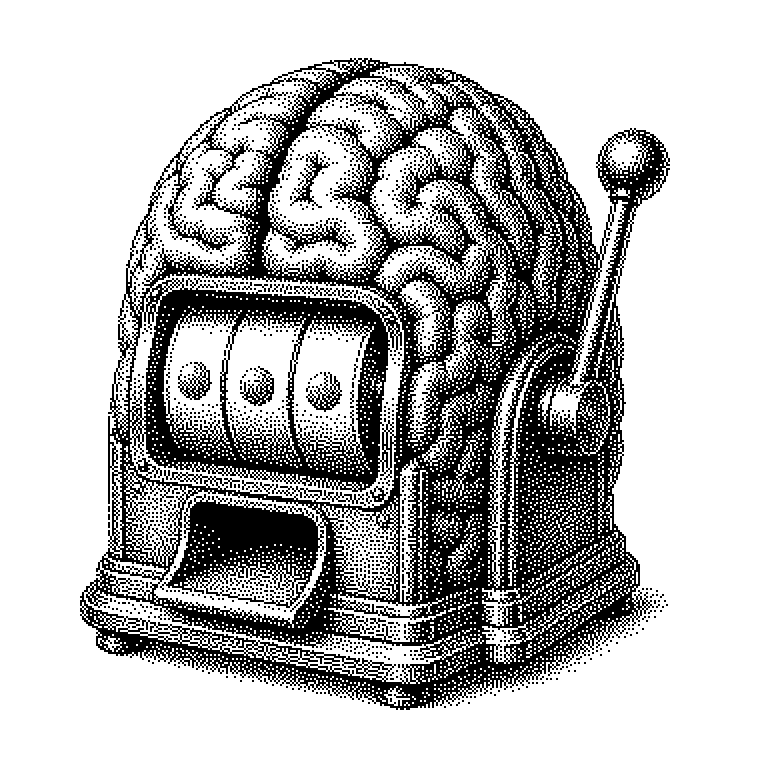
System-One Model
A System-One model is an AI language model that produces an answer in a single pass — without planning, double-checking, or reviewing its own output. The term originates from cognitive psychology, where it denotes fast, intuitive thinking as opposed to slow, deliberate reasoning.
A System-One model generates an answer in a single step: input in, output out. It does not plan, does not check itself, and does not break a difficult task down into sub-steps. The name is borrowed from a concept in psychology: the psychologist Daniel Kahneman distinguished two modes of thinking — “System 1” for fast, automatic reactions and “System 2” for slow, deliberate reasoning. AI researchers have adopted this distinction to describe two classes of language models. A System-One model corresponds to the fast, intuitive mode: it outputs the answer that best matches its training — without pausing to reflect.
Strengths and limits of this class
The biggest advantage is speed. A System-One model responds in milliseconds to a few seconds, because it does not go through any additional computational steps. This makes it cheap to run and suitable for tasks that require high throughput — for example automatic text summarization, translation, or simple search queries.
The limitation shows up with complex, multi-step problems. Math problems with many intermediate steps, logic puzzles, or planning tasks are solved worse by a System-One model than by a model that explicitly takes time to think. It can produce a convincing-sounding but incorrect answer — because it never checked whether its first instinct was correct. This pattern is sometimes described in research as “confident but wrong”.
A common misconception is that System-One models are inherently weaker or less intelligent. That is not true. For many everyday tasks they deliver excellent results — and an overpowered model that mulls things over for hours would simply be overkill for a simple email reply.
What happens internally
Technically, a language model always operates on the same basic principle: it processes an input text and predicts, word by word, what should come next. This process, in which the model generates text from its computed probabilities, is called inference. For a System-One model, that’s all there is to it — a single such pass, and the answer is ready.
System-Two models, i.e. models with an explicit thinking phase, on the other hand carry out multiple such inference passes. They first generate internal reasoning steps, check intermediate results, and correct themselves if necessary, before the actual answer is output. This costs significantly more compute time and therefore more money per request. System-One models skip this entire overhead.
In addition, many System-One models were optimized through certain training procedures to deliver helpful and direct answers. During training, the model learned to arrive quickly at a good answer — not how to write out a solution path step by step.
System-One models in products and debates
Most language models that became publicly known between 2020 and 2023 are System-One models — including early versions of GPT-4 or Claude. To this day, they form the foundation for the vast majority of AI applications: chatbots, writing assistants, code completion, automatic translation.
The term gained particular prominence when OpenAI introduced an explicit thinking phase with the model o1 in late 2024, thereby bringing its counterpart, the System-Two model, to market. Since then, trade media and manufacturers regularly distinguish between the two classes. This distinction helps users understand when a model is the right fit for a given use: for fast, broadly scoped tasks, a System-One model is often the better choice — it is faster, cheaper, and entirely sufficient for straightforward requests.
In today’s product landscape, many providers offer both variants, often even within the same platform. Users can then choose for themselves whether they need a quick answer or would rather wait and receive a more thorough analysis in return.