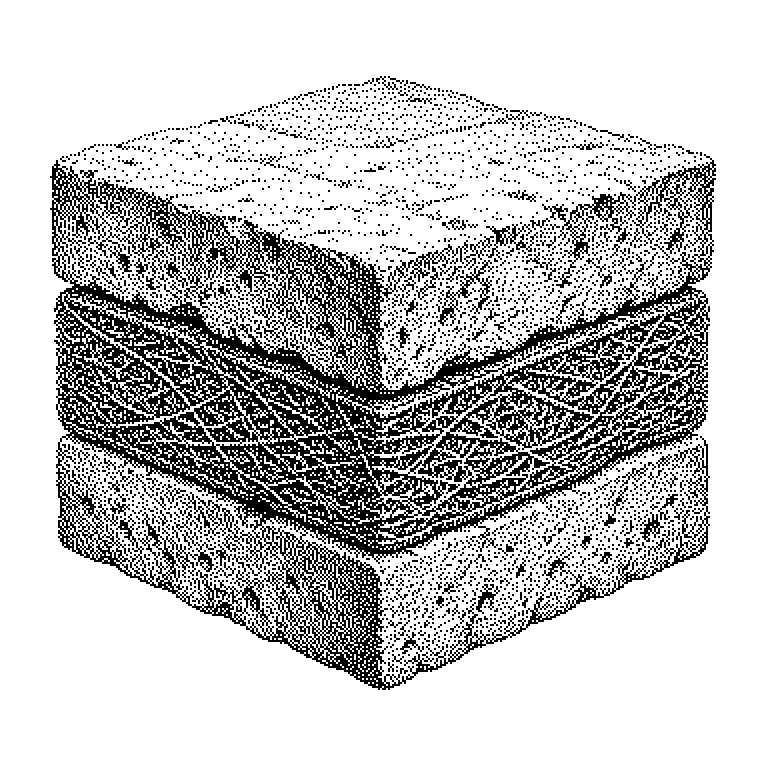
Sandwich Architecture
Sandwich architecture describes a structure made of three layers, where a middle layer sits between two outer layers. In technology, the term refers, depending on context, to a material structure, a chip stack, or a software structure with a core layer between input and output.
The name says almost everything: a sandwich consists of two slices of bread with a filling in between. A sandwich architecture is built the same way, just in a technical context. Two outer layers enclose a middle layer, and each layer has its own task. The outer layers usually handle contact with the outside, meaning the environment, the user, or the rest of the system. The middle layer does the actual work, but is often not functional on its own. The term appears in several fields: in materials construction, in the design of computer chips, and in software development. What they all share is the same basic principle, not the same technique.
Why three layers can do more than one
The appeal of this structure lies in the fact that it allows properties to be combined that would otherwise be mutually exclusive. A material can either be very light or very sturdy, but having both at once is difficult. A sandwich solves this problem by separating the two: thin, sturdy panels on the outside, a lightweight foam core on the inside. The result weighs little yet can withstand a lot. That’s exactly why aircraft floors, wind turbine rotor blades, and snowboards are made of such structures.
The same argument applies in software, just with different ingredients. There, the core of a program, meaning the actual rules and computational steps, is separated from everything around it. On the outside sit the parts that communicate with the outside world: the user interface, the database, the internet connection. The advantage is interchangeability. You can rebuild the interface completely without touching the core.
A common misconception is that more layers are automatically better. Every additional layer costs something: additional weight in the case of materials, additional complexity in the case of software. Sandwich architecture is therefore a compromise, not a universal solution. It pays off when the three layers truly have distinct tasks.
What happens in the individual layers
In a material sandwich, the outer layers are typically very thin, often just a few tenths of a millimeter. They consist of aluminum, carbon fiber, or fiberglass. The core in between can be several centimeters thick and consists of foam or of honeycomb structures that look like bee honeycombs. When the panel is bent, one outer layer is stretched while the other is compressed. The core merely keeps the two apart, and it’s precisely this distance that makes the panel rigid.
With computer chips, sandwich architecture means something different: layers stacked on top of one another. Memory chips today are stacked in many layers and connected vertically through fine channels. So-called High Bandwidth Memory, a particularly fast type of memory used in AI accelerators, works this way. The advantage is short distances, since data doesn’t need to travel across the board. The disadvantage is heat, which struggles to escape from the middle of the stack.
In the software variant, the core must not know about the outer layers. It merely specifies what it needs, and the outer layers provide it. Experts refer to this as dependencies that only point inward. Related concepts include layered architecture and hexagonal architecture. They differ in the details but follow the same underlying idea of separation.
From the snowboard to the AI data center
You encounter this structure in everyday life more often than you might think. Doors in apartments are usually sandwich panels with a honeycomb core made of cardboard. Cold storage walls, caravans, and surfboards are built the same way. A solar cell is also a sandwich: glass on top, the active layer in the middle, protective film on the bottom. In every case, the goal is to achieve stability, low weight, and protection all at once.
In tech news, the term mostly comes up in connection with chips. When reports discuss shortages of memory for AI systems, they’re almost always talking about stacked designs. Such stacks are difficult to manufacture because every layer has to align exactly. Only a few manufacturers worldwide have mastered the process, which strongly influences prices.
When reading about this, pay attention to which field is meant. A report on lightweight construction is talking about materials, a report on graphics cards is talking about chip stacks, and a developer text is talking about program structure. The term describes a form, not a fixed technology. Once you know that, it immediately becomes clear what’s being discussed.