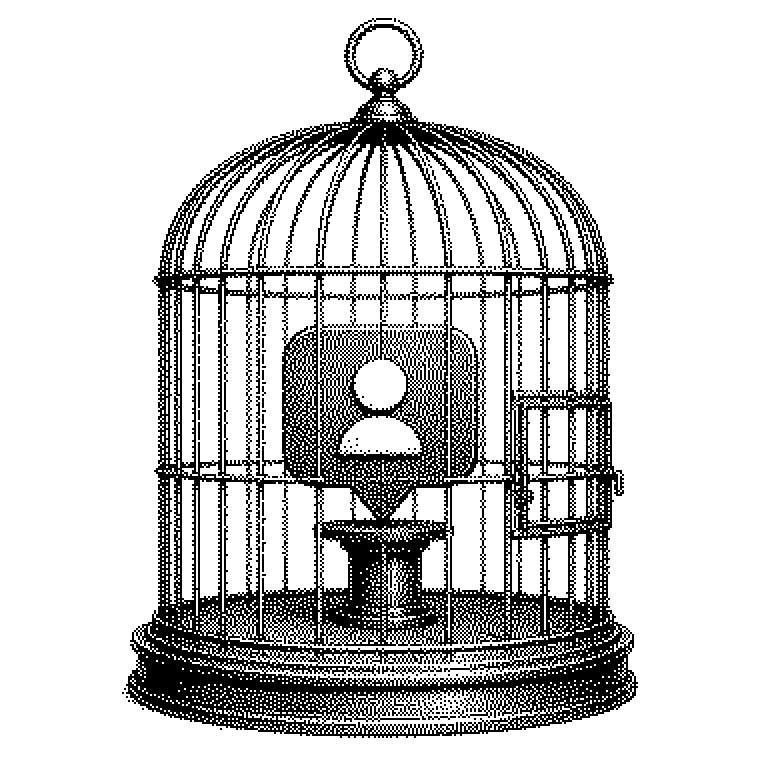
Shadowban
A shadowban is an invisible restriction on an online platform: posts remain normally visible to the sender but are barely shown to other users anymore. Unlike a regular ban, there is no notification, which is why those affected often only notice the throttling through plummeting numbers.
Anyone who breaks the rules on a platform like Instagram, TikTok, or X is normally banned and informed about it. A shadowban works differently: the account remains intact, and everything looks as usual. Your own posts appear on your own page, comments can still be written, nothing looks visibly blocked. Other users, however, are shown these contents only rarely or not at all anymore. The term is made up of “shadow” and “ban”: a ban that operates in secret. Those affected usually only notice it once view counts collapse over the course of days, without anything having changed in their own behavior.
Why platforms prefer quiet throttling over loud bans
For platforms, silent throttling has a practical advantage. Anyone who receives a clear ban knows immediately and simply sets up a new account. This is especially true for spam networks and automated accounts that spread advertising or propaganda. If, on the other hand, an account unknowingly broadcasts into the void, the effort of the operators behind such networks comes to nothing. The platform gains time without triggering an open conflict.
That is exactly the point of criticism as well. Anyone who doesn’t know they are being restricted cannot complain either. A ban can be contested, an invisible throttling hardly can. Journalists, activists, and small businesses repeatedly report that their reach collapsed without explanation. Whether there is really a targeted measure behind this or just a change to the recommendation system can almost never be proven from the outside.
That is why the term is politically charged. In the US, politicians from several parties accused the major platforms of quietly suppressing unwelcome opinions. The EU’s Digital Services Act now requires platforms to inform users about reach restrictions and provide a justification. The underlying problem remains: reach was never guaranteed, and every recommendation is also a decision against other content.
What’s technically behind the silent throttling
What you see on social networks is chosen by a recommendation system. This is a program that gives every post a score and then decides who it shows it to. Many signals feed into this score: how often a post is clicked, how long people look at it, how many report it. A shadowban is usually not a separate feature with a switch, but a strong downward adjustment of this score. The post continues to exist, but ends up at the very bottom of the queue.
The evaluation is almost always handled by automated systems, not humans. They check text, images, and videos for prohibited content and downgrade borderline cases as a precaution. Such systems regularly make mistakes. A channel about cancer screening can be downgraded because of medical terms, a memorial video because of a flag in the background. Platforms often call this cautious downgrading “borderline content”: content that is not prohibited but lies close to the line.
It is important to distinguish this from normal fluctuations. Reach depends on time of day, topic, competition, and chance. A thirty percent drop on a given day is completely normal and no proof of a deliberate measure. It only makes sense to speak of a shadowban once content becomes systematically unfindable over a longer period, for example no longer appearing under one’s own hashtag or no longer showing up in search.
How users and editorial teams recognize a shadowban
In practice, those affected test their visibility from the outside. You open your own profile in a logged-out browser or on a friend’s phone. If a post doesn’t show up there in search or under the hashtag, that is a clearer indication than a drop in click numbers. Some platforms now show within the account itself whether content has been blocked from recommendations.
In the news, you mostly encounter the term in two contexts. On one hand, in disputes over freedom of speech, when accounts claim to be politically held back. On the other hand, in business: for influencers, online shops, and media companies, reach is hard cash, and an unexplained drop hits them directly in revenue. Dating apps and forums like Reddit also use similar methods against spam.
A common misconception is that a shadowban can be lifted through certain tricks, such as a 48-hour pause or deleting all hashtags. There is no evidence for this. It is more effective to remove reported or borderline posts and to file an appeal wherever the platform offers that option.