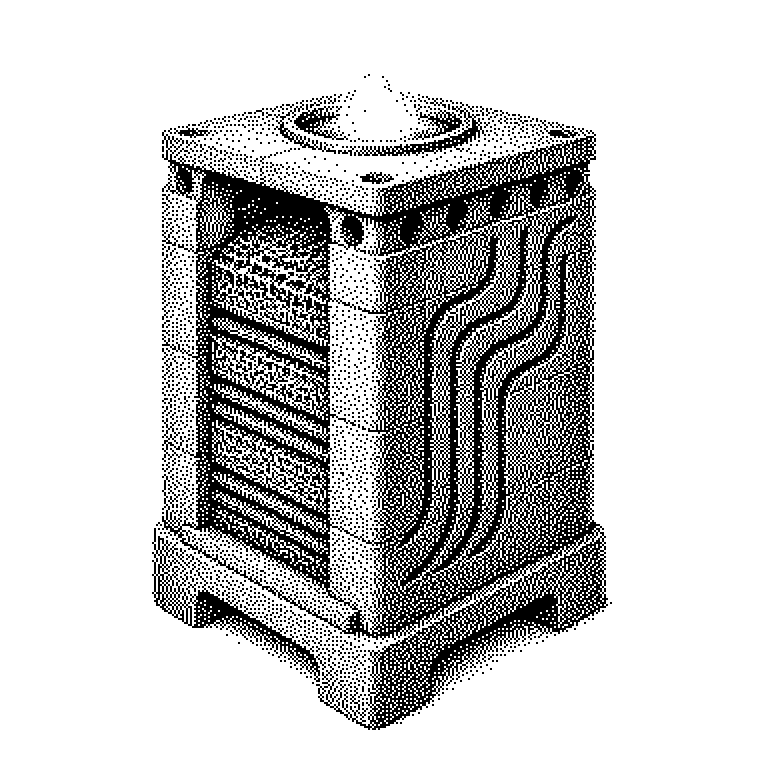
Solid Oxide Fuel Cell
A solid oxide fuel cell converts chemical energy directly into electrical power – without combustion and with significantly higher efficiency than a conventional engine. It operates at very high temperatures and is particularly suited for stationary power and heat supply in buildings and industrial facilities.
A fuel cell generates electricity by allowing a fuel – usually hydrogen or natural gas – to react chemically with oxygen, without burning it. The solid oxide fuel cell is a specific design of this type. Its core consists of a solid, ceramic material that conducts oxygen ions at temperatures between 600 and 1000 degrees Celsius. This property makes it unique among fuel cell types. Unlike a battery, it does not store energy – as long as fuel is supplied, it continuously produces electricity.
Why the SOFC’s efficiency matters so much
A conventional gas power plant burns natural gas, uses it to heat steam, drives a turbine, and thereby generates electricity. Energy is lost at each of these steps. A solid oxide fuel cell skips most of the intermediate steps. It converts the fuel directly through an electrochemical process, achieving electrical efficiencies of up to 60 percent – and when combining power and heat use, even over 80 percent.
By comparison: a modern gasoline engine achieves about 35 to 40 percent. The rest is wasted as heat. The SOFC’s high operating temperature is not only a technical challenge but also an advantage: the resulting waste heat can be used directly for heating or industrial processes. This significantly reduces overall energy consumption.
The electrochemical process inside
An SOFC consists of three layers. The cathode – the side where air flows in – absorbs oxygen molecules and converts them into negatively charged oxygen ions. These ions migrate through the solid electrolyte, a ceramic layer that allows only ions to pass through, not electrons. At the anode, where the fuel arrives, the ions react with the hydrogen or the split natural gas. In the process, electrons are released, which flow through an external circuit – and that is precisely the electricity that can be used.
The term “solid oxide” refers to this ceramic electrolyte. Other fuel cell types use liquid or membrane-based electrolytes and operate at much lower temperatures. The SOFC’s high operating temperature means it starts up slowly – typically over several hours – making it less suited to frequent switching on and off. In continuous operation, however, it is especially efficient.
Another advantage: the SOFC can process many different fuels. It can internally convert methane from natural gas into hydrogen without needing a separate reformer. This makes it more flexible than many other fuel cell types that require pure hydrogen.
SOFC in products, facilities, and the energy debate
Solid oxide fuel cells are currently used primarily in stationary installations. In Japan, the “Ene-Farm” program has for years supplied hundreds of thousands of households with combined power-heat units based on fuel cells. Companies like Bloom Energy in the United States operate large SOFC systems in data centers and hospitals that require uninterrupted power supply.
In industry, SOFCs are gaining importance as a replacement for diesel backup generators. They run more quietly, emit fewer pollutants, and are more economical in continuous operation. Research is also underway in shipping and heavy-duty transport, since the high energy density of hydrogen or synthetic fuels is particularly attractive there.
In political discussions about the energy transition, the SOFC appears as a building block of a hydrogen-capable infrastructure. As countries shift to renewable energy and convert surplus electricity into hydrogen, they need efficient ways to convert this hydrogen back into electricity. The solid oxide fuel cell is considered one of the most promising candidates for this – provided that manufacturing costs for the sensitive ceramic components continue to fall.