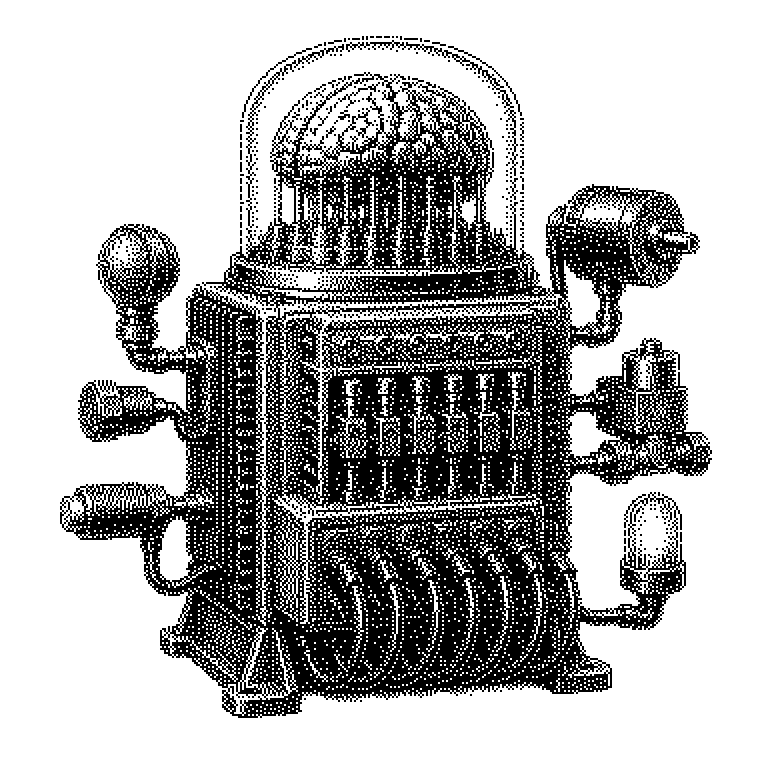
Programmable Logic Controller
A programmable logic controller is a rugged industrial computer that controls machines and plants. It reads signals from sensors, processes them according to a stored program, and then switches motors, valves, or lamps accordingly.
A programmable logic controller is a small, very rugged computer for factories and technical plants. It is usually abbreviated as PLC. Its job is to control machines: it constantly reads in measured values, for example from switches, light barriers, or temperature sensors. Based on fixed rules, it then decides what should happen and switches motors, valves, or warning lamps on and off. These rules reside in a program that is stored in the device and can be changed at any time. This is exactly where the cumbersome word in the name comes from: the controller is not hardwired, but programmable via memory.
The backbone of every factory floor
Before the PLC, controllers were built from relays. These are electrical switches that are wired together with many cables to form a logic. If you wanted to change the sequence of a machine, a technician had to rewire the control cabinet. That took days and was prone to errors. With a PLC, you instead change a few lines of program and load them onto the device.
This flexibility has transformed industry. Today, almost every production line contains at least one PLC, often dozens. They control conveyor belts, filling systems, elevators, sewage treatment plants, and wind turbines. Traffic light systems and the technical infrastructure of large buildings are also often run by such devices. The global market for them is in the double-digit billions.
Reliability is also crucial. A PLC is meant to run for years without crashing or restarting. It withstands dust, heat, vibration, and voltage fluctuations. A normal office computer would quickly fail on a factory floor. This is precisely why this class of device exists at all.
The cycle of reading, computing, and switching
A PLC operates in an endless loop, the so-called cycle. First, it reads in all inputs and stores their states. Then it processes the entire program once. Finally, it writes the results to the outputs, i.e. to motors or valves. After that, everything starts over from the beginning.
Such a cycle typically takes a few milliseconds. What matters is not raw speed but predictability. This is referred to as real-time capability: the controller is guaranteed to respond within a defined time span. For a press with an emergency stop switch, this is literally vital. A normal operating system cannot provide such a guarantee.
Programming is usually done in languages defined by an international standard numbered 61131-3. The best-known one is called ladder logic and looks like a wiring diagram with relays. This was intentional, so that electricians without a computer science background could make the switch. There are also text-based languages that resemble classic program code. A common misconception, incidentally, is that a PLC is a microcontroller hobbyist project. The difference lies in the standard, the ruggedness, and the guaranteed response time.
From the sugar factory to the AI headline
You encounter PLC technology constantly in everyday life without seeing it. The traffic light at your school, the elevator in the department store, the filling system for your soda: such control technology is at work everywhere. Major manufacturers include Siemens with its Simatic series, Rockwell Automation, and Mitsubishi Electric. Job postings for electrical engineering very frequently mention PLC programming.
In the news, the term is mainly encountered in two contexts. The first is security: the malware Stuxnet specifically manipulated PLC devices in Iranian nuclear facilities in 2010. Since then, controllers have been considered a critical attack surface. The second context is the networking of factories, often called Industry 4.0. Modern controllers send their measurement data to higher-level systems.
This gives rise to the connection with artificial intelligence. The data from PLC systems is raw material for methods that predict machine failures. This is called predictive maintenance. However, the actual control remains with the PLC, because there reliability takes precedence over cleverness. A learning system may advise, but it is rarely allowed to close a press on its own.