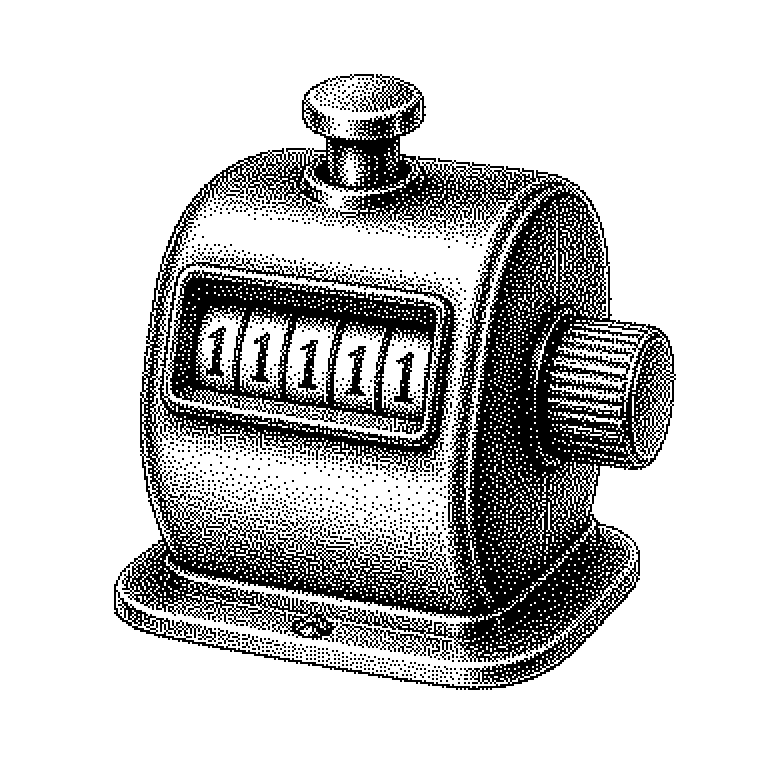
Pageview
A pageview is a single instance of a visitor loading a webpage. The number of pageviews shows how often the pages of a website were viewed in total — but it says nothing about how many different people are behind that number.
Every time someone opens a webpage and it appears in the browser, that gets counted. This single instance of loading is called a pageview. If you open a news site’s homepage, then an article, and then the imprint page, that counts as three pageviews. If you reload the same article again, that typically counts as a fourth. A pageview thus describes an event, not a person. That’s why the number is always considerably larger than the number of people who actually visited the website.
Why pageviews mean money
Most news sites, blogs, and video platforms earn their money through advertising. Ads are displayed on a page precisely when that page is loaded. More pageviews therefore mean more ads shown, and thus more revenue. For many media companies, the pageview is consequently the most important metric in day-to-day business.
Billing is typically done per thousand impressions. A price of five euros per thousand ad placements sounds low, but a large site racks up millions of views per month. Many small amounts add up to a serious business model. That’s precisely why pageview figures also show up in business reports and stock market announcements.
However, the metric has a well-known downside. Anyone who focuses solely on pageviews gets rewarded for splitting content across many subpages or using sensationalist headlines. Such headlines are called clickbait: they promise more than the text delivers. That’s why editorial teams also pay attention to dwell time — that is, how long someone actually reads.
How a view gets counted
Measurement usually happens via a small snippet of code that’s included on every page. As soon as the page has loaded in the browser, this snippet reports a view to a measurement service. What gets transmitted is typically the page’s address, the timestamp, and the source the visitor came from. The measurement service tallies these reports and displays them to the operator in a dashboard.
There are two related metrics that are easy to confuse. A visit or session bundles together all the views a single person makes within one session — it usually ends after about 30 minutes of inactivity. A unique visitor is a single visitor, regardless of how many pages they click through. A website with 100,000 pageviews might therefore have only 20,000 visitors.
Measuring cleanly is harder than it sounds. Ad blockers in the browser often prevent the report from being sent at all. Automated programs, so-called bots, request pages en masse and inflate the numbers if they aren’t filtered out. And with modern pages that load content without a full page reload, the operator has to define for themselves what counts as a new view.
Pageviews in news and products
You’ll come across this figure everywhere reach is discussed. Business news might report, for instance, that a portal reached 300 million pageviews in a quarter. Such figures help determine what advertisers pay and how highly a media company is valued.
In products, you’ll encounter the term in analytics tools like Google Analytics, Matomo, or Plausible. Anyone running their own blog or online shop sees there every day which pages were viewed how often. Website builders like WordPress or Shopify also display this statistic directly in the admin area.
The term is currently interesting for another reason too: AI search. When a chatbot displays the answer directly, nobody clicks through to the source anymore. Many publishers therefore report declining pageviews even though their content is still being read. This is one of the reasons why media companies are negotiating licensing deals with AI companies — or suing them.