Proprietary Model
A proprietary model is an AI system whose inner workings the developing company keeps secret and makes usable only through paid access. Users get answers, but not the model's building blocks themselves.
A computer program that writes texts or generates images consists at its core of huge tables of numbers. These numbers are the actual result of a months-long learning phase, during which the program derives patterns from millions of examples. With a proprietary model, the company keeps these numbers to itself and does not publish them. You can use the model, but only over the internet: the question goes to the company’s servers, and the answer comes back. Other details often remain secret too, such as which texts were used for training. The counterpart is called an open model, where the manufacturer makes the number tables available for download.
What secrecy means for users
For companies that build such models, secrecy is a business model. Training the largest systems costs hundreds of millions of euros. Anyone who simply gives away the finished numbers can hardly recoup that investment. That is why providers like OpenAI, Anthropic, or Google sell access, not the models themselves.
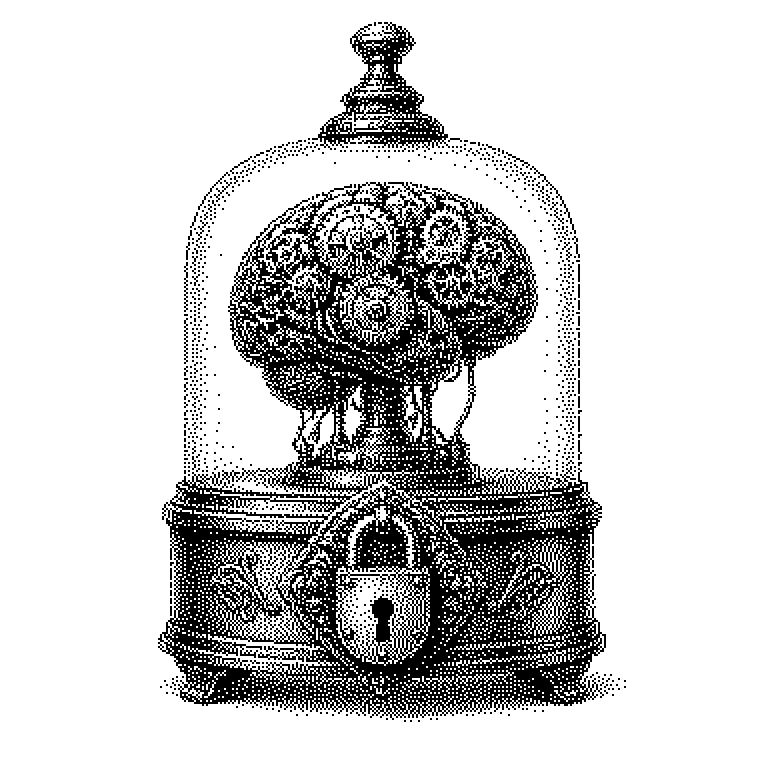
For users, this creates dependency. If the provider raises prices, shuts down the model, or secretly changes it, there is no alternative. Experts call this lock-in: you have built your software around one access point and can no longer easily get away from it. A hospital or a bank must also check whether sensitive data may even be sent to external servers at all.
A second point concerns control. Researchers cannot examine a secret model from the inside. They can only test what it answers and draw conclusions from that. If a model evaluates job applications or assesses loans, this is a real problem. You see the result, but not the path that led to it.
Access via an interface
Access almost always runs through an API. This is a fixed address on the internet to which a program sends a request and receives a response back. You need a key for this, a kind of password with which the company assigns each request to an account. Billing is usually based on the amount of text, measured in tokens, i.e., word fragments.
The model itself runs in the provider’s data centers, on specialized graphics chips. The user notices nothing of this. They only see that the answer appears after one or two seconds. This very separation is what makes secrecy technically possible: whatever never leaves the server, no one can copy.
A common misconception is that proprietary automatically means expensive and open automatically means free. Open models also need computing power, which you have to rent or buy yourself. And proprietary models come in small, cheap variants too. The difference lies not in the price, but in the question of who owns the building blocks.
Well-known examples and the debate over openness
The best-known proprietary models are GPT from OpenAI, Claude from Anthropic, and Gemini from Google. They power chatbots, translation features, and writing aids in office programs. Anyone using ChatGPT in a browser is working with a proprietary model, without this being stated anywhere prominently.
In business news, the term usually appears in comparisons. Meta publishes its Llama models for download, and the French company Mistral and the Chinese company DeepSeek do so partially as well. Analysts then ask whether open models are putting pressure on the prices of closed providers. For investors, this is an important question, because high valuations depend on lasting revenues.
Caution is advised with the word open. Some companies publish the number tables but prohibit commercial use in their terms of service. The training data almost always remains secret. Experts therefore prefer to speak of open weights rather than true open source. Between fully secret and fully open lie many intermediate stages.