Polysomnography
Polysomnography is an examination in which a person sleeps overnight while wired up, recording brain waves, breathing, heartbeat, and movements. It is considered the most accurate method for diagnosing sleep disorders and also provides the training data for AI systems that automatically analyze sleep.
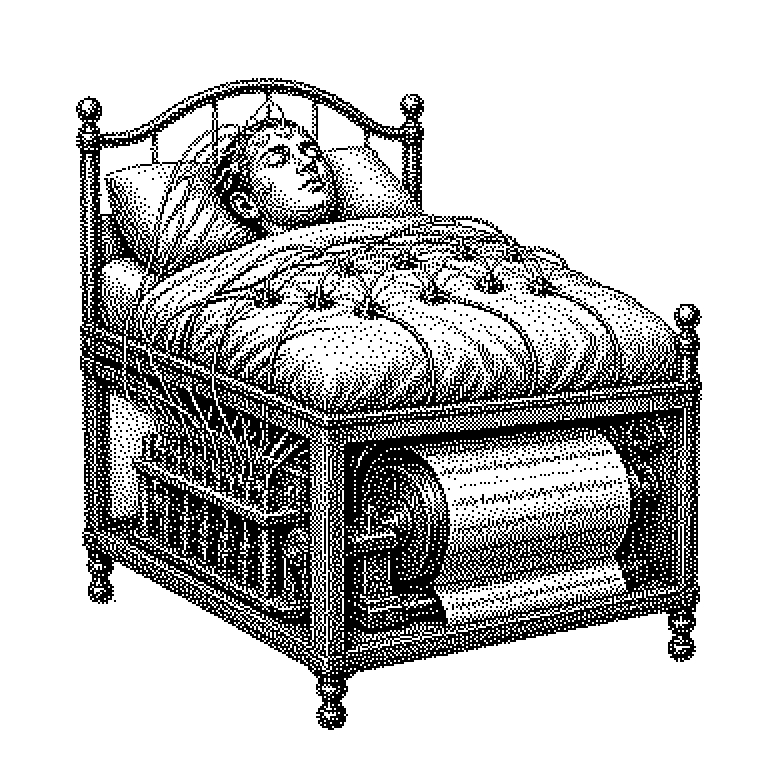
Polysomnography is a medical examination of sleep. For this, a person sleeps one night in a sleep laboratory, meaning a room with a bed and measuring equipment. Small sensors are attached to the head, face, chest, and legs. These sensors simultaneously record many different body signals: brain activity, eye movements, muscle tension, heartbeat, breathing, and blood oxygen levels. The name says exactly that: “poly” means many, “somnus” means sleep, “graphy” means recording. At the end of the night, several hours of measurement curves are available, which a specialist or a computer program must evaluate.
Why a whole night of measurement cables is necessary
Many illnesses only show up during sleep. The best-known example is sleep apnea. In this condition, breathing repeatedly stops for seconds during sleep. Those affected usually notice nothing, they just feel exhausted in the morning. Left untreated, this increases the risk of high blood pressure, heart attack, and stroke over the years.
A doctor cannot detect such pauses during the day. Even the patient’s account is not sufficient, because no one remembers their own sleep. Polysomnography therefore provides hard numbers instead of guesses. For example, it counts how often per hour breathing stalls. This number directly determines whether treatment is necessary.
For the tech industry, the examination is important for a second reason. It is considered the gold standard, meaning the method against which all others must be measured. If a smartwatch claims to detect sleep stages, it must compare its results with polysomnography data. Without this comparison, such a claim is worthless.
From electrodes to sleep stages
The most important sensors are electrodes on the scalp. They measure tiny electrical voltages generated by the brain. This measurement is called electroencephalography, or EEG for short. Depending on how fast and how evenly the curves oscillate, the person is in a different sleep state. Additional electrodes on the eyes and chin help identify dream sleep, since the eyes move abruptly and the muscles go almost completely slack during it.
The evaluation follows a fixed set of rules. The night is broken down into 30-second segments. Each segment receives a rating: wakefulness, light sleep, deep sleep, or dream sleep. With eight hours of measurement, that amounts to around 960 individual decisions. In the past, a trained person did this by hand, which takes several hours.
This is exactly where AI systems now assist. A neural network is given tens of thousands of already-rated nights as training material. It learns which curve shape belongs to which sleep stage. Modern systems agree with experts on this task about as well as two experts agree with each other. That sounds modest, but it is a realistic benchmark: even humans disagree on about a fifth of the segments.
Between sleep lab and smartwatch
In everyday life, one rarely encounters polysomnography directly. In Germany there are a few hundred sleep labs, and the waiting time for a spot is often months. A night in the lab is expensive, labor-intensive, and uncomfortable for the patient. Many sleep worse with the cables than at home, which distorts the result.
That is why stripped-down variants keep emerging. Home devices measure only breathing, pulse, and oxygen, but forgo the EEG. Rings and watches go even further and estimate sleep from pulse and movement. Such devices reliably detect when someone is asleep. When it comes to distinguishing individual sleep stages, they are considerably less accurate than the lab, even if the app displays a neat graphic.
In business news, the term usually appears in connection with medical technology and health apps. Companies advertise that their software has been approved by authorities as a medical device. Such approvals are almost always based on studies in which the product had to compete against real polysomnography data. Anyone reading reports about sleep AI should therefore first look for this comparison.