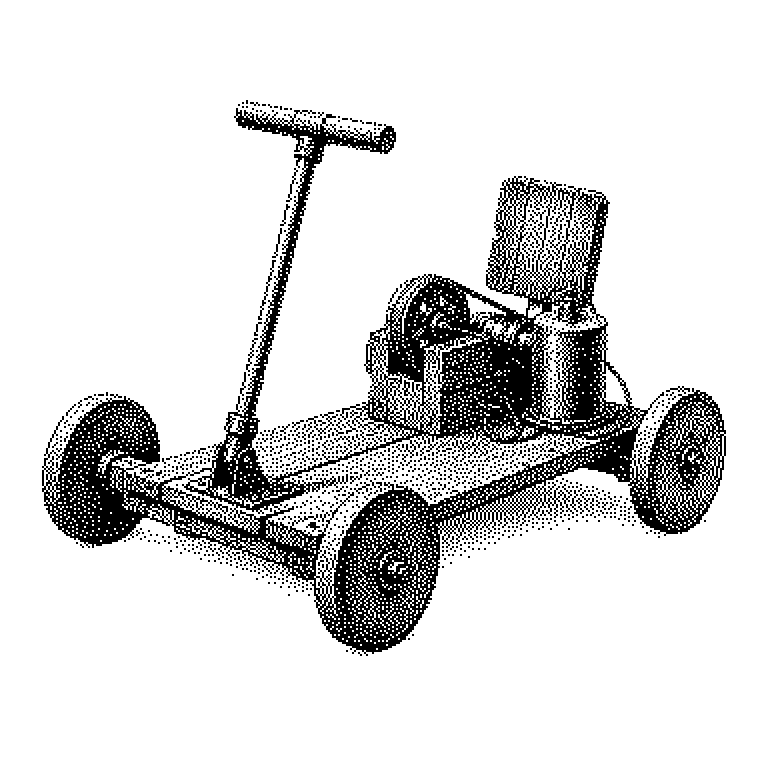
Proof of Concept
A proof of concept is a small test run meant to show whether an idea works at all. It is deliberately built quickly and incompletely before much money flows into the finished solution.
A proof of concept is a first small attempt meant to answer a single question: Can this actually work? The English term literally means “demonstration of the concept”; in German it is also called a Machbarkeitsnachweis (feasibility demonstration). Only the bare minimum is deliberately built. It’s not about a polished product but about getting an answer. If the answer turns out negative, you’ve lost a few weeks instead of two years. If it turns out positive, the actual development can begin.
Why companies test before they build
Large software projects are expensive. A team of ten developers easily costs more than a million euros over the course of a year. If it turns out in the end that the underlying idea doesn’t hold up, that money is gone. A proof of concept, by contrast, often costs only a few tens of thousands of euros. It is thus a kind of insurance against major failure.
With artificial intelligence, this kind of test is especially important. You usually can’t calculate in advance how well a model will solve a task. Whether a piece of software can reliably interpret X-ray images is something you only find out once you’ve tried it on real images. That’s why many AI initiatives at companies start out as a PoC.
There’s also a common misconception here. A successful proof of concept doesn’t prove that a product is finished. It only proves that the path isn’t blocked from the outset. Experts speak of “pilot purgatory,” the testing trap: companies accumulate dozens of successful trials but never bring any of them into real operation.
What actually gets built in such a test run
At the start there is a clear assumption to be tested. For example: a language model can correctly assign 80 percent of incoming customer emails to the right department. Beforehand, the team defines the threshold at which the test counts as passed. Without that threshold, any number can later be spun to sound good.
Then the simplest version that can answer this question is built. It often runs on a developer’s laptop and is fed a few thousand sample data points. A lot is left out: user accounts, data-protection checks, a presentable interface. At this stage, some steps are still done by hand by a human.
In the end, there is a result and a decision. Either the project moves forward, or it is deliberately ended. A discontinued proof of concept is not a failure — that is in fact its actual purpose. The code that was built is usually thrown away, since it was never meant for continuous operation.
PoC, prototype, and pilot project in practice
You come across this term very often in press releases. “Bank X launches a proof of concept for AI-supported credit assessment” means: there is a test, not yet a product. For investors, that’s an important distinction. Years can pass between a PoC and actual running revenue, and many tests never reach that goal.
Three similar terms are often confused. A proof of concept asks whether something is technically possible. A prototype additionally shows how the thing can be used. A pilot project already runs with real users, but only in one department or one branch. This is usually exactly the order in which they occur.
You also encounter this principle outside the business world. Anyone who writes one page for a presentation first and asks the teacher whether the direction is right is, at its core, doing a feasibility demonstration. In IT security, a published sample program that exploits a security vulnerability is also called a proof of concept. There, it proves that the vulnerability is genuinely dangerous.