Prisoner's Dilemma
The prisoner's dilemma is a famous thought experiment about two people who must decide separately whether to cooperate or betray each other. It shows how both end up worse off even though each acted rationally in their own interest.
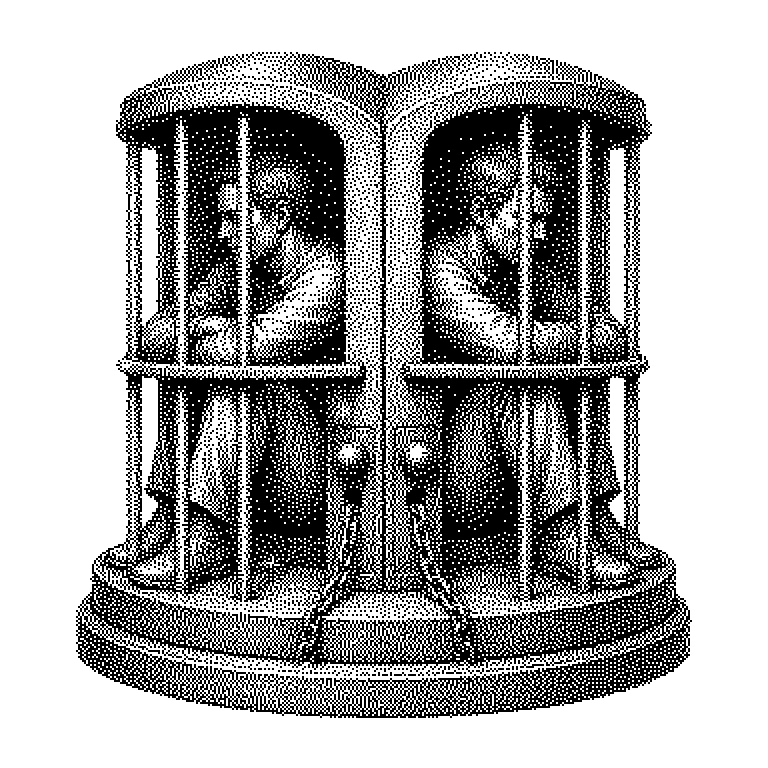
Two bank robbers are arrested and interrogated in separate rooms. There is barely any evidence, so the police make each of them the same offer. Whoever betrays the other goes free — the betrayed one serves five years. If both betray each other, each gets four years. If both stay silent, it’s only enough for a small sentence of one year per person. Neither knows what the other will do. This exact situation is called the prisoner’s dilemma.
The core lies in the calculation each individual makes. No matter what the other does: betrayal is always the better choice for me. If he stays silent, I go completely free by betraying him. If he betrays me, I save a year by betraying him too. So both betray each other — and serve four years instead of one. The best joint outcome is achievable, but no one dares to pursue it alone.
Why smart individual decisions lead to a bad overall outcome
The dilemma is more than a mental puzzle. It describes a pattern that appears everywhere self-interest and shared benefit diverge. A classic example is advertising: if two competing companies both refrained from advertising, both would save a lot of money. But each fears the other might secretly advertise anyway. So both spend millions, and market shares end up the same in the end.
The same logic explains arms races, overfishing of the oceans, and stalled climate negotiations. Each country would gain short-term advantages by doing less than the others. Together, everyone ruins the shared foundation. The technical term for this pattern is the collective action problem: a benefit everyone profits from but no one wants to pay for alone.
A common misconception: the dilemma doesn’t mean people necessarily act selfishly. It only shows that certain rules reward selfishness. Change the rules — through contracts, oversight, or penalties — and behavior changes too. That’s why the model interests economists, political scientists, and legal scholars alike.
The payoff matrix and the repeated game
Formally, the prisoner’s dilemma belongs to game theory, the mathematical study of decisions made by multiple parties. The four possible outcomes are written into a table with two rows and two columns. Each cell shows what each player receives. This table is called the payoff matrix, and the outcome can be read from it alone.
The outcome of mutual betrayal is called a Nash equilibrium. This refers to a state in which no one can improve their situation alone by choosing differently. It’s important to distinguish this from the best overall outcome: a Nash equilibrium doesn’t have to be good for everyone. That’s exactly the point of the dilemma.
Things get interesting when the same two players play against each other repeatedly. Then betrayal can be punished later, and cooperation suddenly becomes rational. In a famous computer tournament in the 1980s, a very simple strategy won: cooperate, but retaliate once for every betrayal in the next round. It’s called Tit for Tat and remains a standard example to this day of how trust can emerge.
From price wars to the AI race
You often encounter this pattern in business news without the name attached. When two supermarket chains undercut each other with price cuts, both lose profit, yet neither can afford to stop. When cartels make secret price-fixing agreements, they are specifically trying to escape this dilemma. That’s why competition authorities offer leniency programs: whoever comes forward first gets immunity from prosecution. This deliberately places cartel members into a prisoner’s dilemma.
In the tech industry, the term is currently being discussed mainly in relation to AI. Many companies say they would prefer to release new systems more slowly and cautiously. But whoever slows down while competitors keep racing ahead loses the market. So everyone releases quickly — an outcome that, according to those involved themselves, no one actually wanted.
The model also plays a role in AI research itself. Programs are made to compete against each other repeatedly in order to study when they cooperate and when they deceive. Such experiments are part of the broader question of whether multiple AI systems can reliably coordinate with each other or will instead exploit one another. Anyone who knows this term will understand such reports much more quickly.