Class Action
A class action is a court proceeding in which many aggrieved parties jointly pursue their similar claims against the same company. It is a central lever of pressure in the US and increasingly affects tech and AI companies there as well.
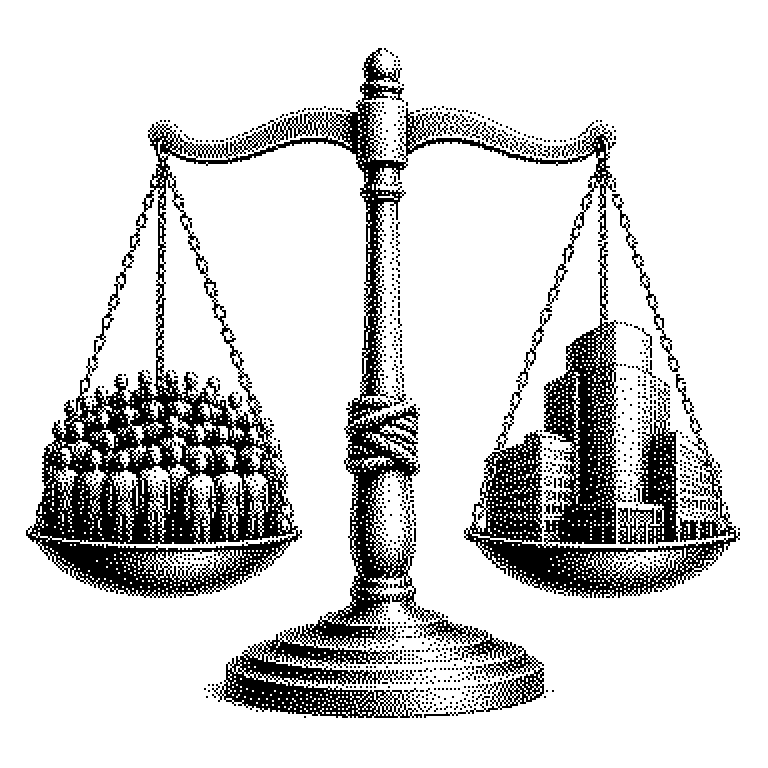
Sometimes a company doesn’t harm just one person, but thousands in the same way. One example: an app overcharges by two euros every month. For a single customer, going to court isn’t worth it, because a lawyer costs more than the damage. In a class action, many affected parties therefore bundle their similar claims into a single proceeding. It is then heard only once, and the ruling applies to everyone who belongs to the group. Many small amounts thus add up to a sum that really does hurt the company.
Why corporations fear class actions
The most important effect is leverage. Two euros of damage times ten million users equals twenty million euros. On top of that come legal and court costs, which a corporation often has to bear in the event of a loss. A case that looks trivial on its own becomes a real balance-sheet risk when added up.
For society at large, this serves a regulatory function. Without class actions, companies could calculate that filing a complaint never pays off for an individual. Many small, systematic violations of the rules would then be practically risk-free. Lawyers call this effect rational apathy: the effort is disproportionate to one’s own benefit.
That’s why most class actions don’t end with a verdict, but with a settlement. The company pays a sum without admitting any wrongdoing. For investors, such settlements are important news, because they change provisions and quarterly figures.
Opt-out in the US, registration in Europe
In the US, this procedure is called a class action. There, the court defines a group, for example all buyers of a particular device between 2019 and 2023. Anyone who fits this description is automatically included and does not need to register. Only those who explicitly opt out are excluded; this principle is called opt-out. That explains why American lawsuits involve such enormous groups.
In Germany, it’s the other way around. Here there is the model declaratory action and, since 2023, the redress action. Not just any lawyer may sue; only a recognized consumer organization may do so, such as a federal association of consumer advice centers. Affected parties must actively register in a registry to participate. This registration principle is called opt-in and results in smaller groups.
A second difference lies in the amount of payments. US courts can impose punitive damages, meaning sums well above the actual harm. German courts, as a rule, only compensate for the loss actually incurred. Anyone reading reports should therefore not directly compare amounts from the two systems.
Class actions against tech and AI companies
In tech news, the term currently appears mainly in three contexts. First, in data protection: after a data breach, users whose addresses or passwords have appeared online sue. Second, in copyright law: groups of authors and image agencies sue AI providers because their models were trained on protected material. Third, in securities law, when investors believe a company presented risks or revenues too optimistically.
The best-known German example is the diesel scandal. Around 450,000 car owners registered in the lawsuit registry against Volkswagen. The settlement in 2020 brought about 750 million euros in compensation. Without bundling, most of these people would never have sued at all.
A common misconception is that affected parties get rich if the case succeeds. Usually, only double-digit amounts per person remain, while the law firms profit from the total volume. What matters is the signaling effect: after costly proceedings, companies often change their business practices, not just their provisions.