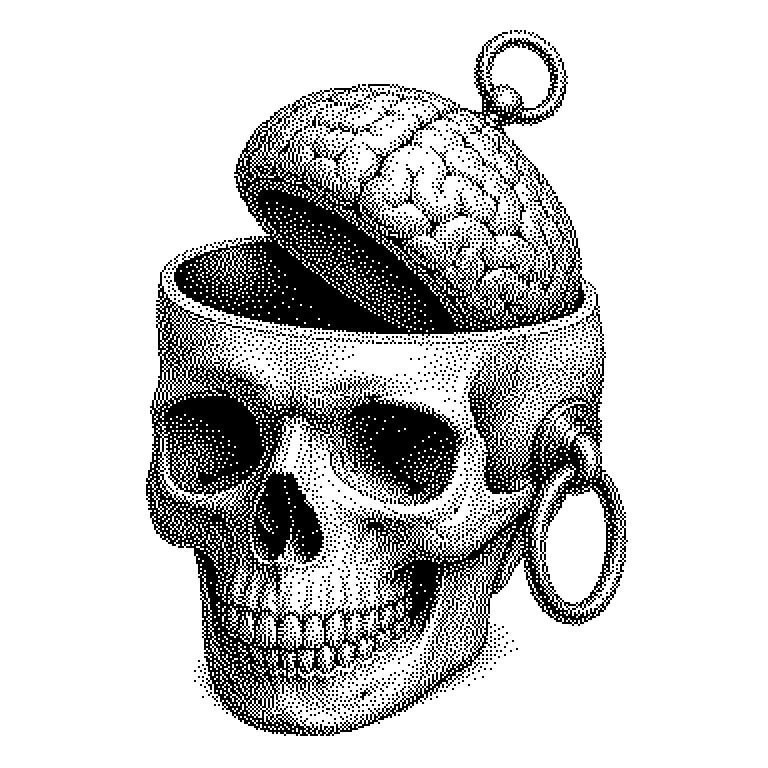
Cognitive Offloading
Cognitive offloading refers to shifting mental work onto aids outside one's own head – such as a notepad, a navigation device, or an AI chatbot. The term originates from psychology and is now used above all in the debate about the influence of AI tools on thinking.
People carry out many thinking tasks not in their heads, but with the help of their surroundings. Anyone who writes down a phone number doesn’t have to remember it. Anyone who uses their fingers while calculating relieves their memory. Anyone who follows a navigation device doesn’t have to plan the route themselves. Psychologists call this very shifting of mental work to the outside world cognitive offloading. The English expression literally means something like “cognitive unloading”, i.e. handing off thinking work to an aid.
Why the debate is boiling over right now
Offloading is ancient and in itself neither good nor bad. Writing, slide rules, and calculators are all forms of it. What’s new is the scale. A chatbot, meaning a program that answers questions in ordinary language, can not only supply facts. It can also sort arguments, structure texts, and suggest decisions. This means that, for the first time, thinking itself can be handed off, not just remembering.
For school and university, this is the central question. Writing a summary is strenuous, but it is precisely this effort that produces understanding. If a program supplies the summary, a finished result emerges without the learning process behind it. Researchers speak here of a difference between performance and learning: the submitted work looks good, yet little has stuck in the mind.
The term is also relevant for companies. If employees permanently hand off analyses to software, the skill within the team can slowly disappear. If the tool fails or produces nonsense, no one notices anymore. Experts call this de-skilling, i.e. the creeping loss of competence.
What happens in the mind in the process
Working memory is the part of thinking that holds and processes information in the short term. It is tightly limited and holds only a few units at once. Cognitive offloading gives it room to breathe. Anyone who jots down a long calculation on paper doesn’t have to juggle intermediate results in their head. The freed-up capacity is then available for the difficult part.
The price for this is a weaker memory trace. In well-known experiments, test subjects remembered information markedly worse when they knew the file would remain saved. Instead, they remembered where the information could be found. This pattern is often called the Google effect. Memory thus doesn’t store less, but something different: references instead of content.
What matters is which part of the task is being offloaded. Handing off routine is usually unproblematic. Hardly anyone misses doing square roots by hand. It becomes critical when the core of the task disappears, namely comparing, weighing, and checking. A common misconception is that offloading is automatically laziness. A surgeon who ticks off a checklist is deliberately offloading and thereby makes fewer mistakes.
From the shopping list to the AI assistant
In everyday life, the principle is encountered by almost everyone hourly. The alarm on the phone replaces remembering an appointment. The calendar app replaces keeping track of the week. The spell checker takes over part of the correcting. The map application takes over orientation, which is why many people remember routes worse when they drove them using navigation.
In the news, the term usually appears in connection with AI assistants in schools and offices. Studies from 2024 and 2025 found indications that intensive use of such tools goes along with less independent checking of results. Such findings show a correlation, but no reliable proof of cause and effect. Providers of learning software are therefore now advertising that their programs ask for intermediate steps instead of spitting out finished solutions.
In practice, a simple rule of thumb helps. One should offload what one could in principle do oneself, but doesn’t need to redo every single time. And one should retain for oneself what one wants to be able to judge. Anyone who adopts an AI answer without being able to check it hasn’t saved work, but has given up control.