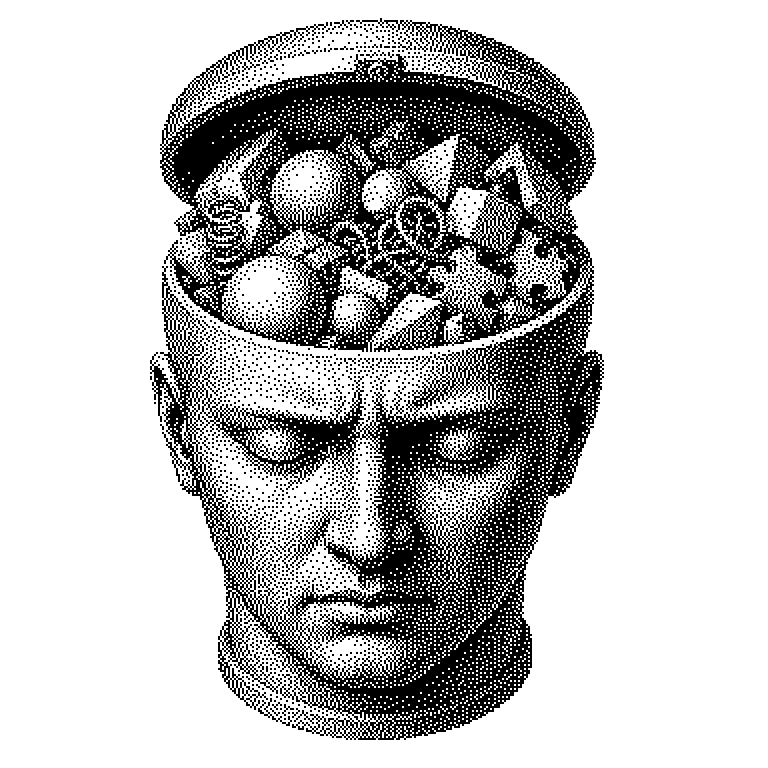
Cognitive Load
Cognitive load refers to the amount of information a person must hold and process in their mind at the same time in a given moment. Because this working memory in the brain is very small, this load determines whether we understand something or give up overwhelmed.
Our brain can only remember very few things at once. Someone who hears a phone number and has to type it in right away can usually manage it. If a question interrupts in the meantime, the number is gone. This is exactly the limit the term cognitive load refers to. It describes how much information someone has to juggle in their mind at any given moment. The psychologist John Sweller made the concept well known in the 1980s while researching instruction.
Why a full head stops learning
The short-term memory in the brain holds only a few elements at once. Classic estimates speak of about four to seven items. Anything beyond that simply falls out. Someone who is overloaded doesn’t understand the material worse because they are stupid. They don’t understand it because there is no room left.
For school and training, this has direct consequences. An explanation with too many new terms at once fails, even if each individual term would be understandable on its own. That’s why good textbooks build up material in small steps. Each step should contain only a little that is new, so that the rest of working memory remains free for making connections.
The term is also firmly established in the tech industry. Anyone designing software constantly fights against unnecessary load. A form with thirty fields and no structure overwhelms, a form with three clear sections does not. The content is the same, the load is not. That is exactly why designers, teachers, and air traffic controller trainers are talking about the same concept.
The three types of load
Research distinguishes three sources of load. The first is inherent in the subject matter itself and is called intrinsic. A system of equations with three unknowns is simply more complex than a simple addition. This load cannot be magicked away, only broken down into portions.
The second source is called extraneous and arises from the way something is presented. A cluttered slide, a graphic without labels, a text full of jargon: all of this costs capacity without anyone learning anything from it. This load is pure waste and can almost always be reduced. A well-known example is the split-attention effect: when an image and its explanatory text are placed far apart, one constantly has to jump back and forth. If the label sits directly within the image, the effort disappears.
The third type is called germane. It arises when someone actively forms connections and anchors knowledge in long-term memory. This load is desirable, because it is precisely what generates understanding. The goal, then, is not to avoid all effort. The goal is to eliminate the useless part so that room remains for the useful part.
From the cockpit to the chatbot
In everyday life, the principle appears everywhere. Navigation devices announce turn instructions aloud instead of only displaying them. This way the information is split between ears and eyes, and both channels remain relieved. Aircraft cockpits and control panels in power plants are built according to the same rules. There, overload can be fatal.
In tech news, the term crops up especially often in relation to user interfaces and developer tools. When a company promises that its tool reduces cognitive load, it usually means: fewer menus, fewer context switches, fewer things one has to keep in mind. It is also a central selling point for AI assistants. A model that summarizes a long error message takes exactly this burden off the human.
A common misconception is that cognitive load is the same as stress or time pressure. That is not true. One can be completely relaxed and still overloaded, for instance while calmly reading a densely written technical text. Conversely, a hectic but familiar activity can cost hardly any capacity. What matters alone is the number of things that must be held in mind at the same time.