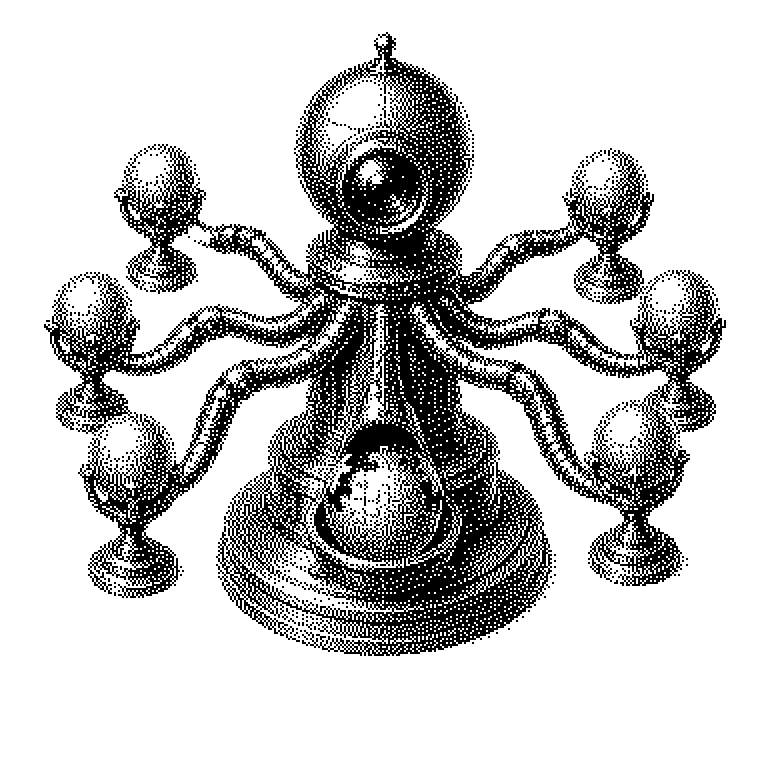
Coordinator Agent
A Coordinator Agent is an AI program that breaks a large task down into subtasks and distributes them to other programs. It does little substantive work itself, instead planning, delegating, and assembling the results at the end.
Modern AI systems often no longer consist of a single program. Instead, several programs work together, each with its own specialized task. For this to avoid turning into chaos, there needs to be an entity that keeps track of the big picture. This is exactly the role taken on by the Coordinator Agent. It receives the user’s request, breaks it down into smaller steps, and passes each step to the appropriate program. In the end, it collects the partial results and forms them into a single answer. You can think of it as a project manager who doesn’t build anything themselves but knows who should do what.
Why a single model reaches its limits
A single AI model can do an astonishing amount, but it easily loses track during long tasks. If a task has twenty steps, it often forgets along the way what the actual goal was at the start. A Coordinator Agent keeps this goal in view while the actual work happens elsewhere. It checks off steps and notices when something is missing.
There’s also a practical cost advantage. Not every subtask needs the biggest and most expensive model. A simple summary can be handled by a small, cheap model, while a tricky legal question calls for a large one. The Coordinator decides who takes on which task, saving computing time and money.
It’s important to distinguish this from the router in a Mixture-of-Experts model, i.e., a model made up of many sub-networks. This router operates deep inside a single model and selects components for each word. A Coordinator Agent operates one level above that: it distributes entire tasks to independent programs.
From request to work plan
The Coordinator Agent itself is usually a language model, meaning an AI that understands and generates text. It receives an instruction describing its role and a list of available helpers. These helpers are called sub-agents or tools. A tool can be a web search, a calculator, or access to a company database.
The process is a loop. First, the Coordinator writes a plan in text form, for example: first search for sources, then check figures, then write the text. It then calls the first helper and waits for its response. It reads this response, compares it with the plan, and decides on the next step. This repeats until the goal is reached.
A common misconception is that fixed program logic runs here. In reality, the Coordinator makes its decisions linguistically, and thus not always in the same way. That’s why limits are built in: a maximum number of steps, a time limit, a cost limit. Without such safeguards, an agent can get lost in endless loops and burn through a lot of money.
Coordinator Agents in real products
Anyone who asks an AI today for in-depth research is often already using such a system. Features like Deep Research in ChatGPT, Gemini, or Perplexity work according to this pattern. A coordinating model launches many parallel searches, has sources summarized, and writes a report from them. The fact that the answer takes several minutes is due precisely to these many intermediate steps.
In companies, this principle is found in customer service. A Coordinator receives the request and, depending on the topic, sends it to a billing agent or a technical support agent. This is also common in programming: one agent plans, a second writes code, a third tests it.
In the news, the term usually appears in the context of agentic AI, meaning AI that independently carries out multiple steps. Providers like OpenAI, Anthropic, Google, and Microsoft sell toolkits for this. When orchestration is mentioned there, it almost always refers to a Coordinator Agent.