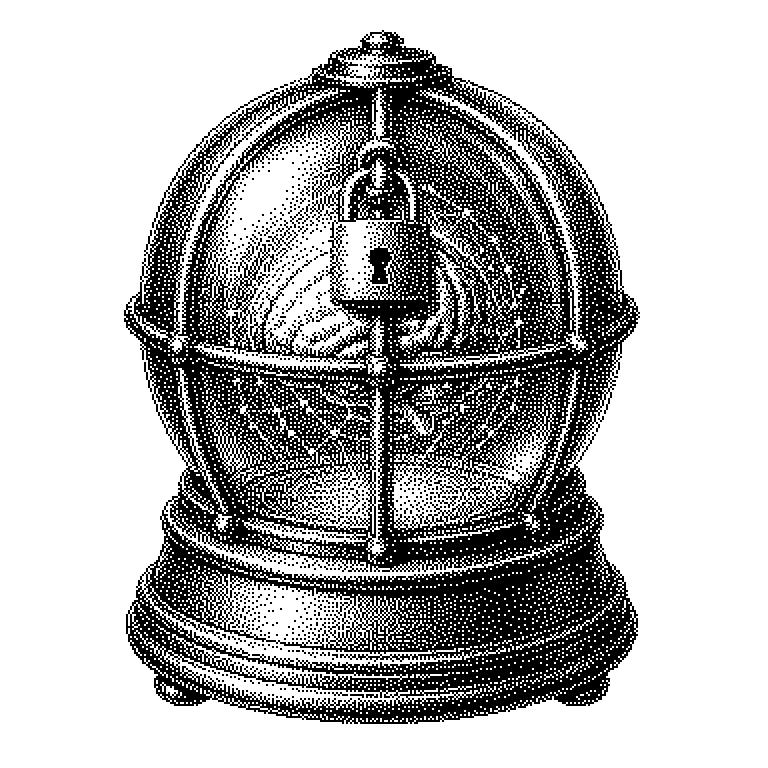
Closed Model
A closed model is an AI system whose inner workings the manufacturing company keeps to itself. Users can only use it via an interface on the internet, but cannot download, copy, or modify it.
A program that writes texts or generates images consists at its core of a huge table of numbers. These numbers are the result of a long learning process and determine what the program can do. With a closed model, the company that built it keeps these numbers secret. You can use the program, but only via the company’s servers: you send your question there and get an answer back. Downloading it, running it on your own computer, or modifying it is not possible. Well-known examples are the models behind ChatGPT from OpenAI, Gemini from Google, and Claude from Anthropic.
Who keeps control over the numbers
Training a model costs an extreme amount. For the largest systems, figures in the range of hundreds of millions of dollars are cited, mainly for computing chips and electricity. Whoever invests that much doesn’t want to give the result away for free. Secrecy is therefore first and foremost a business model: the company sells access, not the product itself.
For users, this has two sides. It’s convenient that you don’t need any technology of your own. A browser is enough to work with one of the most powerful systems in the world. The dependency is unpleasant. If the company changes the price, the rules, or the model itself, you have to accept it. If a model is shut down, all products built on it stop working.
On top of that comes a dispute over verifiability. Researchers cannot take a closed model apart to examine errors or biases in its answers. They only see what goes in and what comes out. The companies argue the opposite: that secrecy makes misuse harder, for example when someone wants to remove a model’s safety rules.
What exactly stays secret
Usually three things are locked away. First, the weights, meaning the learned numbers inside. Second, the training data, meaning which texts and images the model has seen. Third, many technical details of its construction, such as how large the model even is. For some systems, it is still not publicly known to this day how many building blocks they have.
Access runs via an API. That is an interface through which one program can ask another for something without knowing its inner workings. A developer sends text to the provider’s address and receives the model’s answer back. Payment is per amount of text processed. So you are renting computing power, similar to electricity from the grid.
The counterpart is called an open model or open-weight model. There, the manufacturer publishes the weights for download, for example with Meta's Llama models or with Mistral. An important distinction: open does not automatically mean that the training data or the license terms are also free. Between fully closed and fully open lie many intermediate stages.
Closed models in products and headlines
In everyday life, you encounter them without noticing. Anyone using a search engine with an AI summary, a translation feature on their phone, or a writing assistant in an office program is often talking to a closed model on someone else’s server. The entered data leaves your own device in the process.
This is exactly what makes the term important for companies and authorities. A law firm or a hospital may not simply send confidential documents to a foreign provider. Some companies therefore choose an open model in their own data center, even if it is somewhat weaker. Others buy specially protected access, where the provider guarantees not to reuse the data.
In business news, the term is usually at the center of a fundamental question: will a few closed top models prevail, or will the open alternatives catch up? For investors this is decisive, because closed models generate stable revenue per request. With open models, on the other hand, money is made more from consulting, operations, and hardware.