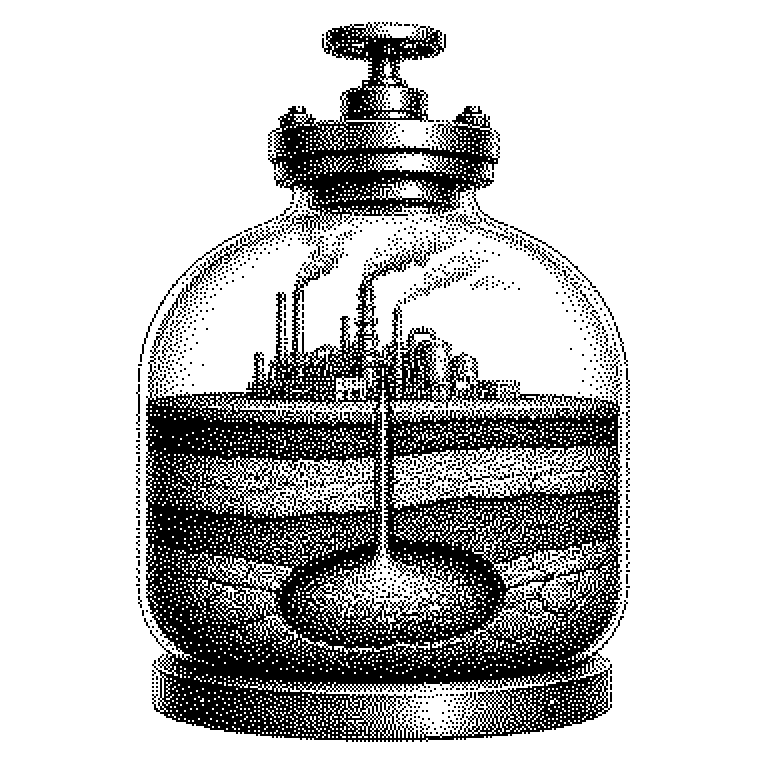
Carbon Capture and Storage
Carbon Capture and Storage (CCS) refers to a process in which carbon dioxide is intercepted directly at its source of origin and then permanently stored underground instead of being released into the atmosphere. It is considered one of the few technologies that could hold back large amounts of CO₂ from the energy sector and industry.
Power plants and factories burn fossil fuels such as coal, oil, or gas. This produces carbon dioxide, or CO₂ for short — a gas that accumulates in the atmosphere and warms the Earth. Carbon Capture and Storage, abbreviated CCS, is a process that intervenes at exactly this point. It captures the CO₂ right at the smokestack, before it enters the air, and pumps it into deep rock layers underground, where it remains trapped. The goal is simple: less CO₂ in the atmosphere, without having to immediately give up burning fossil fuels.
CCS as a bridge in the climate debate
Many industries cannot reduce their CO₂ emissions to zero in the short term. Cement plants or steel mills emit CO₂ not only through their energy consumption but through the chemical process itself — electricity from wind power alone does not solve the problem there. In such cases, CCS offers a way out that renewable energy alone cannot provide.
At the same time, the technology is controversial. Critics warn that it slows down the shift to clean energy because it keeps fossil fuel power plants economically attractive for longer. Proponents counter that without CCS, the climate goals of the Paris Agreement — that is, limiting global warming to 1.5 to 2 degrees Celsius — would hardly be achievable. The International Energy Agency (IEA) therefore counts CCS among the necessary technologies in the climate policy toolkit.
Three steps from combustion to rock
CCS proceeds in three steps. First, capture: the exhaust gas from a factory or power plant is passed through a chemical solvent that absorbs CO₂ like a sponge. The CO₂ is then released again by heating — but now in pure, concentrated form. This step itself consumes energy, which eats up part of the savings again; typically, a power plant’s efficiency drops by about ten percentage points.
Second, transport: the captured CO₂ is brought to high pressure until it behaves almost like a liquid. In this state, it can be transported through pipelines, similar to how natural gas flows through pipelines today.
Third, storage: the CO₂ is pumped into porous rock at depths of one to three kilometers — often into old, depleted natural gas fields or saline aquifers. The rock layer above acts like a lid. Over time, the CO₂ reacts chemically with the rock and literally turns to stone, which further secures the storage.
CCS in practice and in the headlines
Around thirty commercial CCS facilities are currently in operation worldwide, together storing about 50 million tonnes of CO₂ per year. That sounds like a lot, but it is less than 0.2 percent of global annual emissions of about 37 billion tonnes. The technology thus exists, but is still far from operating at the scale needed.
In Norway, the world’s oldest commercial CCS project has been running since 1996: the Sleipner storage site beneath the North Sea. There, CO₂ is separated out during natural gas extraction and stored on the seabed. In Germany, the federal government has been planning a legal framework since 2024 to allow CCS to be used in industry domestically as well — for a long time, it was practically considered forbidden.
In the world of finance and tech, CCS is increasingly appearing in connection with AI data centers. Major technology companies have publicly committed to net-zero emissions and purchase so-called CO₂ certificates from CCS projects to offset their emissions. Whether this is credible or merely greenwashing — that is, a green veneer without real effect — is one of the most hotly debated questions in the current climate debate.