Co-Intelligence
Co-Intelligence describes the collaboration between humans and AI programs as a team in which both sides contribute different strengths. The term was coined by business professor Ethan Mollick and now serves as a guiding concept for how people should meaningfully use AI at work.
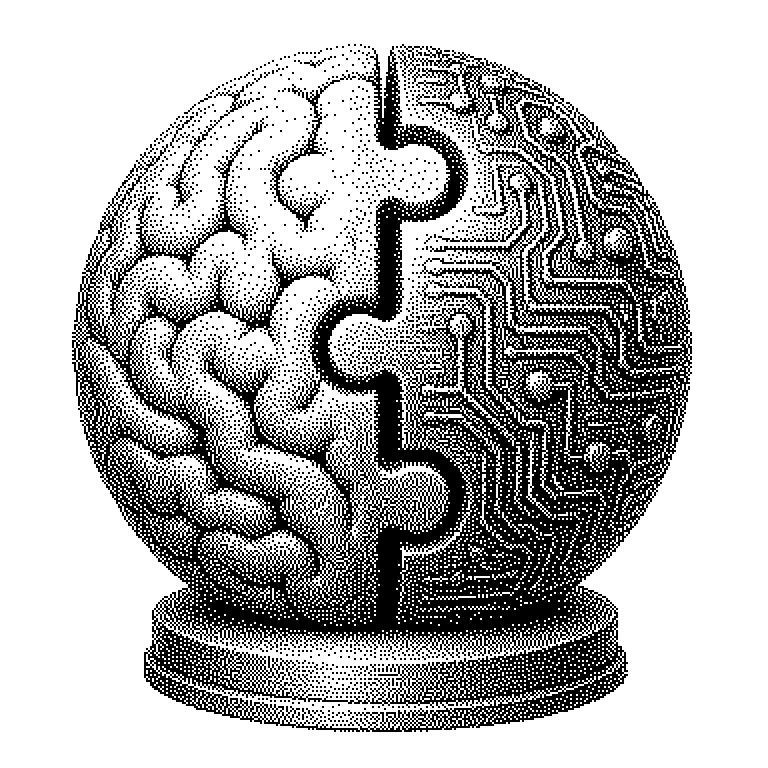
Co-Intelligence means that a human and a computer program work together on a task. This refers to programs that can write texts, answer questions, or generate images. The human sets the direction, checks the result, and takes responsibility. The program delivers drafts, ideas, and raw material in a very short time. The term comes from a 2024 book by the American business professor Ethan Mollick. He is not describing a technical component but an attitude toward the technology.
Why a tool becomes a counterpart
Classic software does exactly what it is told to do. A calculator computes, a spreadsheet sorts, and both always deliver the same result given the same input. Modern AI systems behave differently. They suggest things one hadn’t thought of oneself, and they answer differently on two consecutive occasions. That’s why the image of the tool now fits only partially.
Co-Intelligence offers a different image: that of the intern. An intern works quickly, is widely read, and is willing to tackle any topic. However, they have little experience, don’t know the company, and sometimes make mistakes with full conviction. According to Mollick, this is exactly how one should treat an AI system. You use its speed but check every result before it goes out.
This attitude has economic significance. Studies show that employees supported by AI complete tasks significantly faster. In a much-cited experiment by the Boston Consulting Group, consultants with AI assistance solved about twelve percent more tasks and needed roughly a quarter less time to do so. However, the benefit was unevenly distributed. Those who knew the system’s limits benefited greatly, while those who trusted it blindly made more mistakes.
Four rules for collaboration
Mollick sums up Co-Intelligence in four principles. First: Always invite the AI to the table. You should test it on every task, because otherwise you won’t discover where it helps. Second: Stay human in the process. Someone is needed to check the result and stand behind it.
Third: Tell the system what role it should play. The instruction “Answer as a critical physics teacher” leads to different results than a general question. Fourth: Assume that you are currently using the worst AI of your life. The systems improve quickly, so it’s worth regularly reviewing your assessments.
In practice, this usually means working in rounds. The human describes the task, the system delivers a first draft. The human cuts, adds, and asks follow-up questions, the system revises. The distinction from automation is important here: with automation, a task runs through without a human. With Co-Intelligence, the human remains involved at every step.
From school essays to corporate strategy
In everyday life, you encounter this principle wherever a chatbot is built in as an assistant. Programmers have code suggested to them and then correct it. Journalists use AI for research summaries but check the facts themselves. In school, an AI-generated text becomes a subject for discussion instead of simply being handed in.
In business news, Co-Intelligence comes up when companies explain how they intend to introduce AI. The term then signals: We are not replacing jobs, we are equipping employees. Whether that is true is an open question and is discussed controversially. Critics consider the term euphemistic because it verbally conceals staff cuts.
A common misconception is that Co-Intelligence means the system is an equal partner. That is not what is meant. The AI has no goal of its own and no understanding of consequences. Decision-making authority rests entirely with the human, and that is precisely what the term is meant to remind us of.