Community Notes
Community Notes are short additional annotations that users themselves write beneath misleading posts on social networks. A note only becomes publicly visible if people with otherwise opposing views jointly find it helpful.
Community Notes are a method that allows users of a social network to add notes to other people’s posts. Anyone who considers a post misleading writes a short note about it, usually with a link as evidence. This note is not displayed immediately. First, other users rate whether they find the note helpful. Only once enough people from very different camps agree does the note appear for everyone beneath the post. The method originated at Twitter, where it was tested from 2021 onward under the name Birdwatch.
The dispute over controlling misinformation
Social networks have been under pressure for years because false claims spread there very quickly. The classic response to this was professional fact-checking: editorial teams or commissioned organizations verify claims and flag them. This model has two well-known weaknesses. It is expensive, and it scales poorly because millions of posts are created every day.
On top of that comes a political problem. Many users distrust a central authority that decides what is true. Community Notes shift this decision to the users themselves. This is seen as an attempt to regain trust without having to delete posts. The post remains up; it just receives an addition.
Economically, the method is very attractive for platforms because unpaid volunteers do the work. In early 2025, Meta announced it would replace its paid fact-checkers in the US with a similar system. This shows how strongly the approach has changed the industry. Critics, however, see it primarily as a cost-cutting measure.
Why agreement from both camps is necessary
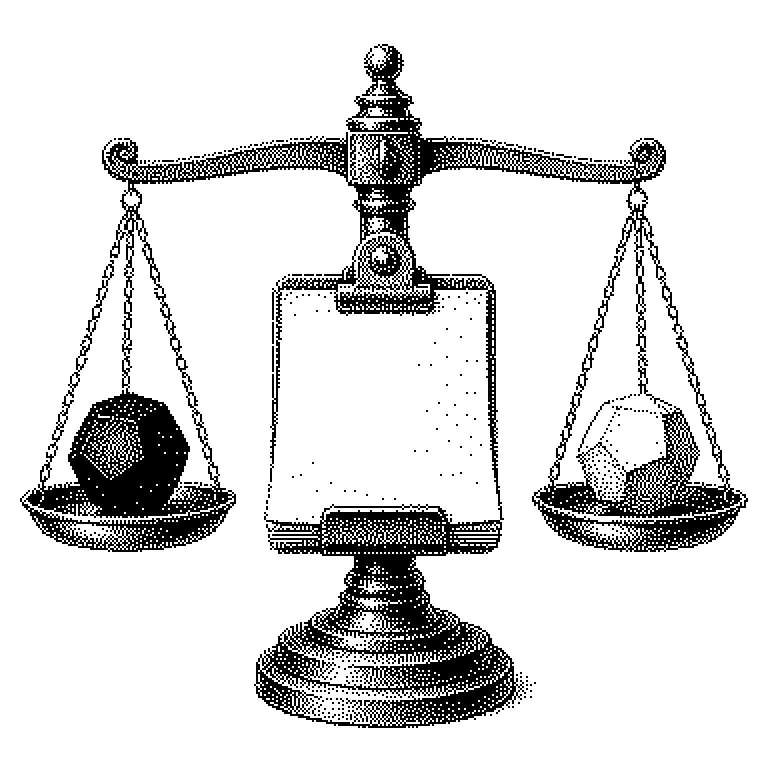
The core of the method is the question of which note gets published. Simple voting would not work. On a politically charged topic, the numerically larger group would always win. The result would not be a fact-check, but a majority opinion.
That is why an algorithm first calculates how individual users have rated things in the past. Users who judge notes similarly end up close together mathematically. This creates a map of rating patterns, entirely without any information on political stance. A note is only considered helpful once people from far-apart regions of this map agree on it. Experts call this a bridging criterion, because the agreement must build a bridge between camps.
This also explains the system’s biggest weakness. Such agreement takes time, often hours to days. But a piece of false information usually reaches its largest audience within the first few hours. Many proposed notes also never appear because they fail to meet the criterion. On highly controversial topics, the display therefore often remains empty.
How to recognize a note in the feed
Community Notes are most commonly encountered on X, formerly Twitter. There, beneath a post, a gray-shaded box appears stating that readers have added context. Typical cases include old photos passed off as current, or figures without a source. Advertisements for dubious financial offers are also often flagged this way.
Not everyone can contribute right away. You must have held an account for a while and initially only rate other people’s notes. Anyone who judges reliably in this process earns points and may later write notes themselves. Poorly rated contributions lower one’s own influence again.
A common misconception is that Community Notes is an AI tool. The notes come from humans; only the evaluation of the ratings is handled by a program. Since 2025, however, X has been testing whether language models may propose drafts for notes. The final decision on publication still rests with the users' ratings.