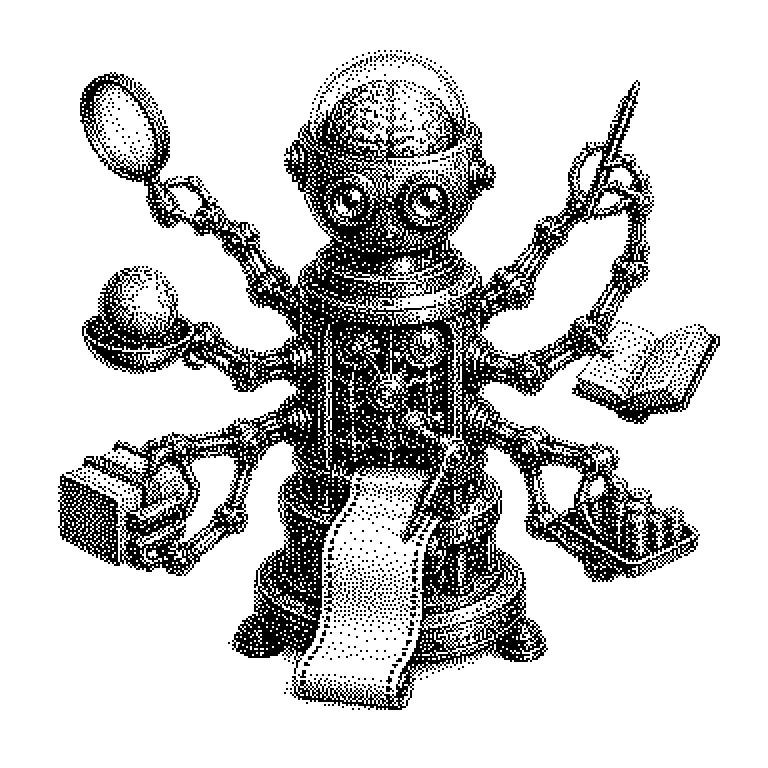
Agent
An agent is an AI system that doesn't just respond, but breaks a task down into steps on its own and uses tools such as search engines, programs, or databases in the process. So it keeps working until a goal is reached, instead of stopping after a single answer.
Most AI programs people know work like a conversation: you ask a question, the program delivers text, and then it’s done. An agent goes a step further. It receives a goal instead of a single question and works on it over multiple rounds. In doing so, it may decide for itself what to do next. It can also use other programs, for example calling up a search engine, opening a file, or running a calculation. The request “Find the cheapest train to Hamburg on Saturday and book it” is typical of an agent, not of a simple chatbot.
From answer-giver to task-taker
The difference sounds technical, but it’s economically significant. A text program delivers suggestions that a human then implements. An agent takes on the implementation itself. This shifts the value from “saves me writing work” to “completes a work step.” That’s exactly why software companies have talked about almost nothing but agents since 2024.
For companies, this also changes the business model. Classic software is sold per user and month. An agent that processes tasks can be billed per completed transaction. Providers promise that an agent takes over processes that people are paid for today, for instance in customer service or accounting.
With autonomy comes responsibility. A wrong sentence in a chat is annoying. A wrong bank transfer or a deleted file is damage. That’s why real agents are usually given tight limits: they may only use certain tools, only act up to a certain amount, or must ask a human at sensitive steps. This principle is called human in the loop, meaning a human as an intermediate checkpoint.
The loop of thinking, acting, and observing
At the core of an agent is a language model, i.e. a program that has learned to continue meaningful text. Around this, a loop is built. The model first notes what the next step should be. Then this step is actually carried out, for example a web search. The result is presented to the model as new text, and the round begins again.
For this to work, the agent needs three things. First, tools: clearly described functions that it is allowed to call, for example “search the web” or “send email.” Second, a memory in which intermediate results and previous steps are stored. Third, a stopping condition, otherwise the loop keeps spinning endlessly and burns computing time.
A common misconception is that an agent is a particularly intelligent kind of model. That’s wrong. It’s the same model as in chat, just packaged differently. And because every step is a new request to the model, an agent run can easily cost ten to a hundred times as much as a single chat answer. Errors also add up: if you’re wrong five percent of the time per step across ten steps, you end up wrong noticeably more often overall.
Agents in the browser, in the code editor, and on the hotline
Agents are furthest along in programming. Tools like GitHub Copilot, Claude Code, or Cursor read an entire project, change several files, run tests, and fix things when the tests fail. This works especially well there because the computer itself can check whether the result is correct. This automatic feedback is missing in many other areas.
There are also agents that operate a browser: they click, type, and fill out forms, for instance to compare prices or book appointments. In customer service, agents independently check order numbers, arrange returns, and write the accompanying reply. In offices, they take over routine work such as sorting invoices.
In news and advertising, however, the word is stretched very far. Much of what’s sold as an agent is a chatbot with a search function attached. A useful test question is: does the system act on its own over multiple steps, or does it merely deliver text? Only in the first case is the term justified.