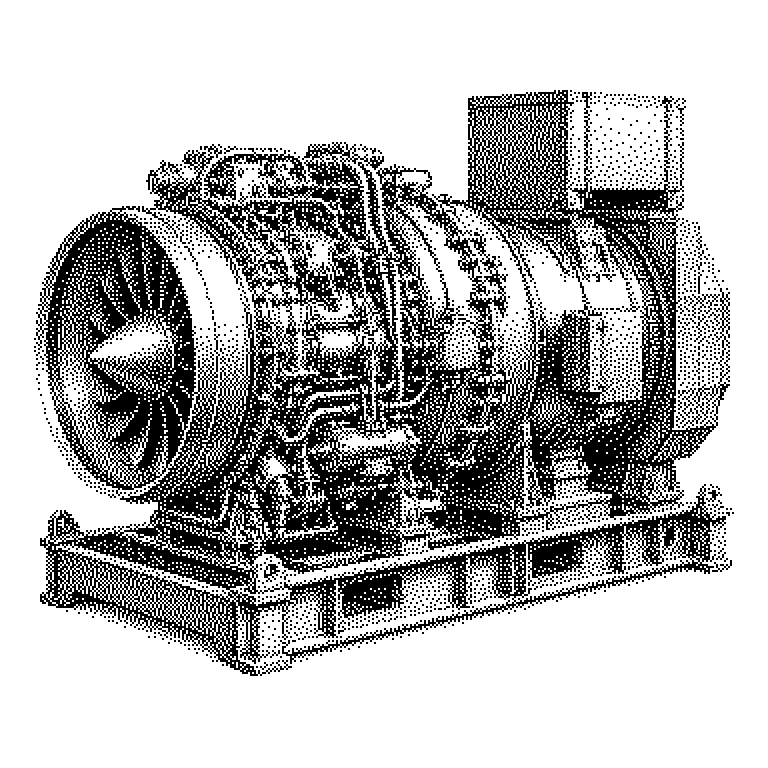
Aeroderivative Gas Turbine
An aeroderivative gas turbine is a power generator whose technology is derived from aircraft engines. It is smaller and lighter than classic power plant turbines and delivers full output within just a few minutes.
A gas turbine is a machine that burns gas or oil and generates motion from the hot flow. This motion drives a generator, which turns it into electricity. In an aeroderivative gas turbine, the heart of this machine comes from aircraft manufacturing. Manufacturers take a proven engine, the kind that hangs beneath the wings of large jets, and convert it for ground-based operation. The name says exactly that: “aeroderivative” means roughly “derived from aircraft.” Instead of pushing an airplane forward, the machine now turns a generator.
The power plant type for peak loads and data centers
The great advantage of these machines is speed. An aircraft engine must reach full power within seconds during takeoff. It retains this trait on the ground as well. An aeroderivative gas turbine often delivers its full output after five to ten minutes. A classic large power plant needs hours to do the same.
This fits well with a power grid that relies heavily on wind and solar. When the wind drops, capacity suddenly goes missing from the grid. That’s exactly when these turbines step in and bridge the gap. Experts call this role peak load: electricity that’s only needed during certain hours, but needed instantly.
For a few years now, there has been a second driver, and it comes from the AI industry. Large data centers for AI models require enormous amounts of electricity, often several hundred megawatts at a single site. Grid connections for this can take years in many regions. Operators therefore install their own gas turbines next to the building so they can get started sooner. Aeroderivatives are popular for this because they can be delivered and installed quickly.
From aircraft engine to generator
At its core, the machine works in three steps. A compressor draws in air and compresses it heavily. In the combustion chamber, fuel is added and ignited, usually natural gas. The hot exhaust gases flow through turbine blades and set them spinning. Part of this rotation drives the compressor, the rest goes to the generator.
The difference from an aircraft lies at the end of the chain. A jet engine expels the exhaust gases backward at high speed, generating thrust. On the ground, thrust is useless. That’s why an additional turbine stage is added, designed to convert as much energy as possible from the exhaust into rotational motion. This stage sits on its own shaft and is connected to the generator.
The counterpart is called a heavy industrial gas turbine, also known as a heavy-duty turbine. It is designed from the ground up for stationary use, weighs many times more, and is built to run continuously for months on end. A common misconception is that the aeroderivative is simply the better option. It is faster and lighter, but usually more expensive per kilowatt-hour generated, because it is smaller and requires more frequent maintenance.
Where these turbines are used today
Typical deployment sites include reserve power plants in the grid, oil platforms, and ships. Industrial facilities with their own power supply also use them. Because they’re compact, they can be transported in containers and set up almost anywhere. There are even mobile units mounted on trailers for emergencies after storms or earthquakes.
In business news, the term currently appears mainly in connection with AI. Manufacturers such as GE Vernova, Siemens Energy, and Mitsubishi Power report order books filled for years ahead. Waiting times of several years for new turbines are not uncommon. Anyone planning a data center today has to order the power supply earlier than the graphics cards.
The climate question remains contentious. These turbines burn fossil gas and emit CO2 in the process. Proponents argue that they complement wind and solar and only run for a few hours per year. Critics counter that data centers need electricity around the clock, meaning the turbines end up running continuously. So if you come across the term in the news, it’s worth taking a closer look at the planned operating hours.