Apoptosis
Apoptosis is the orderly self-degradation of a cell according to a fixed internal program. The body uses it to remove old, superfluous, or damaged cells without harming the surrounding tissue.
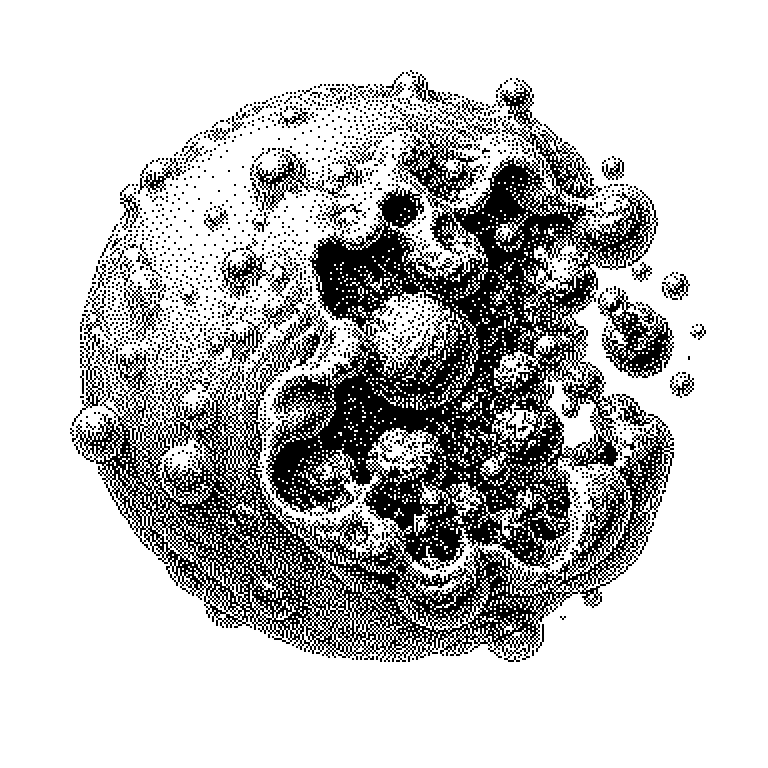
Every human being consists of many billions of tiny building blocks, the cells. Cells do not only die through accidents such as injuries or poison. Very many of them break themselves down because an internal program provides for it. This orderly self-degradation is called apoptosis. In the process, the cell shrinks, breaks up its genetic material, and disintegrates into small packages. These packages are taken up and utilized by neighboring cells and scavenger cells. Nothing leaks out, and no inflammation occurs. The technical term for this is programmed cell death.
Why a body eliminates its own cells
A body does not grow only through building up, but also through targeted breakdown. In the human embryo, the fingers are initially connected by tissue. This intervening tissue disappears through apoptosis, and only then do individual fingers form. The tadpole, too, loses its tail through exactly this route. Shaping within the body is therefore often a matter of removing, not adding.
In the adult body, apoptosis maintains a balance. Estimates suggest that around 50 to 70 billion cells die this way in a human being every day. Roughly the same number arise anew. If this breakdown did not occur, tissue would grow uncontrollably. The immune system uses the same mechanism: immune cells that would attack the body itself are forced into self-degradation early on.
Apoptosis is especially important in the case of damaged genetic material. If a cell has damage it cannot repair, it is supposed to shut itself down. If this emergency brake stops working, the damaged cell continues to divide. This is precisely a key step in the development of cancer. Conversely, too much apoptosis can also cause harm: in diseases such as Alzheimer’s or Parkinson’s, nerve cells die that would actually still be needed.
The self-destruction program inside the cell
You can picture apoptosis like the controlled demolition of a building. A house is not smashed apart with a wrecking ball, but collapses in an orderly fashion. The rubble stays on the property, and the neighboring houses remain intact. Afterward, trucks come and carry the material off for recycling. A cell undergoing apoptosis behaves in exactly this way.
Technically, certain proteins do the work, so-called caspases. These are scissors that cut other proteins in a targeted way. They are already present, fully formed, in every cell, but in an inactive form. Only a start signal switches them on. Then they work in a chain: the first scissors activate the next, and the reaction proceeds on its own from there.
There are two routes for the start signal. In the extrinsic pathway, a messenger substance docks onto the cell from outside, often sent by an immune cell. In the intrinsic pathway, the cell’s powerhouse, the mitochondrion, signals that something is severely damaged. What matters is the distinction from necrosis: in necrosis, a cell bursts after an injury, its contents leak out, and inflammation results. Apoptosis, by contrast, is quiet, planned, and energy-intensive.
Apoptosis in medicine, school, and the news
In biology class, apoptosis usually comes up in connection with the cell cycle, development, and cancer. A frequently cited example is the protein p53. It checks the genetic material and, in the event of excessive damage, triggers cell death. In very many tumors, it is precisely this protein that is defective.
In medicine, apoptosis is a treatment target. Chemotherapy and radiation work because they damage cancer cells so severely that their self-destruction program starts. Newer drugs intervene even more directly, releasing the brake that keeps tumor cells from dying. Skin redness after a sunburn is also related to this: cells with UV-damaged genetic material shut themselves down and later peel off.
In the news, the term often appears in research reports on cancer, autoimmune diseases, or aging. A common misconception is that apoptosis is something bad. It is a normal process essential to survival. It only becomes dangerous when it is triggered too rarely or too often.