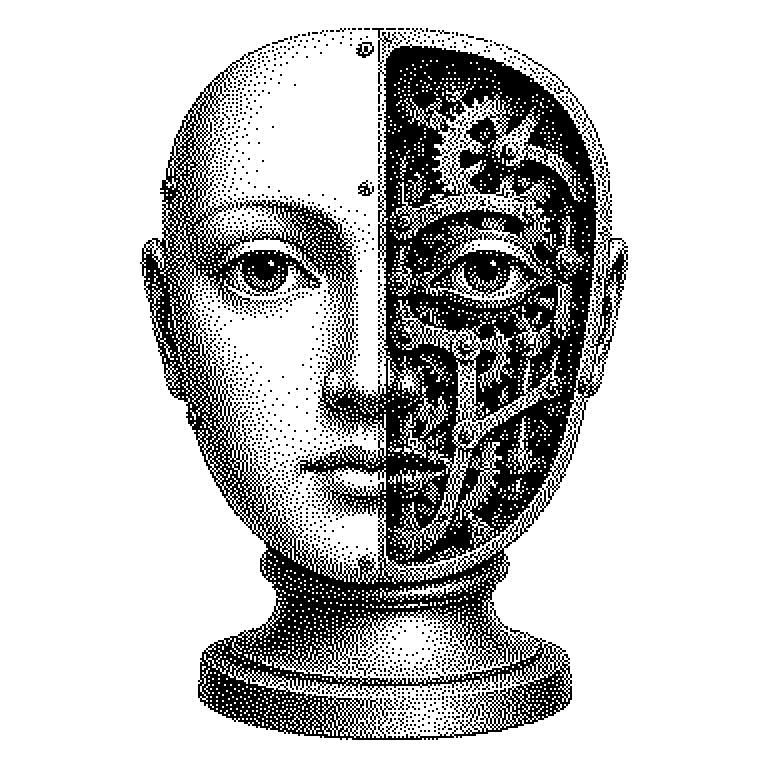
Anthropomorphic AI
Anthropomorphic AI refers to computer programs that are deliberately designed to appear human – through language, voice, name, or appearance. The term also describes people's tendency to attribute feelings and intentions to such programs that they do not actually have.
Anthropomorphic literally means “human-shaped”. Anthropomorphic AI thus refers to computer programs that are deliberately designed to make people perceive them as a counterpart. This includes a first name, a friendly voice, phrases like “I believe”, or a face on the screen. However, the term has two sides. On one hand, it describes the design created by developers; on the other, it describes our own tendency to see a being in such systems. This tendency is old: people have long given names and character traits to cars, ships, and pets.
Why a chatbot says “I”
Human traits make technology easier to use. Anyone who can talk to a program as if talking to a person doesn’t need to read a manual. This lowers the barrier to use enormously and is one of the reasons why chat programs found millions of users so quickly. From the manufacturers' point of view, humanization is therefore no accident, but a design decision.
But this is exactly where a risk lies. When a program says “I’m sorry about that”, it sounds like empathy. In fact, it is merely calculating which sequence of words is likely to fit the situation. Anyone who doesn’t see the difference easily overestimates how reliable the information is. Studies show that people trust a system’s statements more when they are phrased in a friendly and personal way.
This becomes particularly delicate with sensitive topics. Some users describe personal problems or health complaints to AI assistants. A system that sounds sympathetic can create trust that does not match its actual reliability. This effect is often more pronounced in children and older people.
What creates the human impression
The impression arises on several levels at once. The first is language: the system uses “I” and “you”, asks follow-up questions, and phrases things politely. The second is the voice, when it sounds natural, pauses, and varies its intonation. The third is appearance, meaning an avatar, a face, or a robot body. Each level reinforces the effect on its own.
Technically, there is no sense of self behind it. A language model is a program that has learned from vast amounts of text which word is likely to come next. Because these texts originate from humans, the result sounds human. In addition, the behavior is fine-tuned afterward: humans rate responses, and the model learns which tone is preferred. A polite, empathetic tone usually scores better in this process.
A common misconception is that systems that seem more human are also smarter. This is not true. Tone and capability are two independent things. A model can phrase things warmly and still make up facts. Conversely, a plainly worded specialist program can work very precisely. The technical term for confusing fluent language with genuine understanding is the Eliza effect, named after a chat program from the 1960s.
From Alexa to the care robot
In everyday life, the term appears wherever technology bears a name. Voice assistants like Alexa or Siri are classic examples. Customer service chatbots also often introduce themselves with a first name. In Japan, and increasingly in Europe, robots with faces are being tested in care homes because older people find it easier to interact with them.
In the news, the topic mostly comes up in connection with regulation. The EU’s AI Act requires that people be able to recognize when they are talking to a machine. Companion apps, in which users maintain a virtual friendship or relationship, are also facing criticism. The accusation is that they deliberately exploit emotional attachment for the sake of subscriptions.
For investors and companies, this is more than a matter of style. A likeable assistant retains customers longer, which increases economic value. At the same time, liability risk grows when users trust the advice too much. As a result, many providers now include disclosures stating that it is an AI.