Augmented Reality Glasses
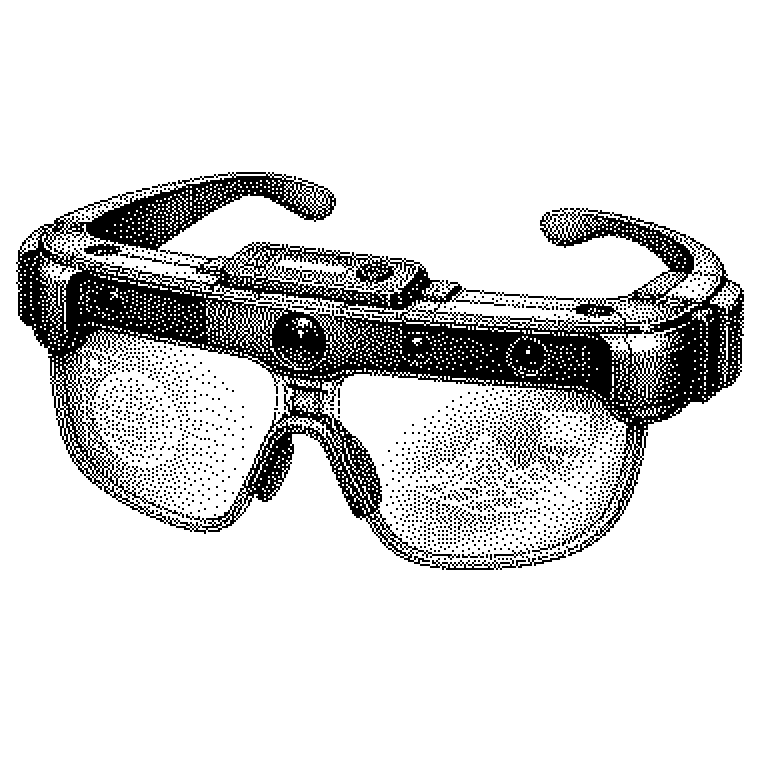
Augmented reality glasses are eyewear that overlay additional images and text into the field of view while the real environment remains visible. They combine transparent lenses, cameras, and sensors with a small computer that understands where the wearer is currently located.
At first glance, a pair of augmented reality glasses looks like a somewhat thick pair of sunglasses or sports glasses. Their difference: they can display images, numbers, or arrows directly into the wearer’s field of view. The real environment remains visible, with the overlays simply placed on top of it. This is exactly what the English term “augmented reality” means, roughly “erweiterte Wirklichkeit” in German. This distinguishes them from virtual reality glasses, which completely darken the field of view and show a purely artificial world. AR glasses, then, don’t aim to replace reality but to supplement it.
The computer you wear on your nose
Until now, you look at a screen when you need information. You pull your phone out of your pocket, unlock it, search for the app. AR glasses reverse this: the information comes to the user, right where they’re already looking. Major technology companies consider this the next big device category after the smartphone. Accordingly, a great deal of money is flowing into development.
The glasses become especially interesting in interplay with artificial intelligence. A voice assistant in the device can answer questions about what the cameras are currently seeing. You look at a menu in a foreign language and get the translation displayed. You stand in front of a broken device and see the matching repair instructions. Without this image recognition, AR glasses would just be a tiny monitor in front of the eye.
At the same time, the glasses are controversial. They carry cameras and microphones into situations where other people don’t expect them. Earlier attempts like Google Glass failed starting in 2013 partly for this reason: wearers were perceived as a threat to privacy. Today’s models therefore show a light indicator when the camera is running.
From the camera to the image in the eye
AR glasses must first understand where they are located. For this, several cameras capture the surroundings, often supplemented by sensors that measure distances. Motion sensors register every turn of the head. From this data, the software builds a rough three-dimensional model of the space. Only this way can a displayed arrow seemingly stay put on the floor when you turn your head.
The image itself is generated by a tiny projector in the temple of the glasses. Its light is guided into the lens, which simultaneously serves as a kind of light guide. At the right point, the light exits again and reaches the eye. So you see the image seemingly floating freely in space, even though it comes from the edge of the lens. This technology is called waveguide optics and is the most expensive part of the glasses.
The biggest technical bottleneck is power. Cameras, sensors, and image recognition require a lot of energy, but a glasses temple offers barely any room for a battery. Many manufacturers therefore offload the heavy computing work: the glasses transmit the data to a smartphone or to a data center on the internet. This saves weight but costs a fraction of a second in delay.
Workshop, operating room, and living room
So far, AR glasses are most widespread not among private individuals but in businesses. Factory technicians see the next work steps displayed directly on the component. Warehouse workers are shown the way to the correct shelf. In medicine, surgeons overlay images from a CT scanner onto the surgical field. The advantage is always the same: the hands remain free.
In everyday life, one currently mostly encounters simpler variants. Glasses like Meta's Ray-Ban models have a camera, speakers, and a voice assistant, but sometimes no display at all. Strictly speaking, they are therefore not yet fully-fledged AR glasses. Apple sells a device with the Vision Pro that transmits the environment via camera inward onto screens, rather than letting you look through the lens. Experts call this passthrough.
In business news, the term mostly appears in connection with billion-dollar investments and sales figures. The decisive open question is when true AR glasses will become light, affordable, and attractive enough for people to wear them all day. Until then, they are considered a promising technology with an uncertain market.