Agent Orchestration
Agent orchestration describes how multiple AI agents — that is, programs that independently carry out tasks — are coordinated so that they work together to achieve a goal. An overarching system distributes the subtasks, monitors progress, and combines the results.
Some tasks are too large or too varied for a single program to handle alone. That’s why they are split across multiple AI agents — that is, programs that independently plan and execute steps without requiring a human to confirm each one. Agent orchestration is the system that coordinates these agents. It decides who does what, in what order, and what happens if a step fails. Without orchestration, the agents would work past one another or duplicate the same subtask.
Why one agent alone isn’t enough
A single AI agent can research, write, or execute code — but rarely all of these well at the same time. Complex tasks demand different capabilities. A request like “create a market report” needs someone to gather data, someone to analyze it, and someone to turn it into text. Three specialized agents handle this faster and more reliably than one agent trying to do everything at once.
Parallel workflows are also a decisive advantage. Where a human works through one task after another, multiple agents can run simultaneously. Orchestration makes exactly this possible: it recognizes which steps depend on each other and which can start independently at the same time. This saves time — especially in long, multi-stage processes.
The conductor and the musicians
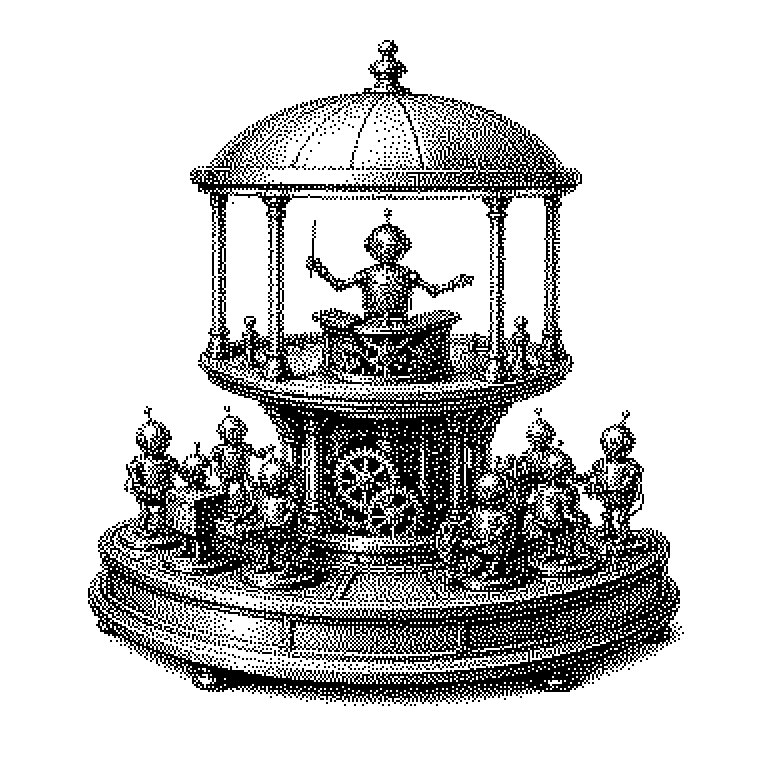
The principle can be compared to an orchestra. The individual agents are the musicians — each one masters their instrument. The orchestrator is the conductor: it sets the tempo, signals who comes in when, and corrects anyone who falls out of time. In technical terms, the orchestrator is often itself an AI model or a rule-based system that keeps track of the overall process.
In practice, there are two common patterns. In the centralized approach, there is exactly one orchestrator that controls all other agents and collects their results. In the decentralized approach, agents can assign subtasks to each other — meaning one agent communicates directly with another, without every communication passing through a central point. The latter is more flexible but harder to monitor.
Error handling is also important. If an agent cannot complete a task — because a website is unreachable or a tool reports an error — the orchestrator must decide: retry, deploy a different agent, or abort the overall task. This very robustness is one of the hardest parts of building such systems.
Where agent orchestration shows up today
In businesses, agent orchestration is increasingly used to automate routine workflows. One example: a system receives a customer inquiry by email, one agent reads and categorizes it, a second searches the database for the customer account, a third drafts a response. The orchestrator links these steps into a seamless process. The human only sees the result.
Well-known frameworks — ready-made toolkits for developers — are called LangGraph, AutoGen, or CrewAI. They provide the infrastructure for orchestration so developers don’t have to build everything from scratch. OpenAI, Google, and Anthropic have also integrated orchestration logic directly into their platforms.
In the financial industry, the term appears in reports on automated analysis and reporting processes. Investment firms are testing systems in which agents independently evaluate news, perform risk calculations, and create summaries — all coordinated by an orchestrator that keeps an eye on the overall process.