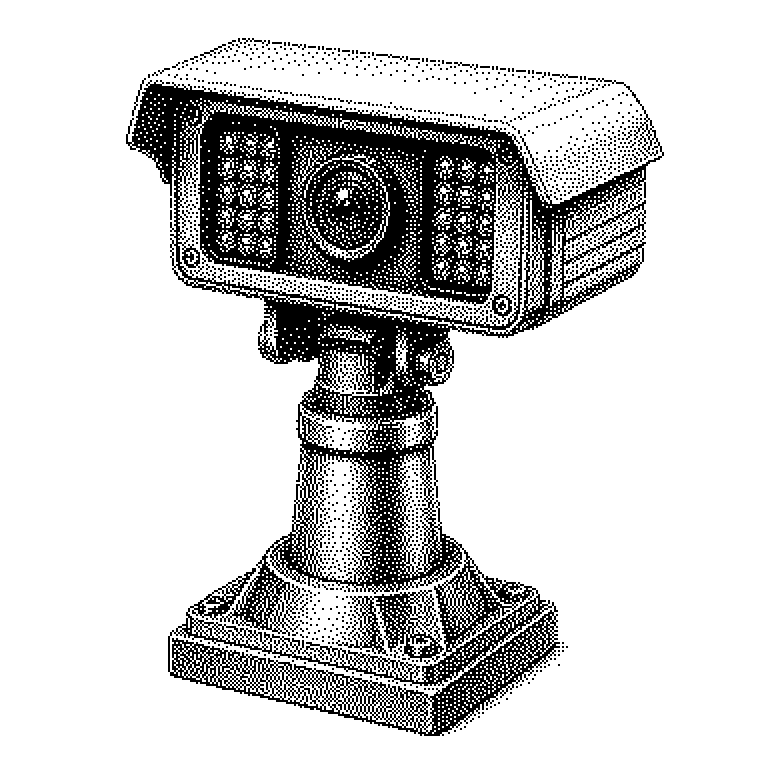
Automated License Plate Reader
An Automated License Plate Reader is a camera with connected software that photographs car license plates and automatically converts the character string into text. Combined with location and time, this creates a database of which vehicle traveled where and when.
An Automated License Plate Reader is a camera that photographs car license plates and automatically converts the letters and numbers on them into text. The German term for this is automatische Kennzeichenerfassung, and the English abbreviation is ALPR. Such cameras are mounted on bridges, traffic lights, toll stations, parking garage entrances, or on the roof of police vehicles. They capture every passing car, not just suspicious ones. For each license plate read, the system also stores the camera’s location and the exact time. Many such entries combine to form a searchable list of who drove where and when.
From single photo to movement profile
A single image is harmless. It only shows that a particular car passed through a particular intersection on a Tuesday evening. The technology only becomes interesting through sheer volume. A network of hundreds of cameras captures the same vehicle again and again, and a route can be reconstructed from these data points.
This creates a movement profile, meaning an overview of a person’s typical routes. This reveals more than many people realize. Regular visits to a doctor’s office, a mosque, or a labor union then end up indirectly in the database. This is precisely why privacy advocates and authorities have been arguing about these systems for years.
A second point of contention is retention period. Some systems delete a license plate immediately if it doesn’t match any wanted case. Others keep all data for months or years. In Germany, the Federal Constitutional Court has repeatedly restricted indiscriminate blanket retention. In the United States, by contrast, private companies operate huge license plate databases and sell access to them.
How the camera turns a metal plate into text
The process consists of several steps. First, the system must even locate the license plate within the camera image. Software searches for the typical bright rectangle with dark characters. Only this small image section is processed further, not the entire photo.
In the second step, the individual characters are recognized. This task is called text recognition or OCR and works similarly to scanning a letter. Today this is usually handled by a neural network, meaning a program that has learned the mapping from millions of example images. It delivers not just a result but also a confidence score, such as 97 percent.
For this to work at 130 km/h and in darkness, the cameras use infrared light and very short exposure times. License plates are reflective, so they light up brightly in the infrared image. Errors still occur: dirt, snow, or a bent plate lead to mix-ups. Similar-looking characters like 0 and O or 8 and B are especially prone to confusion. Exactly such reading errors have already led to the arrest of innocent drivers.
Toll bridges, parking garages, and police reports
The most harmless encounter is the parking garage. Upon entry, a camera reads the license plate; upon exit, the system matches it against the payment. A ticket is then no longer needed. Gas stations with automatic billing and many company barriers use the same technology.
On a large scale, the technology runs in toll systems. The gantries above German highways capture truck license plates to bill the toll. In London, a network of cameras determines who must pay the congestion charge. Low-emission zones in several European cities are also monitored this way.
In the news, the term usually appears in connection with police work or surveillance criticism. Police use license plate scanners to find stolen cars or wanted vehicles. Companies like Flock Safety or Motorola sell entire camera networks to US communities, which regularly triggers lawsuits. It’s important to distinguish this from facial recognition: an ALPR recognizes the vehicle, not the person behind the wheel. Only a cross-check with the vehicle registry reveals who owns a car.