Neural Network
A neural network is a computational method that learns from examples instead of following fixed rules. It consists of many simple computing units arranged in layers, whose connection strengths are adjusted during learning until the results are correct.
A normal computer program follows rules that a human has written down in advance. For many tasks, though, such rules simply cannot be formulated. No one can write down exactly what makes you recognize a cat in a photo. A neural network solves this differently: it is given thousands of examples along with the correct answer and adjusts itself until it produces those answers. It is built from a huge number of tiny computing units arranged in successive layers, passing numbers along to one another. The name comes from the nerve cells in the brain, which loosely served as inspiration – but the resemblance is more of an inspiration than a genuine imitation.
Why rules aren’t enough
Neural networks are the foundation of almost all of today’s AI systems. Language models like ChatGPT are neural networks. The facial recognition on your phone is one. Speech recognition, which turns your sentences into text, also relies on them.
The decisive advantage is transferability. You don’t need to invent a new method for every new task. You just change the training data. The same basic principle detects tumors in X-ray images, translates texts, and controls robotic arms.
The price for this is computing power and data hunger. Large networks need millions of examples and specialized chips. That’s exactly why companies like Nvidia, which build these chips, have become so valuable in recent years. A large part of the business news about AI is actually about the costs of all this computing.
Layers, weights, and feedback
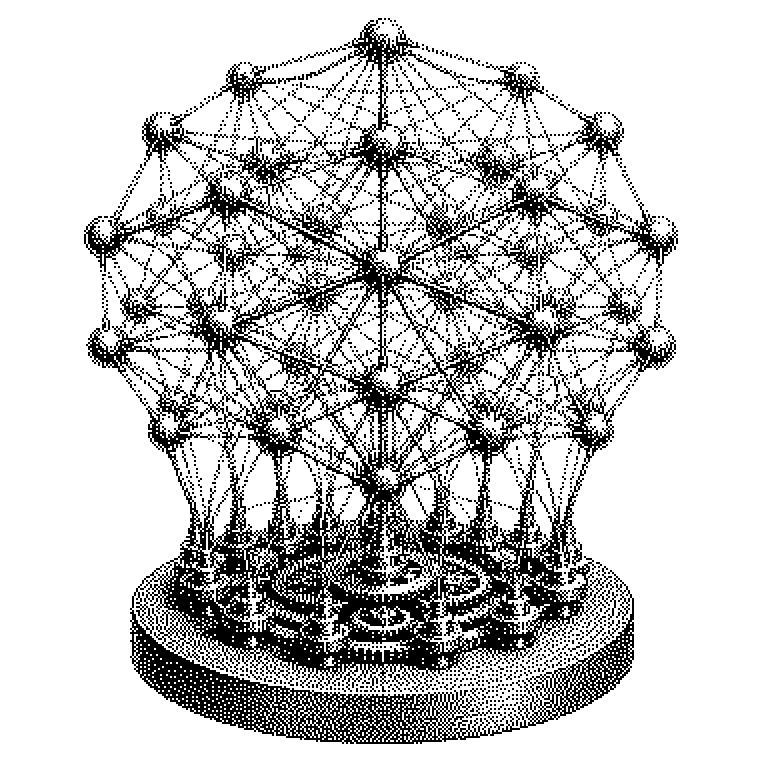
At the very front is the input layer. For an image, every pixel is a number that goes in there. These numbers travel layer by layer toward the back. Every connection between two computing units has a weight, that is, a factor that strengthens or weakens the signal. At the end is the output layer with the result, for instance the probability of “cat”.
At the beginning, all weights are random, so the network is essentially guessing. Then the output is compared to the correct answer and the error is calculated. A method called backpropagation calculates backward how much each weight contributed to the error. Each weight is nudged a tiny bit in the better direction. This process repeats millions of times until the error is small enough.
A comparison helps: imagine a mixing console with millions of dials. You listen to the result, turn each dial slightly in the direction that improves the sound, and repeat this very often. In the end, no one knows exactly why a particular dial ended up where it did. That’s the reason neural networks are often called a black box: every number inside is known, but it’s not readily understood what it stands for.
Where they’re already part of everyday life
Most encounters with them go entirely unnoticed. Autocorrect on your phone, the sorting of your Instagram feed, the spam filter in your inbox, the song suggestions on Spotify – neural networks are working in the background everywhere. Banks also use them to detect suspicious card payments.
In news articles, specialized terms tend to appear instead of the umbrella term. “Deep learning” simply means neural networks with very many layers. A “transformer” is a particular architecture that handles text especially well and underlies all large language models. Knowing these connections makes reading such reports noticeably less stressful.
A common misconception is the idea that a neural network thinks like a human. It searches for statistical patterns in data, nothing more. It has no understanding and no intention. That’s why it can also give convincingly wrong answers when the patterns in the training data are misleading.