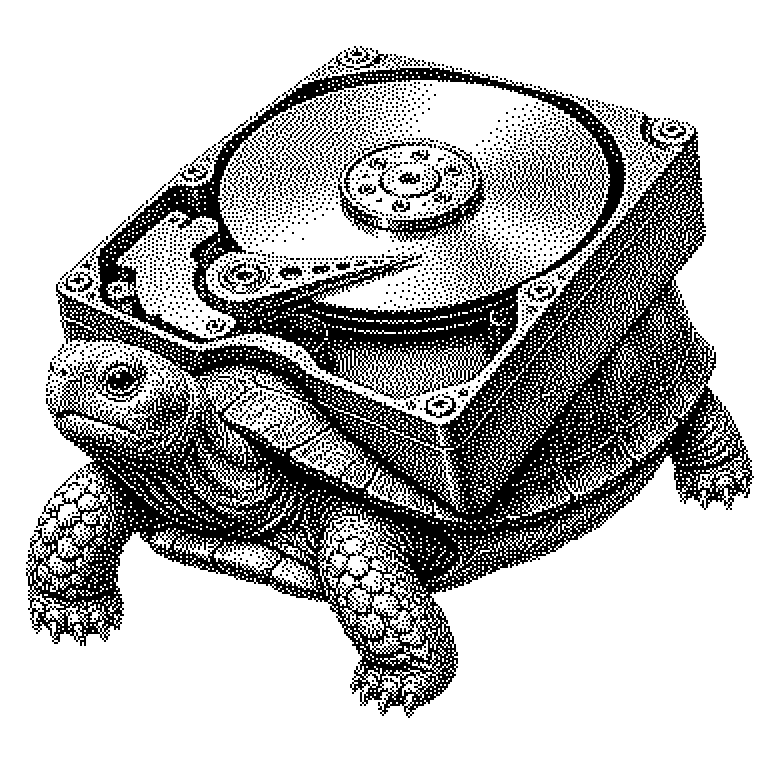
Nearline HDD
A nearline HDD is a large, slow, and inexpensive hard drive for data centers that stores data that doesn't need to be accessed constantly, but regularly. It fills the gap between fast, expensive server hard drives and long-term archives that remain untouched for weeks.
A hard drive stores data on rotating magnetic disks. There are many different variants — depending on how fast, how large, and how robust they need to be. A nearline HDD is designed for maximum storage capacity at the lowest possible cost, not for speed. It spins slower than a typical server hard drive, but holds significantly more: current models manage 20 to 32 terabytes per drive. The name “nearline” essentially means “almost online” — the data isn’t instantly available like with a fast, high-performance drive, but it’s also not as far away as on a tape that first needs to be loaded.
Why nearline HDDs shape data centers
The world’s pile of data grows by billions of gigabytes every year. Not all data is needed constantly, but it must remain accessible. Videos someone might call up next week, backups, older business data — all of this has to be stored somewhere. Fast drives would be too expensive for this, magnetic tapes too slow to access.
Nearline HDDs hit exactly this middle ground. Per terabyte of stored data, they cost significantly less than high-performance server hard drives or flash storage, the so-called SSD. At the same time, they deliver a response within milliseconds — magnetic tapes need seconds to minutes for that. For large providers such as cloud services or streaming platforms, this price difference adds up to a substantial amount across millions of drives.
The technology behind the capacity
A nearline HDD spins its disks at 7,200 revolutions per minute — that sounds like a lot, but it’s slower than some older server hard drives running at 10,000 or 15,000 revolutions. Lower rotational speed means less heat, less power consumption, and less wear. For a drive that runs around the clock, that’s a real advantage.
Manufacturers like Seagate or Western Digital achieve these enormous capacities through two techniques. The first is called SMR, or shingled magnetic recording: the data tracks on the disks are placed so close together that they slightly overlap — similar to roof shingles. This increases density, but makes writing new data somewhat more cumbersome. The second technique fills the interior of the enclosure with helium instead of air. Helium is lighter, slows the disks down less, and allows more disks to be packed into the same housing.
Nearline HDDs are also designed for continuous operation. A normal desktop hard drive is perhaps built for a few hours of use per day. A nearline HDD must run 24 hours a day, 7 days a week, without failing. Manufacturers specify a so-called MTBF rating for this — the average time to first failure, often exceeding one million hours of operation.
Nearline HDDs in products and headlines
Anyone streaming a video on Netflix is retrieving data that very likely resides on nearline drives. The same applies to photos in cloud services like Google Photos or iCloud that aren’t accessed daily. Company backups, older surveillance footage, or scientific measurement data also frequently end up on such drives.
In the financial and tech press, the term mainly comes up in discussions of the storage market. Announcements of new capacity records — for instance, when Seagate unveils a 30-terabyte drive for the first time — almost always concern nearline HDDs. Likewise, supply shortages of these drives are viewed as an economic indicator for the cloud market: when hyperscalers — the massive data centers run by Amazon, Microsoft, or Google — order nearline HDDs in bulk, this is seen as a sign that data volumes continue to grow strongly.
A common misconception is to equate nearline HDDs with ordinary hard drives from electronics retailers. The outer form is similar, but the intended use, reliability, and price differ considerably. A nearline HDD costs a multiple of a desktop hard drive — and is built to operate for years without interruption in a fully automated storage rack of a data center.