Rack
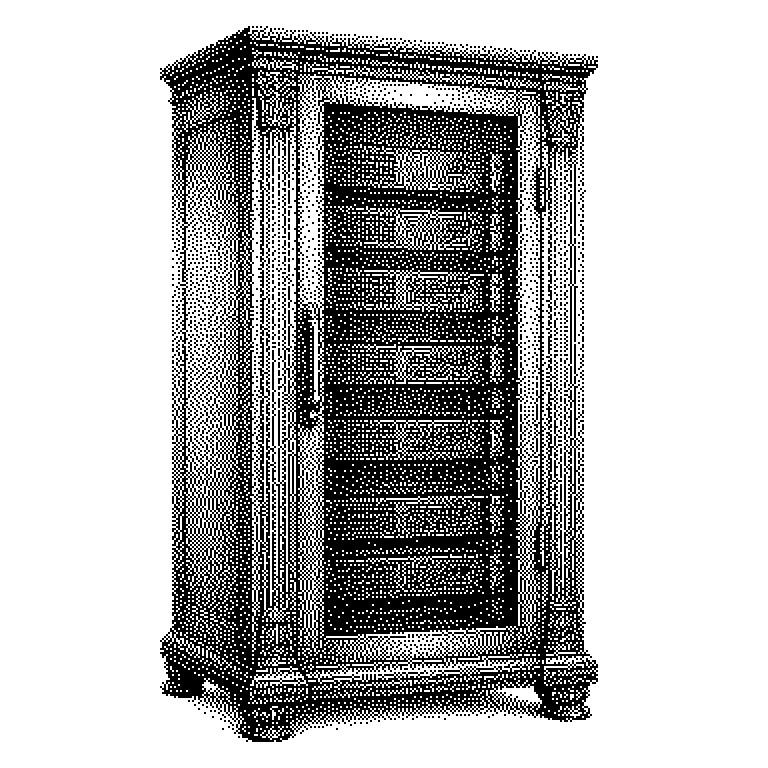
A rack is a standardized metal cabinet in which computers for data centers are mounted on top of one another. It supplies power, network connectivity and cooling for all installed devices and is the common unit in which AI hardware is discussed.
A rack is a tall, narrow metal cabinet for computers. It stands in large buildings where thousands of computers compute for internet services. Devices there are not placed under a desk like a PC, but instead slid in flat, one above the other, like baking trays in an oven. A single rack is typically about two meters tall and around 60 centimeters wide. Depending on the design, it can hold 40 to 50 flat devices. The rack also includes power supply, cable routing, and usually ventilation or water cooling.
Why computing is measured in racks and not in individual computers
A single computer is no longer enough for modern AI. Large language models are trained on hundreds or thousands of specialized chips simultaneously. These chips need to communicate with each other extremely quickly. The shorter the cables, the faster the exchange. That’s why devices are packed as densely as possible — that is, into a shared rack.
As a result, the rack has become the actual unit of computation. Chipmaker Nvidia doesn’t sell its most powerful AI hardware as a single card, but as a fully wired rack. Such a rack costs several million euros. That’s why news about data centers often contains sentences like: “The operator is installing 5,000 racks.” This is a rough but useful indicator of the size of a facility.
Power consumption is crucial here. A normal rack with office equipment might draw 5 to 10 kilowatts, about as much as a few electric stoves. A rack full of AI chips can consume 100 kilowatts or more. This figure determines whether a data center can be built at all. That’s because power and cooling are scarcer today than the chips themselves.
The 19-inch standard and the height unit U
Racks are standardized worldwide. The mounting width is 19 inches, or about 48 centimeters. This standard originally comes from telephone technology and has persisted for decades. The advantage: devices from different manufacturers fit into the same cabinet. So you can combine a server from one company with a network switch from another.
Height is measured in rack units, abbreviated U. One unit is 44.45 millimeters. A flat server is therefore called “1U,” a twice-as-tall one “2U.” A typical cabinet has room for 42 such units. Anyone planning a data center therefore calculates in U, in kilowatts, and in square meters.
At the very top or in the middle sits usually a network device that connects all the servers in the cabinet. It’s called a top-of-rack switch because it’s traditionally installed at the top. From there, thicker cables lead to the other racks. In AI racks, water hoses are added as well, because air can no longer carry the heat away. Such racks are more like cooled machines than cabinets.
Racks in news, prices, and stock prices
In everyday life, you rarely see racks, but you use them constantly. Every search query, every streamed video, and every chatbot response is computed in a rack. Even the school website or an online shop runs somewhere in such a cabinet. The user just never notices.
In business news, however, the rack is a central metric. Analysts estimate how many AI racks a manufacturer can ship per quarter. From this, they derive revenues and stock prices. Operators like Microsoft, Amazon, or Google also often state their capacity in megawatts or in rack counts, not in chips.
A common misconception: a rack is not a computer, but a container with infrastructure. It doesn’t compute anything itself. In modern AI systems, however, this boundary becomes blurred, because all the devices in the cabinet are wired so tightly together that they work like a single large computer. The rack should also be distinguished from the data center: the data center is the building, the rack is just a shelf within it.