Retail Media
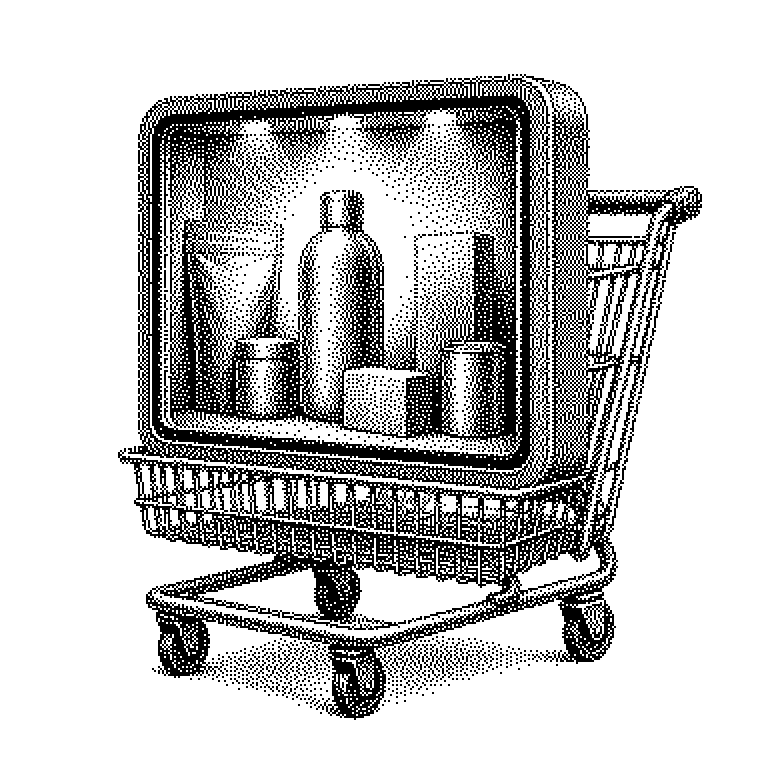
Retail Media refers to advertising space that retailers sell on their own websites, in their apps, and in their stores. Manufacturers pay to make their products visible there at exactly the moment when customers are shopping anyway.
Anyone who searches for “coffee beans” on a major online shop often gets a product at the top of the list with a small label saying “Ad” or “Sponsored.” This spot was bought. The manufacturer paid the shop money to have its product placed ahead of the others. This exact business is called retail media: a retailer sells advertising space on its own sales floor, both online and in-store. The term comes from English and literally means something like “trade advertising media.” What’s new isn’t the idea — in supermarkets, brands have paid for eye-level shelf space for decades. What’s new is that this business now runs digitally, which has made it measurable, automatable, and extremely lucrative.
Why retailers are suddenly earning billions from it
Retail is a business with thin margins. Of every 100 euros in revenue, a supermarket often keeps only one to three euros as profit at the end. Advertising space, by contrast, causes almost no additional costs: the website exists anyway, the customers are already there anyway. As a result, a very large share of every advertising euro remains as profit. For many retailers, retail media has by now become the most profitable part of the company, even though it looks small in terms of revenue.
The example of Amazon shows the scale involved. The company’s advertising business generates a double-digit billion-dollar sum in revenue every year, making it one of the largest sellers of advertising in the world after Google and Meta. Others followed suit: Walmart, Zalando, Otto, the Rewe Group, even pharmacy and home-improvement chains are building their own advertising departments. In the industry, this is referred to as a Retail Media Network, or RMN for short — the infrastructure through which a retailer sells and delivers its advertising space.
A second reason is legal in nature. Classic internet advertising tracked users across the web using small data packets known as cookies. Data protection rules and browser blocks are increasingly making this impossible. Retailers don’t need this kind of tracking: they know their customers from their own purchasing behavior. This data belongs to them alone; it is called first-party data. That makes it especially valuable in a world without cookies.
From search query to paid placement
Technically, most of this runs through a real-time auction. If someone searches for “coffee beans,” the system checks within milliseconds which brands have bid on this search term. Whoever wins the combination of bid amount and expected click probability gets the spot. Payment is usually per click, sometimes per thousand impressions. The entire process is completed before the page has even finished loading.
Artificial intelligence is involved at several points in this process. Models estimate how likely a particular user is to click on a particular ad and subsequently make a purchase. Other systems set the bids automatically so that an advertising budget generates as many sales as possible. Increasingly, models also generate the ad copy and product images themselves. For a manufacturer with ten thousand items, doing this by hand is simply no longer feasible.
The decisive advantage over television or billboard advertising is the closed measurement chain. The retailer sees the ad, the click, and the purchase within the same system. It can therefore calculate exactly how much revenue an advertising euro generated. This metric is called ROAS, “Return on Ad Spend.” With traditional advertising, this connection usually remains an estimate.
Sponsored products, checkout displays, and a conflict of interest
In everyday life, one encounters retail media constantly without naming it as such. Sponsored results in shop search results are part of it, as are advertising banners on category pages, product recommendations in delivery apps, and ads on the screens at supermarket checkouts. Advertising that a retailer displays on third-party websites also counts, as long as it is based on the retailer’s own purchase data.
In business news, the term usually appears in quarterly figures. When a retailer announces that its advertising business has grown by 30 percent, this often explains the bulk of the profit jump. Analysts now pay close attention to this line item, because it works differently than merchandise sales and can justify higher valuations.
However, there is a built-in conflict of interest. The retailer is supposed to rank the best product at the top, but actually earns money by ranking the highest-paying one at the top. Competition authorities in the EU and the US are therefore examining whether platforms favor their own brands. For readers, the practical takeaway is simple: the top result in a shop search is an advertising placement, not a judgment of quality.
