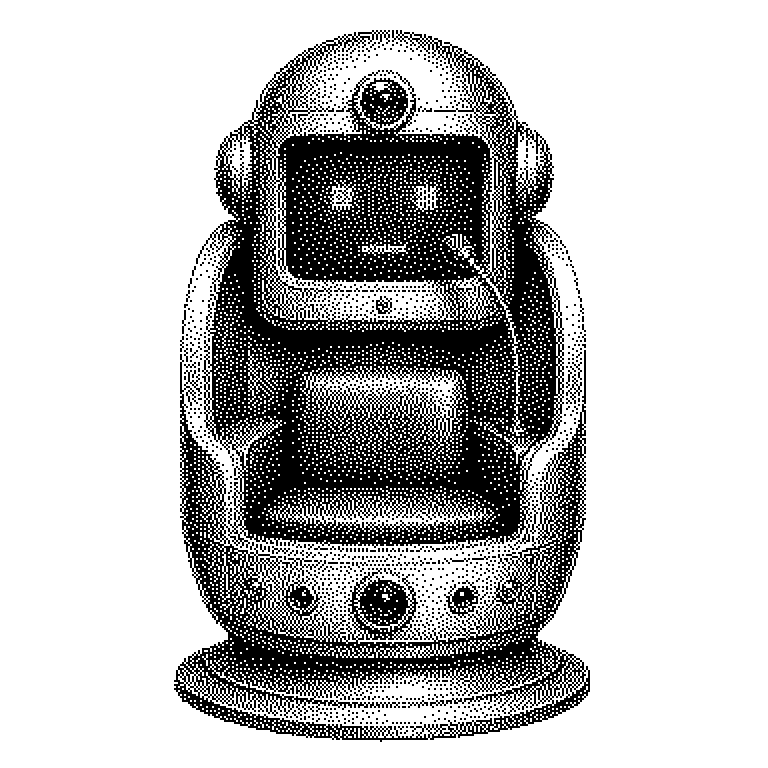
Robo-Interview
A robo-interview is a job interview in which no human sits across from the applicant, but instead a computer program asks the questions and evaluates the answers. Companies use it primarily to make an initial pre-selection when there are very many applications.
In a robo-interview, an applicant conducts their job interview not with a person, but with a program. They are presented with questions on the screen or as a pre-recorded video message. They record their answers via webcam or microphone, often with a time limit per question. Afterwards, software evaluates the recordings and creates an assessment. This assessment ends up with the HR department, which decides who moves on to the next round. The term is colloquial: there is no robot sitting in the room, but rather a program running on a server.
Why companies automate their job interviews
Large companies sometimes receive several thousand applications for sought-after positions. Reviewing each one in a half-hour conversation is not feasible in terms of staffing. A robo-interview can run around the clock and question a thousand applicants on the same day. This saves time and travel costs, especially when applicants come from different countries.
A second argument made by providers is: everyone gets exactly the same questions under the same conditions. A tired or ill-tempered recruiter can then no longer skew the result. Whether this is actually true, however, is disputed. The software learns from data on previous hires, and if the selection there was already biased, it adopts this pattern.
This is precisely why the topic regularly appears in the news. In the EU, automated applicant selection is considered a high-risk application. The AI Act, Europe’s AI law, requires strict testing and documentation for this. Applicants also have a right to be informed that a machine is involved in the decision.
What the software measures in the answers
The first step is almost always speech recognition. It converts the spoken word into text. Afterwards, a language model checks whether the answer’s content matches the question and whether certain keywords appear. Anyone asked for an example of teamwork who fails to describe a concrete situation loses points here.
Some systems additionally evaluate how something is said: speaking pace, pauses, volume, vocabulary. Earlier providers even analyzed facial expressions and gaze direction from the video. This part has come under heavy criticism because the connection between facial expression and professional suitability is barely supported by scientific evidence. Some major providers have therefore switched off facial analysis again.
At the end there is usually a score or a ranking. It is important to distinguish this from an application robot, which merely searches résumés for keywords. The robo-interview evaluates a real answer that the applicant formulates in that very moment. As a rule, the software does not decide alone, but delivers a recommendation to a human.
Who encounters this kind of interview
Robo-interviews are most commonly encountered for apprenticeships, dual study programs, and trainee programs. There, especially many people apply for few spots. Airlines, retail chains, and consulting firms also use them. Anyone who applies online then receives an email with a link and a deadline of just a few days.
In business news, the term usually appears in connection with HR tech, i.e. software for HR departments. Providers like HireVue have built a market with this that has been growing for years. At the same time, media report on lawsuits and complaints from rejected applicants.
For those affected, it is helpful to know: you are allowed to ask whether and how an automated decision was made. In Germany, this is regulated, among other things, by the General Data Protection Regulation. Incidentally, a common misconception is that one must speak in a particularly robotic, keyword-heavy way. Most systems rate complete, concrete answers better than a string of buzzwords.