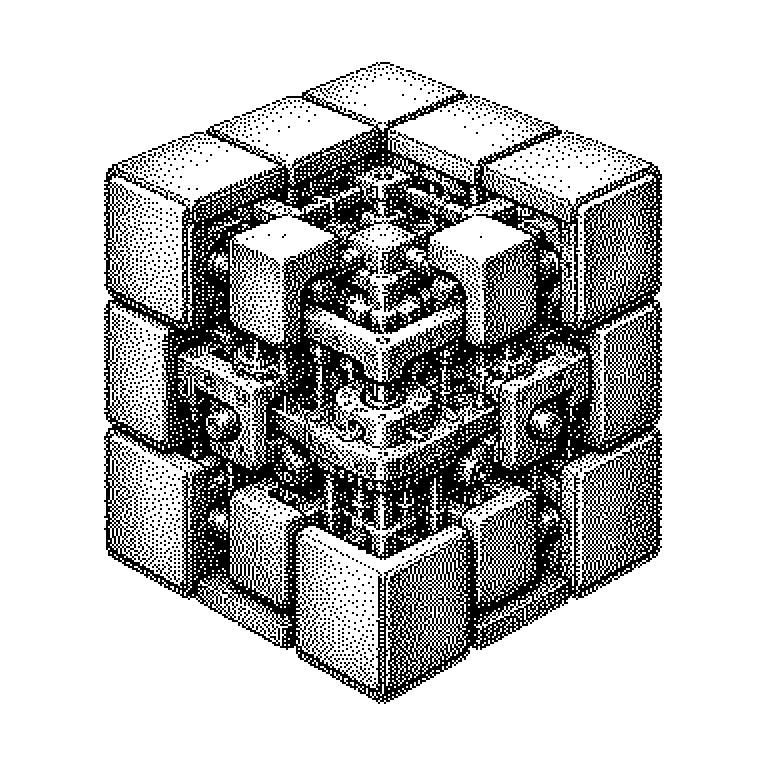
Reverse Engineering
Reverse engineering means taking apart and analyzing a finished product to figure out how it is built and how it works. In technology, this applies to devices, programs, and increasingly AI systems whose inner workings are not disclosed.
Normally, a product comes into being in this order: first a plan, then the build. Reverse engineering flips that order around. You start with the finished thing and work your way backward to the plan. Anyone who unscrews a watch, sketches the gears, and then understands how the hand is moved is doing exactly that. In technology, it’s usually not about gears but about devices, programs, or data formats whose structure the manufacturer hasn’t revealed. The goal is always the same: to infer the internal structure from observable behavior.
Why companies take apart other people’s products
The most common reason is simply compatibility. If a printer only talks to the manufacturer’s own software, someone has to decode that conversation so other programs can print as well. Large portions of free software came into being this way. File formats, too, were often rebuilt after the fact because documentation was missing or kept secret.
A second reason is security. Security researchers take programs apart to find vulnerabilities before criminals exploit them. Conversely, they analyze malware to understand what it does and how to stop it. Without reverse engineering, nobody would know what data was even leaked in an attack.
And then there’s the economic reason: competitive analysis. Car manufacturers buy competitors' vehicles and take them apart down to the last screw to compare costs and construction. This is legal in many countries, as long as you don’t simply copy it outright. The line between understanding and replicating is legally delicate and is regularly fought out in court.
From machine code back to the blueprint
With software, the problem is that programs are shipped as machine code. These are instructions for the processor, practically unreadable for humans. Tools called disassemblers and decompilers translate this code back into a more readable form. But the result is never the programmer’s original text. Comments and meaningful names are lost beyond recovery; what remains is a skeleton that has to be laboriously interpreted.
Often, then, the work isn’t done on the code at all, but on the behavior. You feed in known inputs and observe what comes out. From many such trials, a model of the internal logic gradually emerges. This method is called black-box analysis: the box stays shut, and conclusions are drawn purely from stimuli and responses.
A related but distinct concept is model extraction in AI. Here, someone asks a foreign AI system a very large number of questions and uses the answers to train their own model that mimics it. You’re not copying the components, but the capability. Providers try to prevent this with terms of use and query limits.
From power adapters to closed AI models
In everyday life, you encounter the result more often than the process. If your phone works with a charger from another brand, or an open-source program opens a Microsoft Word file, reverse engineering is often behind it. Many Linux device drivers came into being this way too, because manufacturers didn’t provide any.
In tech news, the term currently comes up mostly in connection with AI. The most powerful language models are closed: their architecture, training data, and size remain trade secrets. Researchers nonetheless try to draw conclusions from response behavior, for instance about the number of building blocks or the training sources used. Some of these analyses later end up in headlines as lawsuits or regulatory debates.
It’s important to distinguish this from piracy. Reverse engineering means understanding, not stealing. In the EU, decompiling software is explicitly permitted if it serves to achieve compatibility. Anyone who instead rebuilds and sells what they’ve discovered one-to-one is infringing copyright or patent rights.