Reverse Transcriptase
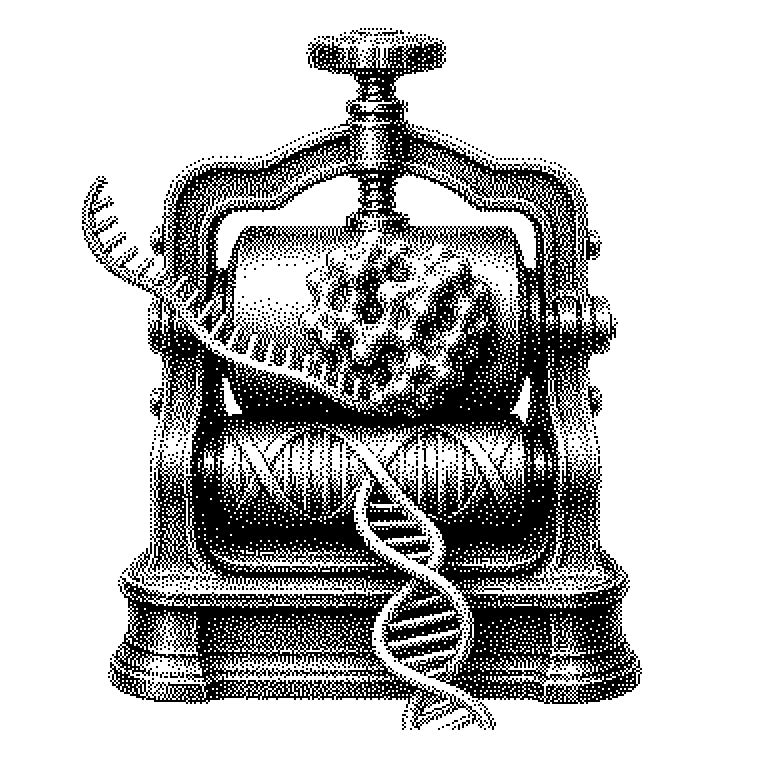
Reverse transcriptase is an enzyme – a biological tool – that rewrites genetic information against the cell's normal reading direction: from RNA into DNA. It plays a central role in virology, genetic engineering, and modern diagnostics.
In every cell, genetic information normally flows in one direction: from DNA via RNA to protein. Reverse transcriptase reverses this flow. It is an enzyme – a molecule that speeds up chemical reactions – and rewrites RNA back into DNA. This contradicts what was long considered an unshakeable fundamental principle of biology. Reverse transcriptase was discovered in 1970 independently by Howard Temin and David Baltimore, for which both received the Nobel Prize in 1975.
Why viruses need this enzyme
Certain viruses, known as retroviruses, store their genetic information not as DNA but as RNA. The best-known example is HIV, the pathogen that causes AIDS. When HIV infects a human cell, it must first convert its genetic material into DNA before it can insert it into the host cell’s genome. This is exactly what reverse transcriptase accomplishes.
Without this step, the virus could not establish itself permanently in the cell and multiply. Reverse transcriptase is therefore a key target for HIV drugs. Many antiretroviral agents – that is, medications against retroviruses – specifically block this enzyme, so that the virus can no longer rewrite its RNA and can no longer spread further.
The rewriting process in detail
Reverse transcriptase reads the virus’s RNA piece by piece and builds a matching DNA strand as it goes. This first step produces a hybrid: half RNA, half DNA. The enzyme then destroys the RNA portion and builds the missing second DNA strand. The result is a complete double-stranded DNA, which can now be transported into the cell nucleus and integrated there into the human genome.
One important difference from the body’s own enzymes: reverse transcriptase works imprecisely. It makes more frequent errors while copying than cellular enzymes do. This sounds like a disadvantage – but it is actually useful for the virus. These errors continuously generate new viral variants. Some of them are resistant to medications, which makes treating HIV more difficult.
Use in the lab and in diagnostics
Researchers have used reverse transcriptase as a laboratory tool for decades. One important method is called RT-PCR: here, RNA is first rewritten into DNA using reverse transcriptase, and this DNA is then amplified and analyzed. This method became known worldwide during the COVID-19 pandemic because it was the gold standard for detecting SARS-CoV-2.
The enzyme is also indispensable in basic research. To understand which genes are active in a particular tissue, one must analyze the RNA present there. Since RNA is harder to handle in the lab than DNA, researchers first convert it into the more stable DNA form using reverse transcriptase. Without this enzyme, a large part of modern genomic research would not be possible.