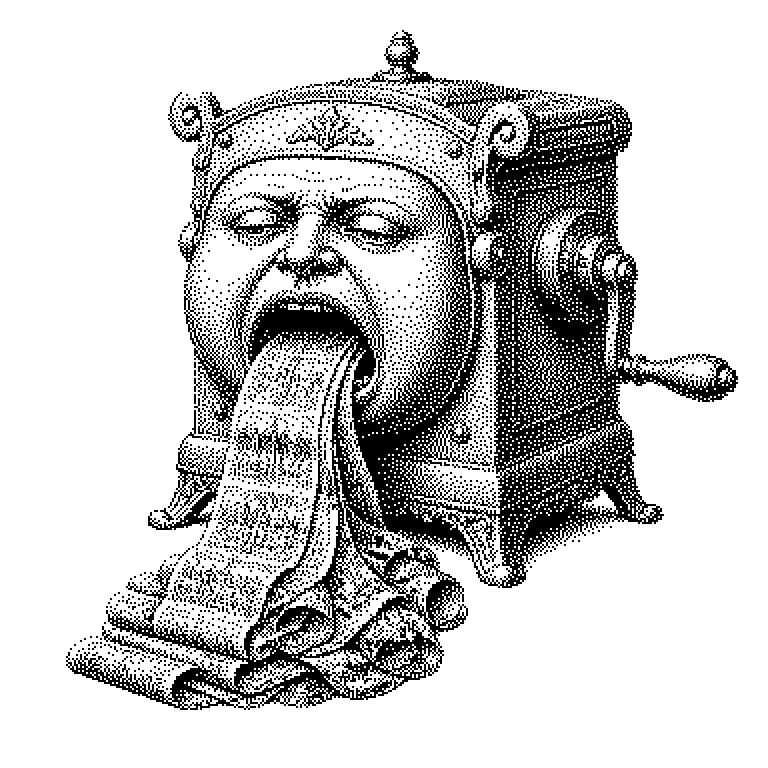
Regurgitation
Regurgitation refers to the case where an AI program outputs entire passages of text or images from its training material almost word-for-word, instead of formulating something new. Technically, this is a side effect of learning, and legally it is one of the most sensitive points in copyright lawsuits against AI companies.
Programs like ChatGPT learn by working through vast amounts of text, images, and code. From this material, they extract patterns that they later use to form their own sentences. Sometimes, however, they don’t output their own sentences but instead a passage from the training material almost word for word. This is exactly what is called regurgitation, which translates roughly to “vomiting back up.” The term is deliberately unflattering: it’s not about an achievement, but about a mishap. This can affect newspaper articles, book pages, song lyrics, program code, or even images with a recognizable watermark from an image agency.
The point of contention in copyright lawsuits
AI companies usually defend their training method with one argument: the model doesn’t store the texts, it only learns statistics from them. After all, a person who reads many novels and then writes their own doesn’t violate copyright either. Regurgitation shakes this defense. Because if a model can spit out an article almost unchanged, the article apparently is somehow contained within it after all.
The New York Times sued OpenAI and Microsoft in 2023 over exactly this. The lawsuit contains over a hundred examples in which the model reproduced longer paragraphs from paywalled articles nearly identically. Similar accusations have come from book authors, music publishers, and programmers. The courts must now determine whether such behavior constitutes an unauthorized copy.
For companies, this is also a practical risk. Anyone who has an AI write text for their own website can unintentionally take over someone else’s material. That’s why major providers now offer a kind of legal protection: they promise to step in for paying business customers in the event of a dispute.
How text passages get stuck in the model
A language model only ever predicts which word is most likely to come next. For most topics, there are many plausible continuations, and the result seems original. But if a passage appears very often in the training material, the prediction becomes extremely unambiguous. Then the most likely continuation is precisely the original.
This is why certain content is affected particularly often. Bible verses, well-known poems, legal texts, and viral news reports appear on thousands of websites. Standard solutions from programming forums also show up countless times. Think of it like a melody you’ve heard a hundred times: at some point you sing it back exactly, without meaning to.
A common misconception is that the model has a built-in database of texts. That’s not true. A model with hundreds of billions of numerical values cannot possibly store the entire internet. It only retains fragments, specifically those that occurred disproportionately often. Experts therefore distinguish between memorization, i.e., storage within the model, and regurgitation, i.e., the actual output.
Filters, tests, and what users notice
In everyday use, one rarely stumbles upon this by chance. Most documented cases arise when someone specifically searches for it. A typical trick: you enter the first sentences of an article and ask for the continuation. Researchers use such attacks to measure how much a model has memorized.
Providers deploy additional filters against this. These compare the response to known protected texts before output and block passages that are too similar. GitHub Copilot, for example, has a setting that suppresses suggestions if they match existing code on GitHub for too long. It’s not perfect, but it significantly reduces the frequency.
In news reports, you’ll usually encounter this term in connection with lawsuits, new studies, or licensing agreements. When a publisher strikes a deal with an AI provider, regurgitation is often the reason behind the scenes. For you as a user, this means: for texts you publish anywhere, it’s worth doing a quick search for conspicuous phrasing.