Remote Development
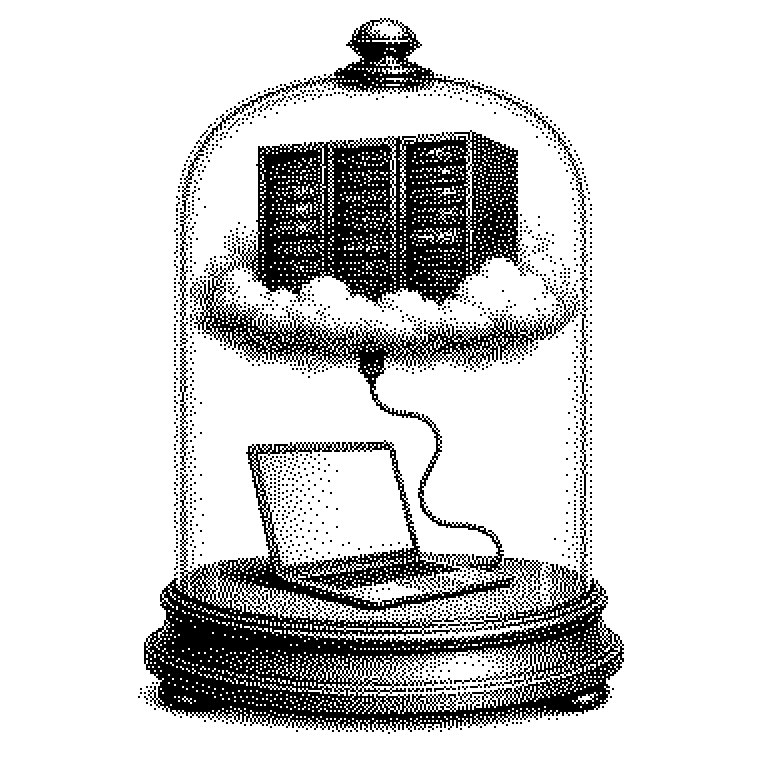
Remote Development means that programmers don't run their code on their own laptop, but on a remote machine in a data center. Their own computer only displays the window, while the actual computing happens elsewhere.
Anyone who writes software needs a program in which the program’s text is typed and tested. In the past, this program always ran on one’s own laptop, and that’s also where all the code was stored. With Remote Development, this is separated: the code sits on a powerful machine in a data center, often hundreds of kilometers away. On one’s own screen everything looks almost the same, but the characters typed travel over the internet, and the results come back. The laptop thus becomes a kind of remote control for a much larger computer.
Why teams outsource their work
The first reason is computing power. Modern projects consist of tens of thousands of files, and a single build process can take half an hour on a laptop. On a machine with 64 processor cores, it takes two minutes. The difference is even greater with AI projects in particular, because they require special graphics chips that aren’t found in any normal notebook.
The second reason is consistency. When twenty people work on a project, each has a different operating system and different auxiliary programs installed. Then the code works for one person but not for the next. If everything is placed on identical remote machines, this problem largely disappears. The well-known phrase “but it works on my machine” loses its basis.
The third reason is security. At banks or defense companies, sensitive source code must not leave the company network. If the code exists only on the server, a stolen laptop can’t reveal anything. Simply nothing is stored on the device itself.
What happens between keyboard and server
Technically, there are two common variants. In the first, the familiar development environment continues to run on one’s own device, but sends all heavy tasks over an encrypted connection to the server. This connection is usually called SSH and is a standard method for securely logging into a remote machine. In the second variant, the entire environment runs in the browser, similar to an online text document.
What matters here is the delay that experts call latency. It describes how long a signal takes for the round trip. If it’s below about 50 milliseconds, you don’t notice anything while typing. If the server sits on another continent, typing can feel sluggish. That’s why companies choose data centers as close as possible to their employees.
Often the remote workspace is additionally housed in a container. This refers to a self-contained package that includes the operating system and all necessary auxiliary programs. Such a workspace can be recreated in seconds and discarded just as quickly. Anyone who has misconfigured something simply restarts instead of searching for hours.
From GitHub Codespaces to the school computer
The best known are GitHub Codespaces from Microsoft, Gitpod, and the remote features of the Visual Studio Code editor. Amazon and Google also offer such services. Billing is usually per hour of runtime, similar to a rental car. A workspace with medium specifications costs roughly between ten and fifty cents per hour.
In the news, the term often appears in connection with AI coding assistants. These assistants need the entire project context and therefore prefer to run directly alongside the code on the server. A second occasion is debates about working from home: Remote Development allows working on large systems from a weak device.
A common misconception is that Remote Development is the same as working from home. However, the term only describes where the computer is located, not where the person sits. You can sit in the office and still develop remotely. The obvious drawback remains: without a working internet connection, nothing works at all.