Regulatory Capture
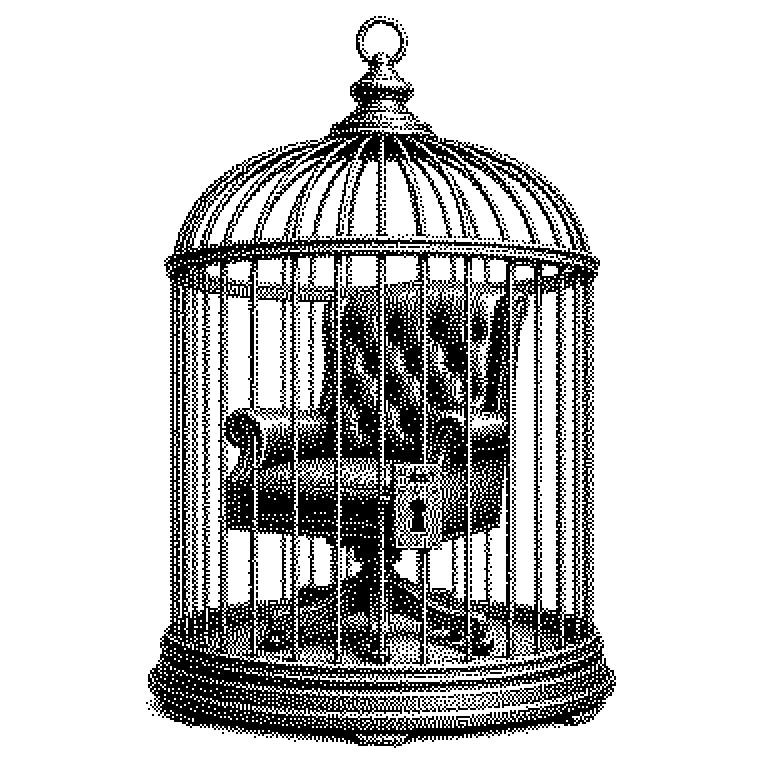
Regulatory capture describes the case in which a government oversight agency ends up serving the interests of the companies it is supposed to supervise instead of those of the general public. In the AI debate, the term is central because major providers themselves call for strict rules – and critics see in this an attempt to shut out competition.
The state establishes agencies that are supposed to oversee companies. They check, for example, whether medications are safe or whether a bank is not overextended with debt. Regulatory capture means that such an agency, over time, adopts the perspective of the industry it controls. It then tends to decide in ways that benefit large firms rather than in ways that would protect the public. The English term literally means something like “capture of regulation.” Very important: this usually is not about bribery, but about creeping influence that is entirely legal.
Why tech companies are suddenly calling for rules
Normally one would expect companies to resist strict regulations. In the AI industry, often the opposite happens. Heads of major providers appear before parliaments and demand licenses, review obligations, and safety tests for AI systems. This is exactly what raises suspicion of regulatory capture.
The reason is easy to understand. A corporation with thousands of employees can staff an entire legal department for approvals. A start-up with twelve people cannot. Strict rules thus affect both, but burden the small player far more heavily. Experts call this a barrier to entry: an obstacle that keeps new competitors out of the market.
For investors and readers of business news, this is more than a political question. Whoever helps write the rules secures market share without a better product. This can support stock prices, but it slows innovation. And it can lead to real risks going unregulated because people are arguing over the wrong things.
The pathways of creeping influence
The most important mechanism is knowledge. An oversight agency must judge whether an AI model is dangerous. This expertise resides almost exclusively within the companies themselves. So the agency obtains assessments, definitions, and measurement methods from them. Whoever defines the yardstick has already half-determined the outcome.
Added to this is the personnel exchange between agency and industry, known in English as the “revolving door.” A lawyer works for three years at the oversight agency and then moves to the controlled corporation for triple the salary. Later she returns to politics. No one has to do anything forbidden in the process. But one rarely criticizes sharply the place where one might soon be working.
A third pathway is attention. The industry has a strong interest in every detail of a law and sends lobbyists. The general public has only a weak interest in many topics at once. This asymmetry explains why technical regulations often turn out industry-friendly. One can picture it like a football match in which one team is constantly talking to the referee.
The term in AI legislation
The accusation comes up most often around the European Union’s AI regulation, the AI Act. It mandates extensive documentation and reviews for high-risk applications. Associations from the open-source scene, meaning freely available software, warned early on that they could not bear this burden. In the US, the debate ran similarly when major labs proposed a government licensing system for very large models.
The term does not originate from technology. It was coined by economists in the 1970s, among them George Stigler. Classic examples include oversight of railroads, banks before the 2008 financial crisis, and aircraft certification. The Boeing 737 MAX case is considered a textbook example: the US aviation authority had delegated parts of the review to the manufacturer itself.
One distinction is important. Regulatory capture does not mean that every strict rule is a trick by corporations. Some regulations are sensible and genuinely protective. The term is a diagnostic tool, not an answer. The useful question is always: who formulated the text, and whom does it harm less than others?