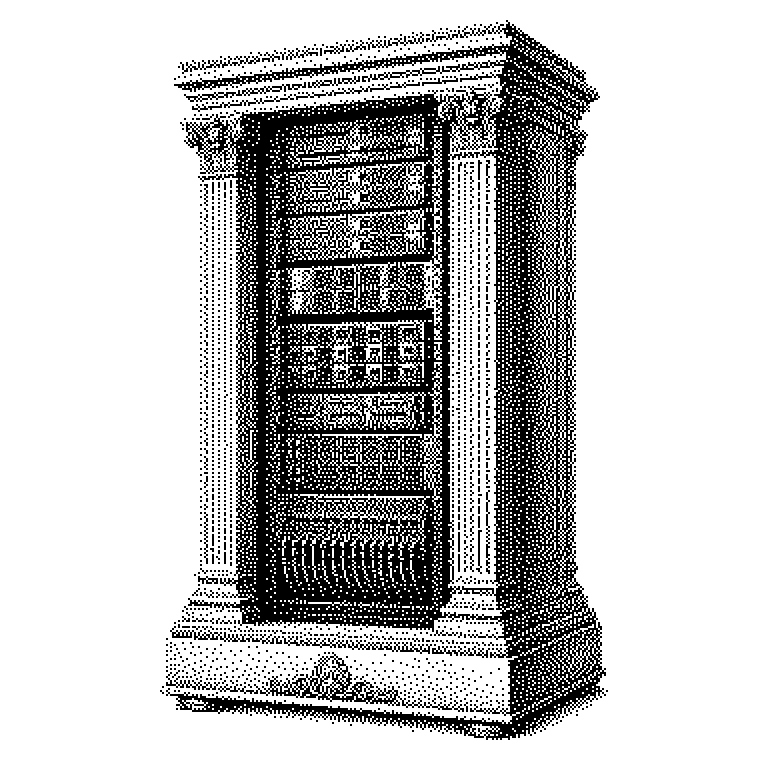
Rack system
A rack system is a standardized metal cabinet in which computers, storage, and networking equipment are mounted one above the other. In modern AI data centers, an entire rack is now considered a single large computing unit rather than a mere shelf.
At its core, a rack system is a tall metal cabinet for computer equipment. The devices are not placed side by side on tables, but rather slid in flat, one above the other, like drawers in a chest of drawers. The dimensions are standardized worldwide: the mounting width is 19 inches, or about 48 centimeters. The height is measured in rack units, abbreviated U, with one unit being just under 4.5 centimeters tall. A typical cabinet has 42 such units, making it about two meters tall. Because all manufacturers adhere to this standard, equipment from different companies fits into the same cabinet.
From shelf to the smallest building block of the data center
For a long time, a rack was just furniture. You bought individual servers, slid them in, and cabled them up. With AI applications, this has shifted. A large language model, that is, a program that generates text, no longer fits on a single computer. It has to be distributed across many specialized chips that work closely together.
That’s why manufacturers now sell entire racks as a single product. Nvidia, for instance, advertises its systems with dozens of graphics chips in one cabinet, internally connected so fast that they behave like a single giant chip as far as the software is concerned. The price for such a rack is in the range of several million dollars. When stock market news mentions delivery times or order books, it is often precisely these units that are meant.
For operators, the rack is also the unit of measurement for space, power, and cooling. A data center is not planned in terms of individual devices, but in terms of rack slots and kilowatts per slot. A classic rack with standard servers draws about 5 to 15 kilowatts. AI racks are at 100 kilowatts and more, that is, as much as several dozen households.
Rails, power, and the limits of air cooling
Inside, the rack has perforated rails on both sides. Devices are attached there using brackets or extendable guide rails. Power distribution units and batteries that bridge brief outages are usually located at the bottom. Networking equipment sits at the top or in the middle, so that the cables to all servers stay short. Cabling runs in channels at the back, while the front remains free for access and operation.
More important than the mechanics is the airflow. Racks stand in rows with their fronts facing each other. This creates cold and hot aisles: the devices draw in cool air from the front and expel the waste heat out the back. If the two mix, the temperature rises and the chips throttle themselves to avoid overheating.
For AI racks, air is no longer sufficient. That’s why liquid cooling is used: water flows through metal plates mounted directly on the chips, carrying the heat away. This explains why many older data centers cannot simply install new AI systems. The cabinets would fit, but the power supply and cooling circuit are missing.
Where these cabinets actually stand
Rack systems are found wherever data is processed: in data centers run by Google, Amazon, or Microsoft, in company basements, in universities, and in many schools. When you load a website or stream a video, a device housed in such a cabinet is responding. Even small variants with six or twelve rack units exist, for instance for recording studios or clubhouses.
In the news, the term usually comes up in connection with AI expansion. Companies state how many racks they can ship or install per quarter. This figure is considered an indicator of how quickly computing power actually becomes available. Ordered chips are of no use as long as the cabinet, cooling, and power connection are missing.
A common misconception is that a rack is itself a computer. Initially, it is just a standardized enclosure. What’s new, however, is that in AI systems, the enclosure, chips, cabling, and cooling are planned as an inseparable package. In this sense, the rack has indeed become the machine.