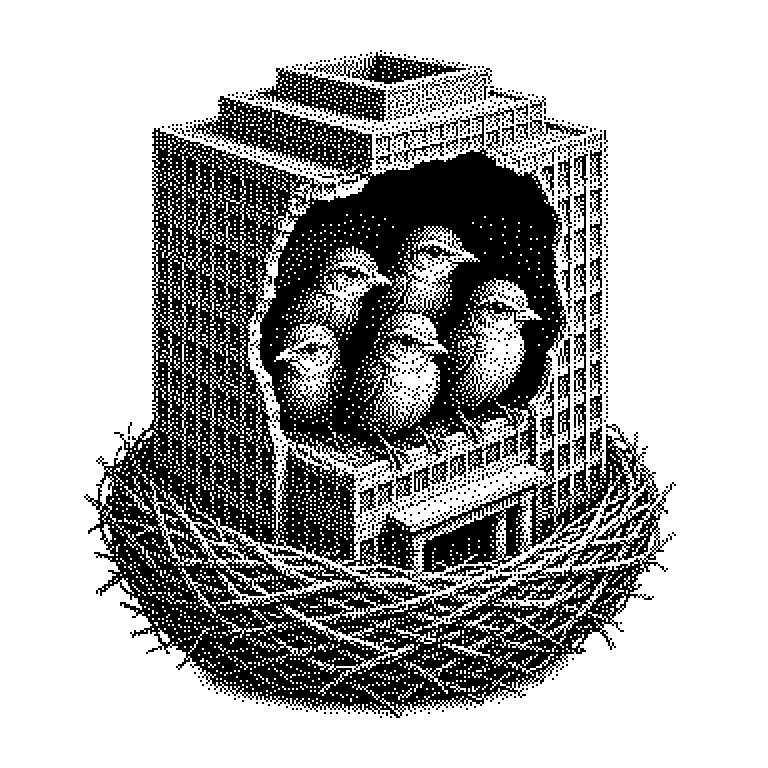
Reverse Acquihire
In a reverse acquihire, a large company doesn't officially acquire a startup but instead hires its entire team — primarily the founders — directly, while the startup formally continues to exist or quietly winds down. The economic outcome closely resembles an acquisition, but it legally and financially sidesteps some of the typical hurdles of a classic acquisition.
Normally, a large company buys a startup: it pays a price, takes over all assets and contracts, and the startup ceases to exist. A reverse acquihire partially inverts this logic. The large company doesn’t formally buy the startup — instead, it directly hires the startup’s founders and key employees. The startup often remains on paper, but has no team left and effectively ceases operations. What’s being bought, then, are the people and their knowledge, not the company as a whole.
Why companies choose this structure
A classic acquisition is laborious. Lawyers review all of the startup’s contracts, debts, and risks — a process that can take months and cost millions. With a reverse acquihire, much of that falls away. The large company takes on no liabilities, no ongoing customer contracts, and no complicated ownership structures.
For the acquiring company, this is especially attractive when the startup has a brilliant team but barely any usable products or technology. This happens frequently in the AI sector: a research team has interesting results, but no scalable business model. The team is valuable; the company around it is not.
There’s also an incentive on the startup’s side. A founder who can no longer save their startup gets at least a soft landing this way — a well-paid job, often with stock options at the new employer. That’s better than bankruptcy, even if it’s not a triumphant exit.
How a reverse acquihire typically unfolds
The process is less formal than an acquisition. The large company offers the founders employment contracts — often combined with an upfront payment referred to in industry jargon as a “signing bonus.” This bonus is economically the purchase price, even though it’s legally a salary. The startup’s investors frequently come away with nothing, or recover only a small fraction of their invested capital.
The startup itself is usually wound down quietly: products are discontinued, the website disappears, customers are terminated or redirected to another provider. Sometimes the company simply isn’t carried on anymore, without being formally dissolved. What remains is the team — now operating as a department or research group within the large company.
An important distinction from the classic acquihire: in a normal acquihire, the company also buys the startup primarily for the people, but it genuinely buys it — with a purchase agreement, a valuation, and acquisition of all shares. In a reverse acquihire, this purchase formally doesn’t exist. The boundary is blurry, which is why observers sometimes use the two terms interchangeably.
Reverse acquihires in the AI sector
In the AI industry, this structure has gained significant attention since 2023. Microsoft, Google, and Amazon have each absorbed teams from AI startups without formally buying them. The best-known case is Microsoft’s handling of Inflection AI in 2024: Microsoft hired founder Mustafa Suleyman and a large part of the team. Inflection AI continued to exist as a company afterward, but was de facto hollowed out.
Regulators in the EU and the US are now watching these structures critically. The suspicion: large companies are using reverse acquihires to circumvent merger control. A normal acquisition above a certain size must be reported to and approved by competition authorities — a pure employment relationship, however, need not be.
The UK’s Competition and Markets Authority (CMA) and the European Commission have therefore begun examining whether such deals should nevertheless be treated as mergers. The issue is thus not only relevant to tech insiders — it sits at the center of a broader debate about how much market power individual AI companies should be allowed to accumulate.