Redshift
Redshift describes the phenomenon in which light from distant objects in the universe appears redder than it was originally emitted. It is one of the most important measurement tools in astronomy and provided the first evidence that the universe is expanding.
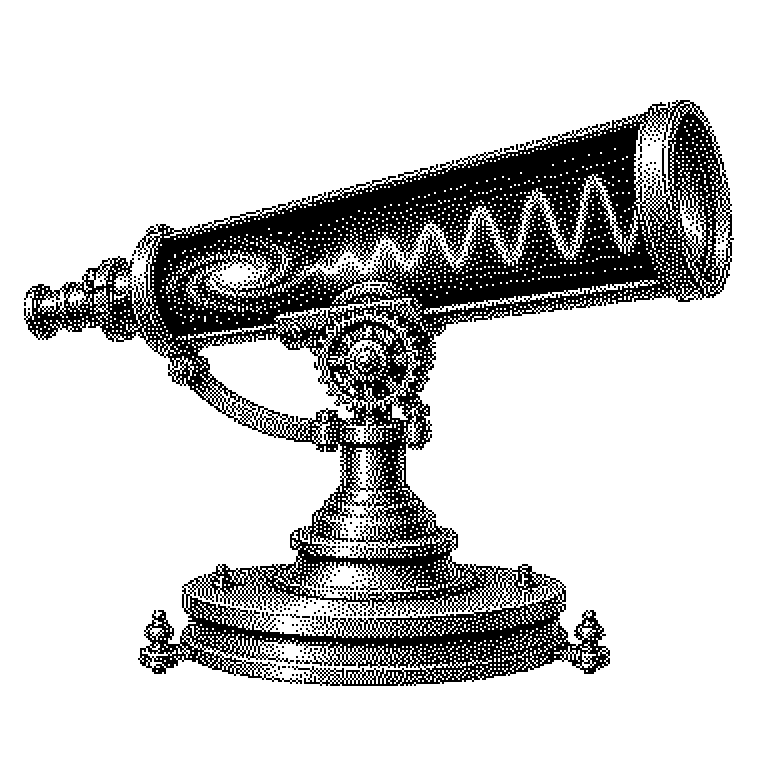
Light consists of waves. Red light has longer waves than blue light. If a light source moves away from us, the waves are stretched on their way to us — they become longer and thus redder. This effect is called redshift. It works similarly to the sound of a siren moving away: the tones sound deeper because the sound waves are stretched out. The same thing happens with light from distant galaxies, only with light waves instead of sound waves. Astronomers measure how much the light has shifted and can use this to determine how fast an object is moving away and how far away it is.
Redshift as evidence for the expansion of the universe
The American astronomer Edwin Hubble discovered in the 1920s that almost all galaxies show a redshift. Not a single one was moving toward us; almost all were moving away. And the farther away a galaxy was, the stronger its redshift.
This meant: the universe is expanding in all directions. This finding was a scientific revolution. It refuted the previously prevailing assumption of a static, unchanging universe. Without redshift measurements, there would be no Big Bang as a recognized theory.
Today, redshift is also a tool for investigating so-called dark energy. Observations show that the expansion of the universe is accelerating. The cause of this is still unknown — but the redshift of thousands of galaxies is the main evidence that this acceleration exists.
How astronomers measure the shift
Every chemical element emits light in very specific colors. Hydrogen, for example, always produces the same characteristic lines in the color spectrum — like a fingerprint. Astronomers know these patterns precisely from laboratory experiments on Earth.
When they split the light of a distant galaxy using a spectroscope — a device that breaks light down into its colors — they find the same patterns. But they are shifted: toward red. The greater this shift, the faster the galaxy is moving away. The degree of the shift is summarized in a single number, the so-called z-value. A z-value of 1 means that the wavelength of the light has doubled.
There is also a blueshift — when an object moves toward us. The Andromeda galaxy, our nearest large neighboring galaxy, shows exactly that. It is racing toward the Milky Way at about 110 kilometers per second and will collide with it in about four billion years.
Redshift in research, technology, and everyday life
The James Webb Space Telescope, which has been in operation since 2022, was specifically built for objects with very high redshift. The earliest galaxies, which formed shortly after the Big Bang, emitted their light as ultraviolet or visible light. After billions of years of travel, this light is so strongly redshifted that it now arrives as infrared. Webb can see infrared — and thus look further into the past than any previous telescope.
The principle of redshift is also found in police radar and weather radar. There, it is not light but radio radiation that is used — but the basic idea is identical: the speed of a car or a rain shower can be calculated from the shift of the reflected waves. In this context, one speaks of the Doppler effect, named after the Austrian physicist Christian Doppler, who first described the principle in 1842.
The term occasionally appears in financial news when reporting on space companies or telescope projects — for example, when new records are reported for the discovery of distant galaxies. A high z-value then means: this galaxy is one of the oldest and most distant ever observed.