Rock's Law
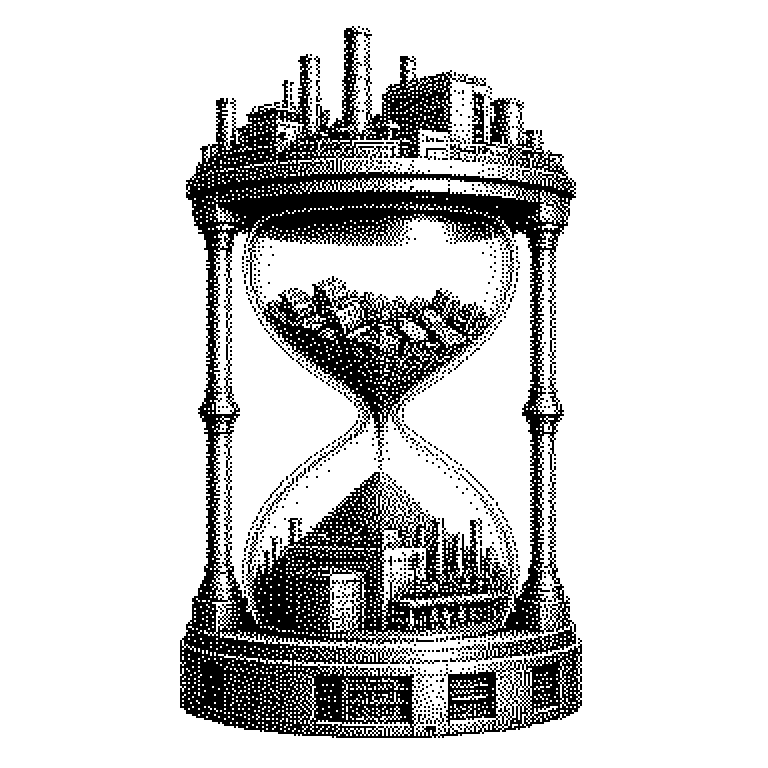
Rock's Law is the observation that the cost of building a factory for chip manufacturing roughly doubles every four years. It thus describes the expensive flip side of technical progress in computer chips.
Computer chips have been getting more powerful and cheaper per computing step for decades. Rock’s Law describes the other side of this development. It states: the cost of building a factory in which such chips are manufactured roughly doubles every four years. The rule is named after the American investor Arthur Rock, who invested money early on in semiconductor companies in the 1960s. It is sometimes also called Moore’s second law, because it is closely related to a better-known rule about the growing performance of chips. It is not a law of nature, but a rule of thumb derived from decades of observation.
Why only three companies still build the most advanced chips
The numbers behind this are staggering. In the 1980s, a modern chip factory cost a few hundred million dollars. Today, the most expensive facilities cost 20 to 30 billion dollars. Hardly any company can raise such sums on its own.
The result is extreme concentration. Only three corporations worldwide can still manufacture the latest generation of chips: TSMC from Taiwan, Samsung from South Korea, and Intel from the USA. All other companies design their chips themselves but have them produced there. Apple, Nvidia, and AMD no longer have any factories of their own at all.
This creates a political problem. If a single country hosts almost the entire world’s production, any crisis there becomes a global risk. This is precisely why the USA and the EU are now spending billions to establish their own factories. These subsidy programs are a direct response to the cost spiral that Rock’s Law describes.
Where the exploding factory costs come from
A chip consists of structures that are only a few nanometers in size. A nanometer is one millionth of a millimeter. To create such fine patterns, they are projected onto a silicon wafer using light, similar to how a slide projector casts an image onto a wall. The finer the pattern, the shorter the wavelength of light must be, and the more complex the machine becomes.
Only a single company builds the most advanced of these exposure machines: the Dutch firm ASML. Depending on the model, a single machine costs between 150 and over 350 million euros. A large factory needs several dozen of them. These machines alone therefore account for a substantial part of the construction costs.
On top of that comes everything else. The production areas must be cleaner than an operating room, because a single speck of dust destroys a chip. The buildings require elaborate air filters, vibration-free foundations, and huge amounts of ultra-pure water. Every new chip generation demands stricter conditions, and this is precisely what drives the regular doubling of costs.
Rock’s Law in the AI debate
In the news, the rule usually appears without its name. Whenever reports discuss billion-dollar investments in new semiconductor plants, Rock’s Law lies behind them. Reports on export bans for chip-making machines or on Taiwan’s role in the global economy also have their origin here.
For artificial intelligence, this connection is especially important. AI systems run on specialized chips, almost all of which are manufactured at TSMC. Because new factories are so expensive, production cannot be ramped up quickly. This explains why powerful AI chips have been scarce and expensive for years.
A common misconception is that Rock’s Law contradicts the better-known Moore’s Law about growing chip performance. That is not true; both describe the same development from two different angles. The individual chip becomes cheaper, while the path to get there becomes more expensive. Experts do disagree, however, on whether this cost escalation can continue forever. At some point, the investments could become so high that they simply no longer pay off.