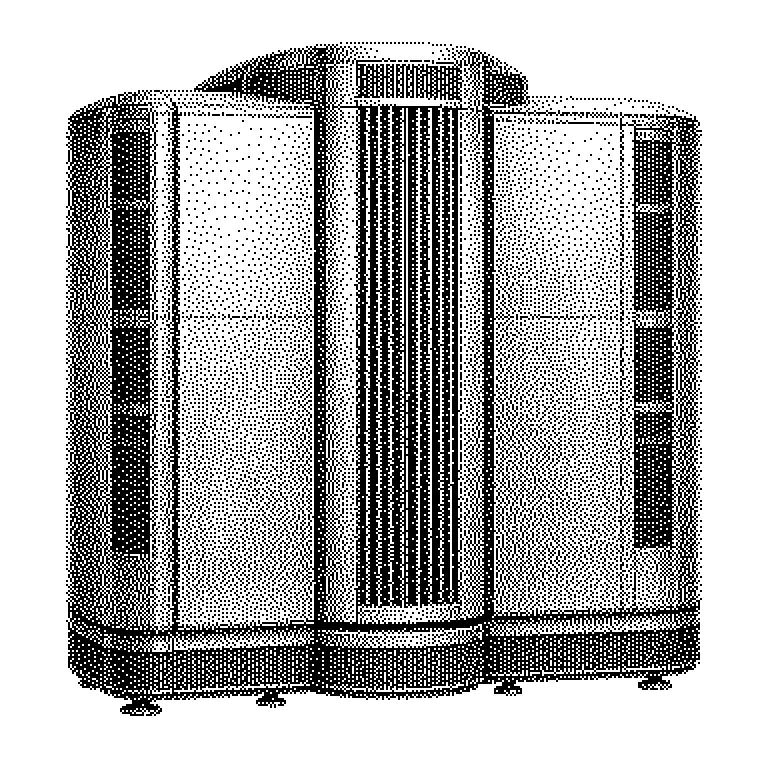
Mainframe
A mainframe is a very large, extremely reliable central computer that processes huge volumes of transactions and queries simultaneously. Banks, insurance companies, and government agencies still operate such machines today because they run for decades with virtually no downtime.
A mainframe is a particularly large and expensive central computer. It sits in a secured room within a company and from there serves thousands of users at once. A single machine can be as large as several refrigerators standing side by side and can cost several million euros. Its strength does not lie in solving a single task especially quickly. It lies in processing very many small tasks simultaneously and without error. A typical example is a debit from a bank account: tiny as a computation, but occurring millions of times a day and never wrong.
Why banks can’t get rid of their mainframes
The mainframe is considered outdated and yet is still in use wherever money is moved. A very large share of all card payments worldwide passes through such a machine at some point. Airlines, insurance companies, and tax authorities also work with them. The reason is reliability: these systems are designed to run for years on end without failing even once.
On top of that comes a problem known as legacy burden. Many mainframes run software that was written in the 1970s and 1980s, often in the old programming language COBOL. These programs work, but no one still knows in detail why they are structured the way they are. The developers have long since retired, and complete documentation rarely exists.
That’s why mainframes regularly turn up in business news. Banks announce migration projects that cost hundreds of millions and take years. Some are abandoned because the risk is too great. An error in payment processing is immediately noticed by millions of customers.
What makes the machine different from a server
An ordinary server is basically a very powerful computer, the kind a private individual could also understand. A mainframe is built differently: almost every important component exists in duplicate. If a processor fails, another one takes over without the ongoing work being interrupted. Power supplies and hard drives can also be swapped out while the system is running. So the machine doesn’t need to be shut down to be repaired.
The second difference concerns the nature of the work. A mainframe is optimized for input and output, not for pure computation. It continuously fetches data from storage, modifies it, and writes it back. For this it has its own auxiliary processors that handle only this data traffic. This keeps the main processor free for the actual transactions.
You can think of it like the difference between a sports car and a freight train locomotive. The sports car is faster over a short distance. The locomotive, on the other hand, pulls thousands of tons, every day, for decades. Anyone who looks only at computing power when assessing a mainframe is measuring the wrong quantity.
Mainframes and the supply of specialists
In everyday life you never encounter a mainframe directly, but always by a detour. Anyone withdrawing money at an ATM or authorizing a transfer online ultimately triggers a booking on a mainframe. Information about a free seat on a train can also originate there. This only becomes visible when something goes wrong and a bank cannot process payments for days.
In the industry, the shortage of specialists is a perennial topic. There are hardly any people left who can reliably understand and modify old COBOL programs. Companies are now deploying AI tools intended to read, explain, and translate such code into more modern languages. Whether this works reliably remains an open question: a translated error in an interest calculation might not surface for months.
A common misconception is that the cloud has long since replaced the mainframe. In fact, IBM, as the leading manufacturer, continues to sell new models, and demand remains stable. Many companies combine both: the mainframe handles the core transactions, while modern cloud-based web services provide the interface. So the mainframe doesn’t disappear — it just hides behind an app.