Magnificent Seven
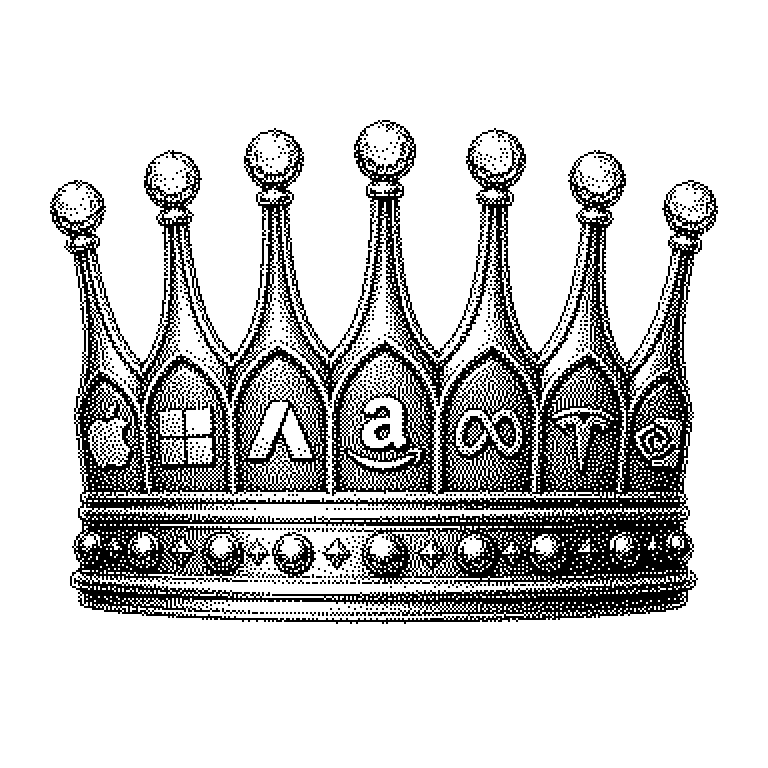
The "Magnificent Seven" are seven US technology corporations whose stock market value and economic influence are so great that they alone can noticeably move the entire stock market. The term brings together Apple, Microsoft, Alphabet, Amazon, Meta, Tesla, and Nvidia under one name.
The “Magnificent Seven” are seven US technology corporations: Apple, Microsoft, Alphabet (the parent company of Google), Amazon, Meta (Facebook), Tesla, and Nvidia. The name is a nod to a well-known Western film from 1960. What connects the seven companies is their sheer size: they are among the most valuable companies in the world. Together they make up such a large share of the US stock index S&P 500 — a basket of the 500 largest publicly traded companies in the US — that their price performance significantly influences the entire index. The term was coined by analyst Gerald Druckerman in 2023.
Why these seven corporations dominate the market
On the stock market, every corporation is assigned a price-based value known as market capitalization. The larger this value, the more weight the company carries in the overall index. At their peak in 2024, the Magnificent Seven together had a combined market capitalization of over 15 trillion US dollars — roughly equivalent to the annual economic output of the entire European Union.
This leads to a concrete problem for investors, meaning people and funds that invest in stocks. Anyone who believes they are investing safely with a broadly diversified index fund is, in reality, heavily concentrated in these seven companies. If their share price falls, the entire index falls with it. The supposed diversification is thus smaller than it appears at first glance.
What connects the seven companies
The Magnificent Seven are not a random selection. They all benefit from so-called network effects: a service becomes more valuable the more people use it. Google’s search engine, Amazon’s marketplace, and Meta’s social networks operate according to this principle. This makes it extremely difficult for competitors to catch up.
In addition, all seven are investing massively in artificial intelligence. Nvidia supplies the specialized computer chips needed to train AI systems. Microsoft has invested billions in OpenAI and is building AI features into its products. Alphabet and Amazon are building their own AI language models. These corporations are thus not merely beneficiaries of the AI wave, but also its driving force.
An important difference from a classic industrial corporation: digital products can be copied and sold any number of times without significant additional cost. Once software has been developed, it can be distributed to a million users just as cheaply as to ten. This explains why these companies can achieve extremely high profit margins.
Where the term appears in news and markets
In financial and technology news, the term comes up whenever there is a need to explain why the US stock market is rising or falling even though the broader economy isn’t doing correspondingly well or poorly. In 2023, for example, the S&P 500 gained significantly — but the increase was almost entirely attributable to the Magnificent Seven. The remaining 493 companies in the index, by contrast, were hardly better off than before.
Central banks and financial regulators also watch the group closely, because a sharp correction — that is, a sudden price decline — in these stocks could shake confidence in the entire market. In early 2025, for instance, Nvidia lost nearly 600 billion dollars in market value within a few days after a Chinese AI startup called DeepSeek introduced cheaper AI models. The entire US tech sector reacted with sharp price declines.
In technology reporting, in turn, the term stands for the question of whether the AI boom is justified or whether the high valuations constitute a bubble — that is, an overstatement that will eventually correct itself. The Magnificent Seven are thus not merely a financial phenomenon, but a mirror of how heavily the world depends on a handful of technology corporations.