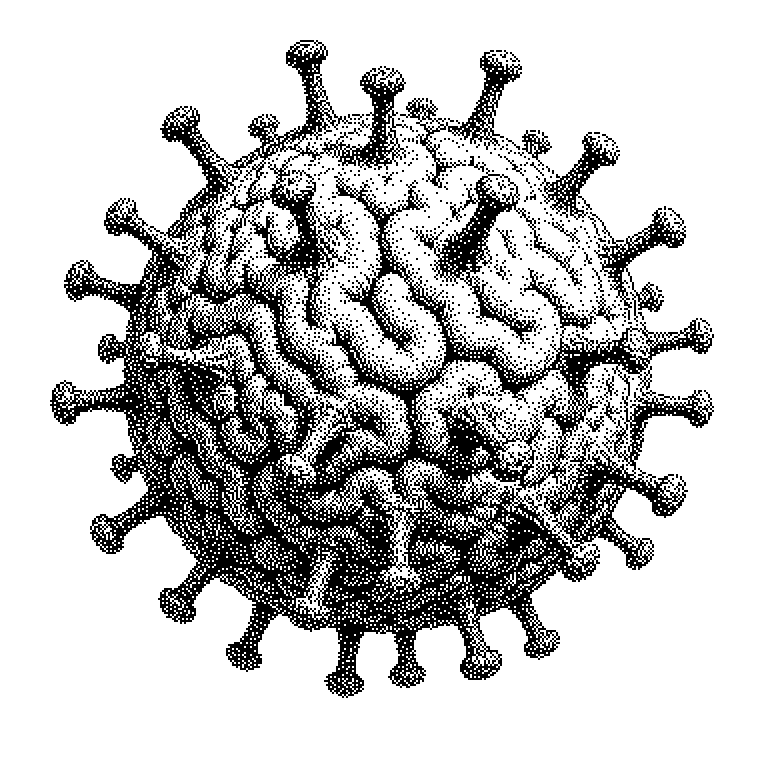
Mind Virus
A mind virus is an image for how an idea spreads from person to person – similar to a contagion. Today the expression is used mainly as an accusation, when someone believes that others have blindly adopted certain beliefs.
The expression mind virus describes an idea that is carried from person to person like a disease. This does not mean an actual pathogen, but a comparison. A claim, a joke, or a political belief jumps from one head to the next, and the number of people who believe it grows quickly. The term stems from a way of thinking that regards ideas as living beings: they multiply, change slightly, and prevail if they can be easily passed on. It is important to note from the outset: the expression is not a scientific finding but an evaluation. Whoever uses it usually considers the idea in question to be false or dangerous.
From technical term to political accusation
The root lies with the biologist Richard Dawkins. In the 1970s he coined the term meme: the smallest unit of culture, such as a melody, a turn of phrase, or a belief. Memes spread as people imitate them. Dawkins explicitly compared them to genes and later also to viruses. This idea gave rise to the expression mind virus.
Today the word is encountered almost exclusively in political debates. Tech entrepreneurs like Elon Musk use it to portray other people’s positions as a kind of contagion. The accusation then runs: these people are not thinking for themselves, they are infected. This is precisely where the rhetorical effect lies. Whoever is deemed infected no longer needs to be refuted, but cured.
For you as a reader, this is the decisive point. If the term appears in a headline, it usually says more about the speaker than about the idea being criticized. It replaces an argument with a diagnosis of disease. That makes it a signal word worth taking a closer look at.
Why some ideas spread faster than others
Behind the image lies an observable phenomenon. Ideas really do spread at different speeds. Researchers have measured that false reports on social networks travel significantly further and faster than accurate news. The reason is simple: they are more surprising, and surprising things are more likely to be shared.
Successful ideas often have three characteristics. They can be passed on in a single sentence. They trigger a strong emotion, usually outrage or fear. And they contain a built-in defense against contradiction, such as: whoever disputes this is themselves one of the bad guys. Such ideas persist stubbornly, regardless of whether they are true.
But the comparison has a weakness. A real virus infects a body without anyone’s consent. People, by contrast, examine ideas, discuss them, and reject them. The metaphor obscures the fact that agreement is a decision. Scientifically, memetics, the study of memes, is therefore considered controversial and not very robust.
Recommendation algorithms as amplifiers
The term appears particularly often in connection with social networks. There, recommendation systems decide which posts are shown to you. These systems favor content that generates many reactions. Outrageous statements meet this criterion especially well. In this way, the technology amplifies precisely those ideas that spread easily anyway.
With AI text generators, a new dimension is added. Programs can now produce hundreds of variants of the same claim within minutes. Experts then speak of disinformation on a large scale. AI models themselves can also be affected: if they are trained on texts from the internet, they adopt widespread misconceptions and pass them on as facts.
In practice, then, you encounter the expression in two places. First, in posts by well-known tech personalities, where it serves as a political insult. Second, in expert discussions about platforms, reach, and fact-checking. The second usage is the more useful one. The first tells you mainly that here people are arguing, not explaining.