MagSafe
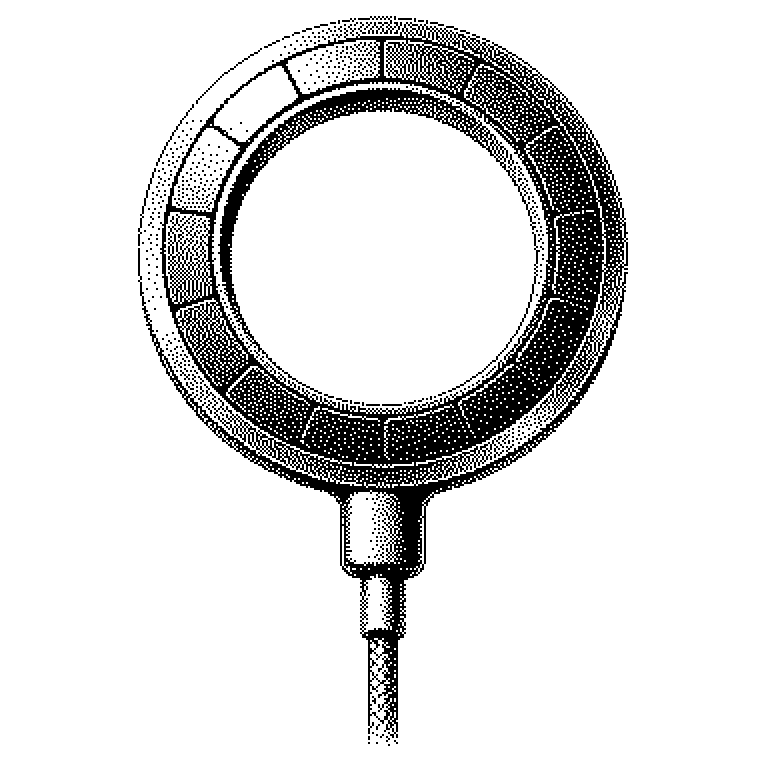
MagSafe is a brand name from Apple for connections that hold together via magnets instead of plugs or clamps. Today the term mainly refers to the magnetic ring in iPhones, on which chargers, cases, and mounts slide into the correct position on their own.
MagSafe is a technology from Apple in which devices and accessories are held together by magnets. Instead of plugging a cable into a socket, you place one part against the other, and the magnets pull it into the right spot. The name first appeared back in 2006 on Apple’s laptops: there, the power connector attached to the case magnetically. If someone tripped over the cable, it wouldn’t yank the whole device off the table, just pop the plug off. Since 2020, Apple has used the same name for a magnetic ring on the back of the iPhone. Chargers, protective cases, wallets, and car mounts stick to this ring.
What the magnetic ring on the iPhone changed
Wireless charging existed before MagSafe. The problem was positioning: if you placed a phone only roughly in the center of a charging pad, it would charge slowly or not at all. That’s because energy is transferred between two coils, and they need to line up fairly precisely. The magnetic ring forces this alignment all on its own.
As a result, wireless charging became more reliable and faster. A MagSafe charger delivers around 15 to 25 watts depending on the iPhone model, whereas older charging pads often topped out at 7.5 watts. For comparison: a charging cable manages about 20 to 30 watts on current iPhones. So the gap between cable and magnetic charger has narrowed.
Economically, MagSafe is also a platform. Apple sells licenses to other manufacturers who want to build accessories with the matching magnet pattern. This gave rise to an entire market of tripods, power banks, card holders, and car phone mounts that wouldn’t exist at all without the magnetic ring.
Magnets, coils, and a brief data exchange
Inside the iPhone sits a circle of several small magnets arranged around the charging coil. The accessory has a mirror-image circle. The magnets are polarized so that they only fit together cleanly in one specific orientation. That’s why a charger audibly slides into its final position as soon as you hold it nearby.
The energy itself doesn’t travel through contacts but through induction. Inside the charger, alternating current flows through a coil and generates a changing magnetic field. This field in turn generates current in the iPhone’s coil. You can picture it like two gears that don’t touch but turn together via a field. Some of the energy is lost as heat in the process, which is why wireless charging is always somewhat less efficient than a cable.
There’s also a small chip inside the accessory that identifies itself to the device. This lets the iPhone recognize whether a genuine MagSafe charger is attached and unlock the higher power output. A case can use this same channel to report its color, so the matching animation appears on the screen. It’s important to distinguish this from Qi2: that’s the open industry standard which adopted the magnet concept and also works on Android phones. MagSafe is Apple’s own, somewhat more advanced variant of it.
From bike handlebars to product launches
In everyday life, MagSafe is mostly encountered as an accessory. A flat magnetic charger sits on the desk, a mount clings to the air vent in the car, a card case hangs on the back of the phone. Ring lights and tripods for video recording also use the magnetic ring. Anyone using a thick case without built-in magnets quickly notices that the holding force weakens.
In the news, the term mainly comes up around product launches and quarterly earnings. Accessories carry high profit margins for Apple, which is why MagSafe is often cited as an example of how a corporation builds an ecosystem around a device. Since Qi2 opened up the magnetic ring concept for everyone, reports frequently discuss how long Apple’s lead in this area will hold.
A common misconception is that MagSafe is its own charging standard with especially fast charging. In fact, it is primarily a positioning aid with an identification chip. And a second misconception: the magnets do not erase bank cards. Caution is still warranted with hotel key cards that have magnetic stripes, as well as with old pacemakers, for which Apple recommends minimum distances.