Mode Collapse
Mode collapse refers to a training problem in certain AI models, in which the model produces only a small selection of very similar outputs instead of reflecting the actual diversity of the training data. The term appears primarily in the context of image generators and other generative AI systems.
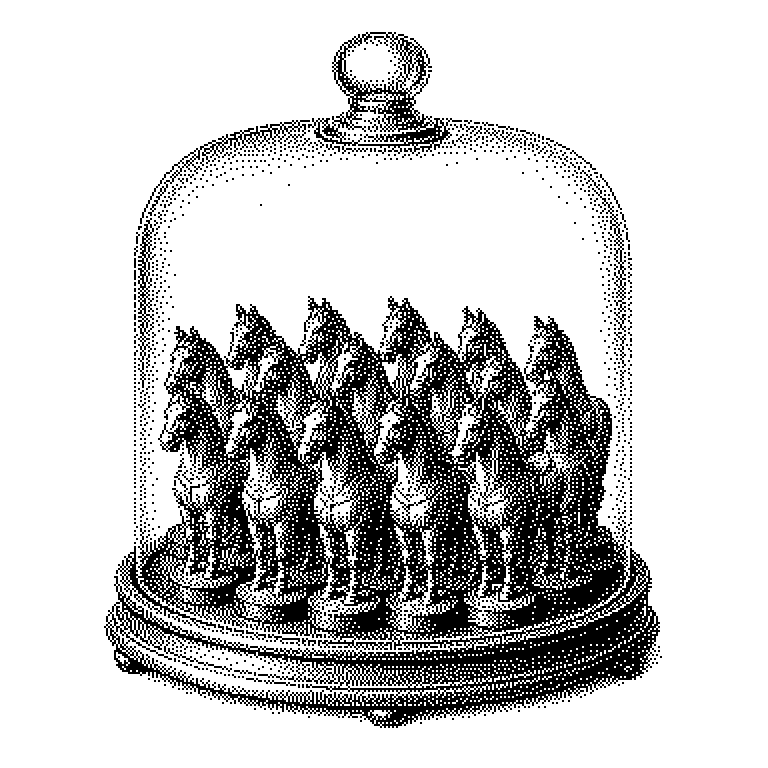
An AI model that generates images or text is supposed to learn the diversity of its training data. Mode collapse describes the opposite: the model “collapses” onto a few or even just a single type of output that it produces over and over again. No matter what input you give it, the results look nearly identical. The model has technically learned to produce outputs that appear plausible — but in doing so it has lost almost all variety. The problem only becomes apparent once you actually use the model and notice that it keeps repeating itself.
What mode collapse means for generative models
Generative models — that is, models that create new content such as images, text, or sound — are only useful if their outputs are diverse. An image generator that always produces the same dog, regardless of whether you ask for a German shepherd or a poodle, is worthless. That is exactly the core of the problem: the model has fixated on a “safe” output that is rarely completely wrong but also never really hits the mark.
Mode collapse is particularly critical when training GANs — these are systems made up of two networks, where one network generates content and a second network checks whether it looks real. If the generating network notices that a particular output always fools the checking network, it has no incentive to try anything else. It simply repeats what works. The checking network, in turn, learns to recognize this one output — at which point the generating network finds a new loophole, and the cycle starts all over again.
How mode collapse arises and how it is countered
The fundamental problem is a flawed training incentive. The model is rewarded for delivering plausible outputs — not for producing outputs that are as different as possible. If a single output is reliably rated as plausible, then from the model’s perspective it is rational to keep repeating it. In the process, the diversity of the training data is completely ignored.
Researchers tackle this in several ways. One method is to design training so that the model is explicitly rewarded for diversity — for example, by checking how similar consecutive outputs are to one another. Another method changes the architecture of the checking network so that it doesn’t just evaluate individual outputs but compares entire groups of them. Both approaches make training more complicated but more stable. Mode collapse has still not been fully solved to this day — it remains one of the most stubborn open issues in training generative models.
A common misconception is to equate mode collapse with poor quality. The individual outputs can in fact look quite high-quality. The problem is not that the model produces bad images — it’s that it always produces the same good image.
Mode collapse in practice and in media coverage
In concrete terms, the phenomenon became visible early on with face generators. After training, some models produced almost exclusively faces of a certain type — even though the training data contained thousands of different faces. Something similar happens with music or text generators that keep falling back into the same patterns.
In tech media, the term usually comes up when a newly released generative model is being criticized. Users notice that portraits always have the same facial expression, that generated melodies are structurally alike, or that a chatbot gives similarly sounding answers to very different questions. Mode collapse is not always complete — there are often degrees of it, where the model does show some variation, but only within a far too narrow range.
For companies building generative AI into products, mode collapse is a serious quality problem. An image generator for marketing material that keeps producing similar layouts quickly loses its usefulness. That’s why testing for mode collapse is now part of the standard checks when developing and evaluating such models.