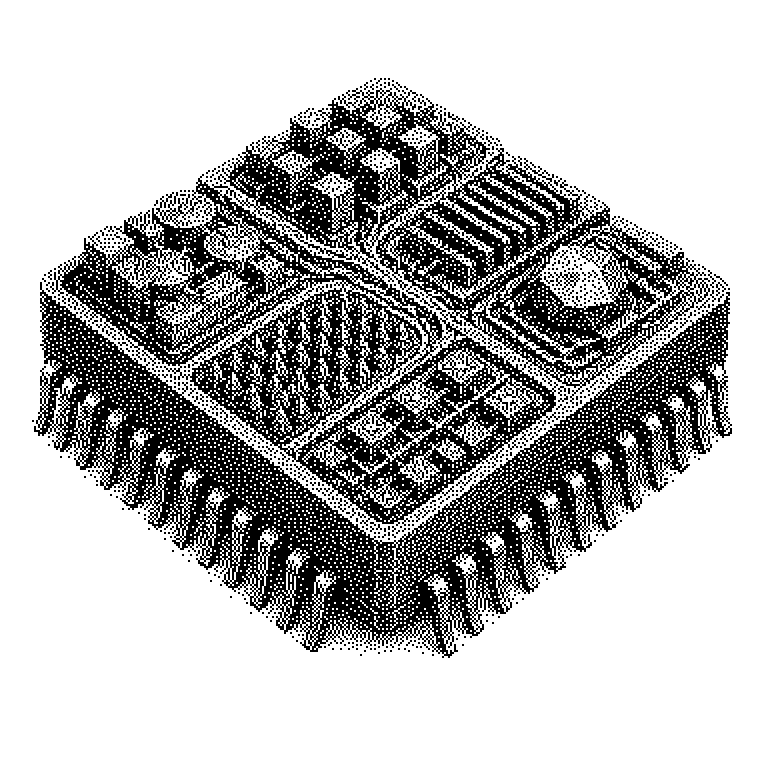
M-Chip
The M-Chip is Apple's own-designed processor family for Macs and iPads. Compute cores, graphics unit, AI accelerator, and memory all sit together on a single piece of silicon — making the devices fast and power-efficient.
Every computer has a central component that does the computing: the processor. Until 2020, Apple bought these components for its Mac computers from a company called Intel. Since then, Apple has designed them itself and calls them M-Chips, numbered from M1 up to the current M4. The special thing about it: Apple packs almost the entire computer onto a single chip the size of a thumbnail. Compute cores, the graphics for the display, a dedicated accelerator for artificial intelligence, and even the working memory sit there side by side. In the past, these were all separate components that had to communicate with each other via the motherboard.
Why Apple broke away from Intel
Whoever builds their own chips doesn’t have to wait on anyone. As long as Apple was buying from Intel, the schedule for new MacBooks depended on when Intel could deliver. Several times, this was delayed by years. Today, Apple decides for itself what the next chip should be capable of and when it will arrive.
The second reason is power consumption. M-Chips are technically descended from the processors in the iPhone, which always had to get by with a small battery. Apple carried this efficiency over into the laptop. A MacBook Air with an M-Chip runs for 15 to 18 hours depending on use and needs no fan, because it barely gets warm. Comparable Windows laptops from 2020 managed about half of that.
The price for this is dependency in another direction. You can’t buy an M-Chip separately and put it into a self-built PC. It only runs in Apple devices with Apple’s operating system. And because the working memory is permanently connected to the chip, it can’t be upgraded afterward.
Everything on one chip: the SoC principle
This design is called System on a Chip, or SoC for short — meaning an entire system on one chip. Think of the difference like that between a city and an office building. With separate components, every piece of information has to travel clear across the city. In an SoC, all departments sit in the same building, just a few doors apart. Short distances mean less waiting time and less energy consumption.
This is especially effective with working memory. Apple calls its approach Unified Memory: compute cores and graphics unit share the same memory. In a classic PC, the graphics card has its own memory, and data first has to be copied there. With the M-Chip, this copying is eliminated entirely.
A third building block is the Neural Engine. This is an area of the chip built solely for AI computations. It handles things like speech recognition or recognizing faces in the Photos app. Such tasks run faster and more efficiently there than on the regular compute cores. Apple also separates these into performance cores for demanding tasks and efficiency cores for small jobs like checking emails in the background.
From the MacBook to the local language model
M-Chips are found in all current MacBooks, iMacs, Mac minis, and in the pricier iPad models. When shopping, you’ll encounter the numbering as M4, M4 Pro, or M4 Max. The base version is enough for school, office work, and streaming. The Pro and Max variants have more cores and are aimed at video editing or programming.
In tech news, the term mostly comes up in connection with AI. Because M-Chips have a lot of Unified Memory, language models can be run directly at home on them, without a connection to a data center. A Mac with 64 gigabytes of memory can handle models that would otherwise require an expensive specialized graphics card. This is precisely why Macs have become more popular among AI developers.
A common misconception is that an M-Chip is automatically faster than any other processor. In raw computing power, top models from AMD, Intel, or Nvidia are sometimes ahead. The M-Chip’s advantage lies in performance per watt — that is, in how much work it gets out of a given amount of electricity.