Unified Memory
Unified Memory refers to a design in which the main processor and the graphics unit use the same working memory instead of each having their own. This saves copying operations and allows large AI models to run even on laptops.
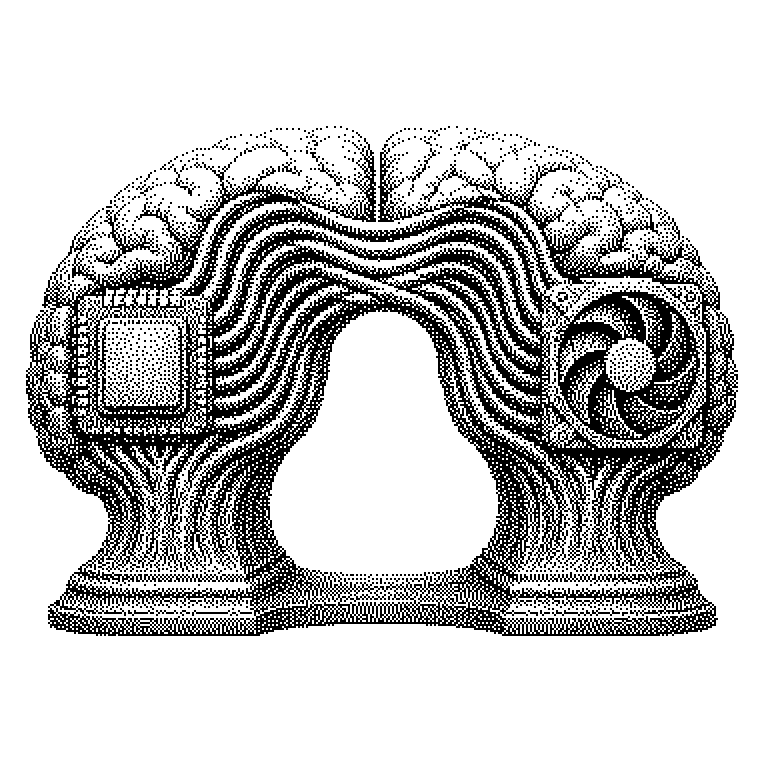
Every computer has working memory: the place where data resides while calculations are being performed on it. Traditionally, the main processor has its own working memory, and the graphics unit has a second, separate one. Anyone wanting to move something from one processing unit to the other has to copy the data. Unified Memory eliminates this separation. There is now only one memory area, which all processing units on the chip can access directly. The principle became widely known mainly through Apple's M-chips, but other manufacturers are now building this way too.
Why large language models suddenly fit on laptops
An AI model consists of many billions of stored numbers, known as parameters. For calculations to be performed, these numbers must reside in working memory. With separate memories, only the graphics card's memory counts. If the model doesn’t fit there, it either doesn’t run at all or runs extremely slowly.
This is exactly where Unified Memory shifts the boundary. A typical consumer graphics card has 8 to 24 gigabytes of its own memory. A laptop with unified memory can have 64 or 128 gigabytes, all of which can be used entirely for a single model. That’s why such devices are popular when someone wants to run an AI model locally on their own machine without sending data to a provider.
A second advantage is energy. Every copying of data costs power and time. Removing it makes the computer more efficient, which matters especially for battery-powered devices. This explains part of the long battery life of modern notebooks.
One desk instead of two filing cabinets
Imagine two colleagues, each with their own filing cabinet. If one needs a folder from the other, it first has to be copied and carried over. With Unified Memory, both share one large desk. Each accesses it directly, and nobody copies anything. Technically speaking: the processor and the graphics unit work with the same memory addresses.
This is possible because all processing units sit on a single chip. This is called a system-on-a-chip. The memory is placed very close to this chip and connected via very wide data lines. As a result, the bandwidth — that is, the amount of data per second — is far higher than that of ordinary PC working memory.
The price for this is inflexibility. The memory is permanently soldered and cannot be upgraded afterward. Anyone who chooses too little at purchase time later has to replace the entire device. In addition, all tasks share the same bandwidth. If the processor and the graphics unit are both computing very intensively at the same time, they can slow each other down. And such a chip is still not faster than a large, specialized computing card in a server rack.
From the MacBook to Nvidia's superchips
The term is most often encountered in Apple’s product descriptions. Since the M1 in 2020, every memory specification there has been marketed as Unified Memory. Anyone buying such a device is thus deciding, through the memory size, how large the AI models running on it can be.
The principle also appears in news about data centers. Nvidia combines the main processor and graphics chips in its Grace Blackwell systems so that they see a shared memory space. AMD is pursuing a similar path with its MI accelerators. The goal is the same everywhere: models that are too large for a single chip should be able to run computations without expensive detours.
A common misconception is that Unified Memory is automatically fast memory. The advantage lies first and foremost in shared use, not in speed itself. And it has nothing to do with virtual memory, in which the computer offloads data to the hard drive when working memory becomes scarce. That remains slow even with Unified Memory.