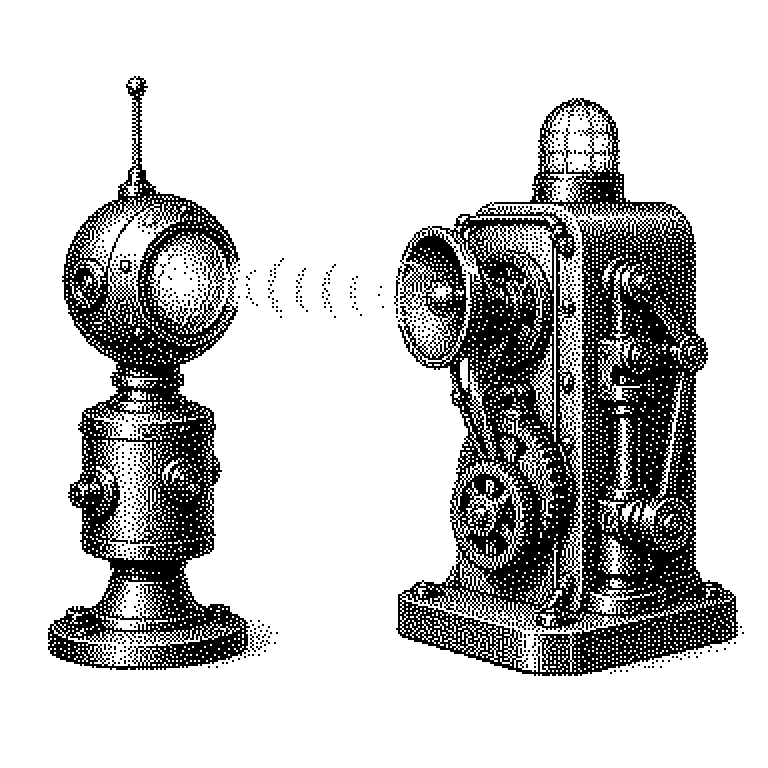
Machine-to-Machine Communication
Machine-to-machine communication refers to the direct exchange of data between devices, where no human writes or reads the message. A sensor, for example, independently reports a measured value to a computer, which then triggers an action.
In machine-to-machine communication, devices exchange data directly with one another. No human types in a message, and no human reads it. A simple example is a vending machine that reports on its own that the cola is almost sold out. This report goes to a computer at the operating company, which then schedules a refill run. In the end, the human only sees the result, namely the machine filled up again. The abbreviation for this kind of exchange is M2M.
Why machines would rather report themselves
In the past, someone had to drive by regularly and check whether a device was still working or needed a refill. Such inspection trips cost time and money, and most of the time everything was fine. If the devices report themselves, someone only needs to drive to where it is actually necessary. With thousands of vending machines or meters across a country, that makes an enormous difference.
The second advantage is speed. A machine can send a value every second, something a human simply cannot do. If the temperature in a cold storage facility falls outside the permitted range, the warning arrives immediately. This way, damage can be prevented before anyone has even noticed that something is wrong.
It is important to distinguish this from the so-called Internet of Things, often abbreviated as IoT. Both terms refer to networked devices. M2M is the older and narrower term: usually two devices, a fixed connection, a clear purpose. The Internet of Things thinks bigger and connects many devices via open networks into a shared system.
From sensor to triggered action
At the start there is almost always a sensor, that is, a component that measures something. This could be a temperature, a fill level, or a rotational speed. The measured value goes to a small radio module in the device. This module often simply contains a SIM card, the same kind found in a mobile phone.
The value then travels via the mobile network or another network to a server. A server is a computer that runs continuously and receives data. There, the value is stored and compared against rules. One such rule might be: if the fill level is below ten percent, trigger an order.
The amounts of data involved are tiny. Often it’s just a few characters per message, such as a device number and a figure. That’s why M2M devices use frugal radio standards that require very little power. Some water meters run for over ten years on a single battery this way. A video stream over the same network, by contrast, would be completely unthinkable.
M2M in the car, in the basement, and in the factory
M2M has been mandatory in cars for years. The eCall emergency system detects a serious accident and automatically calls the emergency center. In doing so, it transmits the location even before anyone is able to speak. Toll systems on highways also work this way, without a driver having to do anything.
In the basements of many houses, digital electricity meters now hang that report their reading directly to the utility provider. Elevators send error codes to the maintenance service, often before they get stuck. In factories, machines report their running times to central software, which uses this to create maintenance schedules.
In business news, M2M usually comes up in connection with mobile network providers. They sell special SIM cards for devices and report the number of active connections as a growth figure. A common misconception is mistaking M2M for artificial intelligence. Most of these systems follow simple if-then rules and don’t learn anything at all.